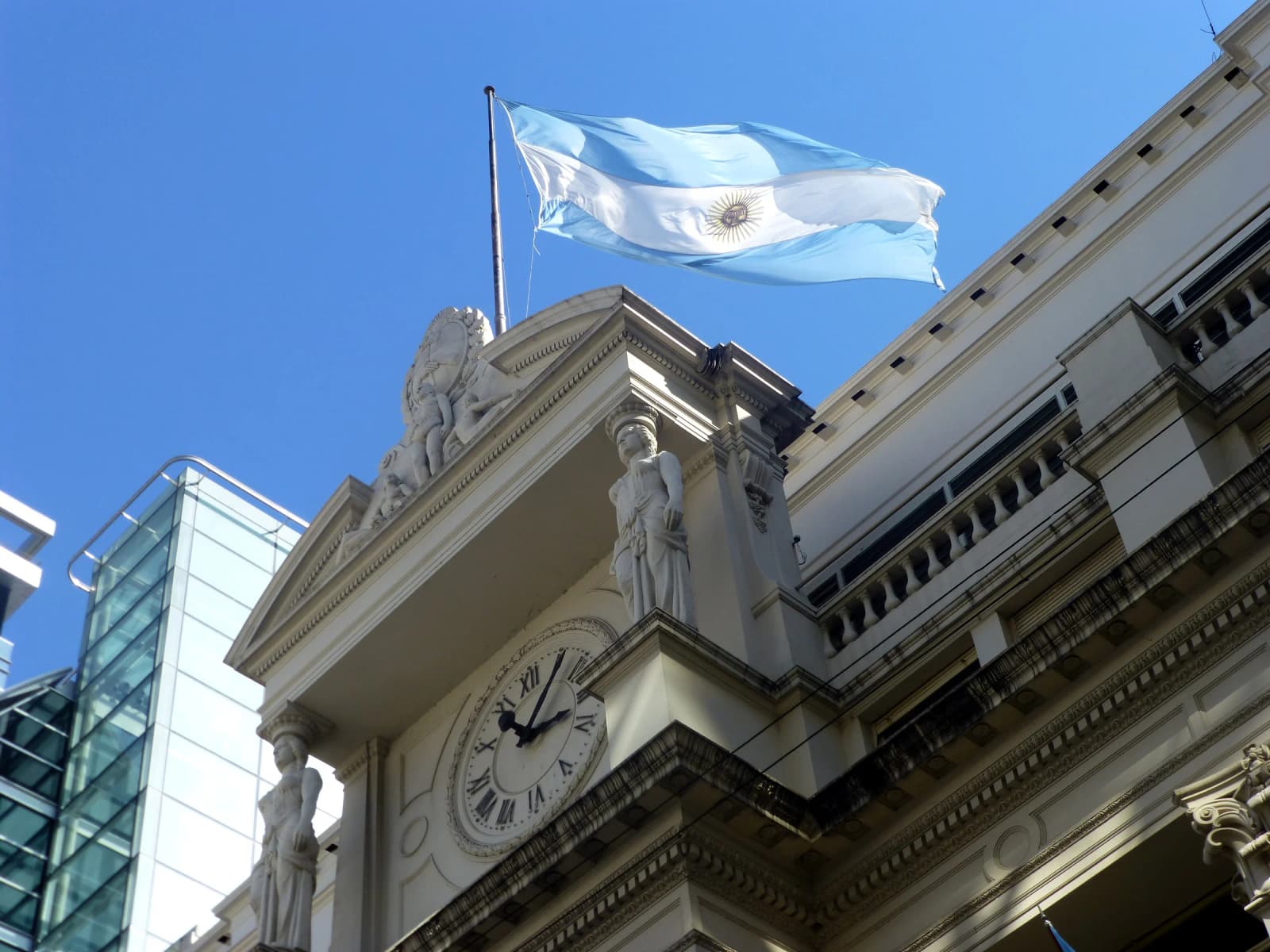
Argentina's Congress on 26 November 2026 gave final approval to a reform of the Central Bank of the Argentine Republic (Banco Central de la República Argentina, BCRA) charter that bars the bank from financing the national government, a long-sought goal of President Javier Milei. The Chamber of Deputies in Buenos Aires passed the measure by 141 votes to none, with 99 abstentions, accepting changes the Senate had made in September.
What does the new law change?
It gives the central bank a single core mission: preserving the value of the peso. According to Argentine news agency Noticias Argentinas, the reform replaces the multiple objectives written into the charter under Law 26.739 of 2012, including employment and economic development goals added during the presidency of Cristina Fernández de Kirchner, and adopts "zero emission" (no printing money to cover spending) as a guiding principle.
The bank will no longer be able to make temporary advances to the Treasury, lend to provinces or other levels of government, or buy public bonds on the primary market. Powers to direct credit to particular sectors are also removed from the board. The current BCRA charter is published on the central bank's website.
How did the vote unfold?
The lower house had first approved the bill on 26 August. The Senate amended it on 24 September, and on Thursday deputies accepted the Senate's text. The 99 abstentions came from opposition blocs including Unión por la Patria and the Frente de Izquierda, which chose not to vote against the bill, local reports said.
The main Senate change concerned removal of central bank leaders. Milei's original bill would have required a two-thirds vote in both houses to remove the bank's governor, his appointee Santiago Bausili. Under the final text, an absolute majority in the Senate is enough, and the Chamber of Deputies has no role in that decision, according to Noticias Argentinas and the Associated Press as carried by PTI.
Reactions
The Office of the President called the reform the end of "91 years of plunder, expropriation, impunity and institutional decay", and Milei wrote on X that more than 90 years of money printing to fund fiscal deficits had ended, Argentine media reported.
Opposition lawmaker Julia Strada of Unión por la Patria argued during the debate that the bank's reserves could now be used as collateral for borrowing, a concern also raised by left-wing deputy Nicolás del Caño. Radical party deputy Diógenes González backed the bill, saying an independent central bank was important and that it was "not the best bill, but the possible one". Buenos Aires province Governor Axel Kicillof accused Milei on X of trying to change the rules of democracy to improve his re-election chances.
Why it matters
Milei has argued that inflation is a monetary phenomenon and that the central bank should focus only on the currency. According to the AP report, annual inflation has fallen from nearly 300 percent in early 2024 to 33 percent last month, but preliminary official figures released this week estimated the economy shrank 1.8 percent in the third quarter after a 0.6 percent contraction in the second, suggesting a recession less than a year before Milei seeks a second term.
The question of who leads a central bank and how independent it is has also been in focus in Europe this week, as eurozone leaders picked Pablo Hernández de Cos as the next European Central Bank president.
What happens next
The law now goes to the executive for promulgation and publication in the Official Bulletin. Separately, the Senate has approved a Milei-backed bill to suspend mandatory primary elections, which now moves to the lower house.
Photo source · Leandro Kibisz, CC BY-SA 3.0