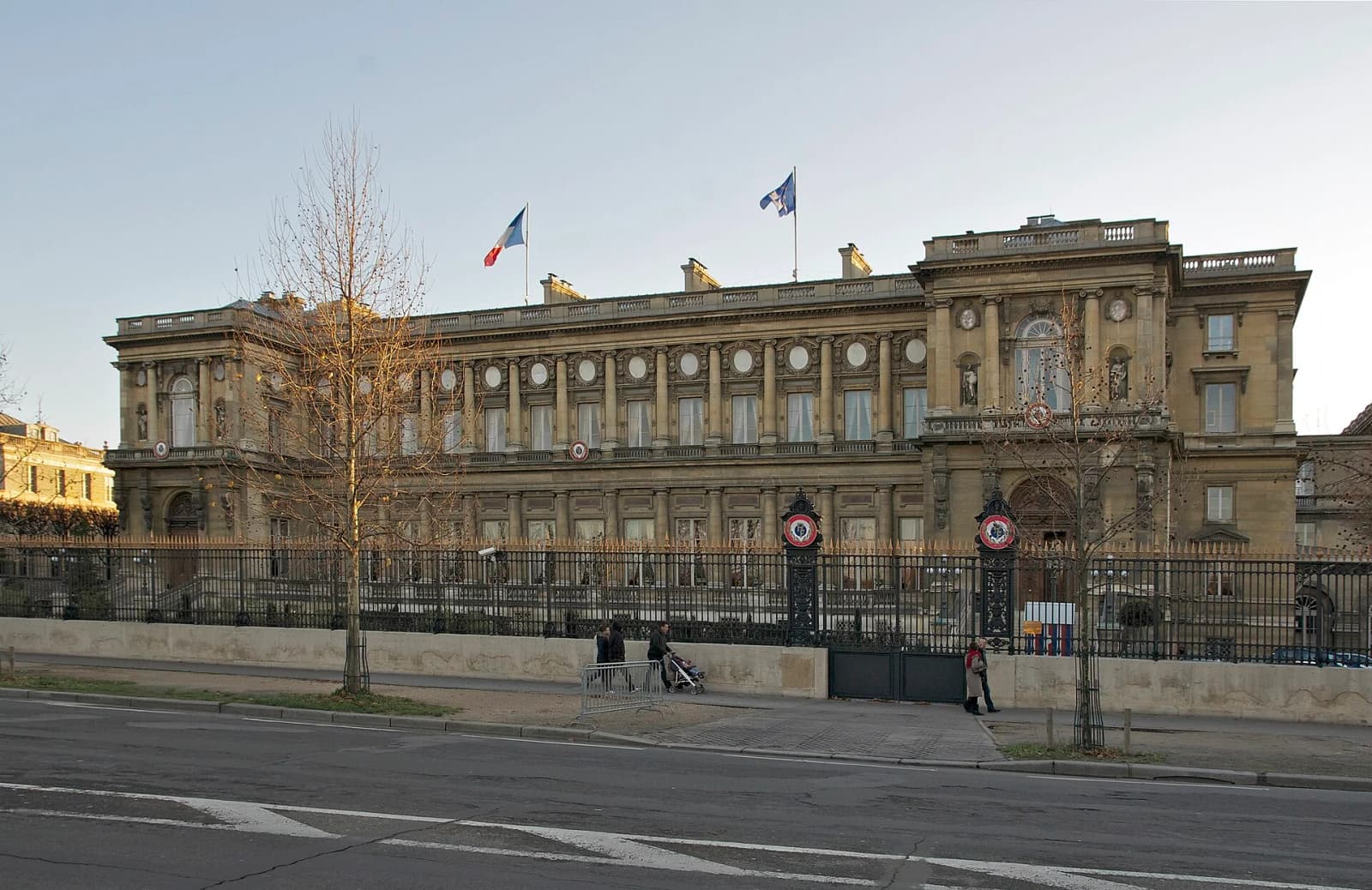
Euro area member states on 26 November 2026 agreed in Brussels, Belgium, to recommend Spanish economist Pablo Hernández de Cos as the next President of the European Central Bank (ECB), lining him up to succeed Christine Lagarde. European Council President António Costa announced the decision after a meeting of eurozone leaders.
In the same package, the member states agreed to recommend France's Laurence Boone and Germany's Markus Brunnermeier as members of the ECB Executive Board, Costa said in a post on X.
Who is Pablo Hernández de Cos?
Hernández de Cos, 55, is currently general manager of the Bank for International Settlements (BIS), the Basel-based forum for major central banks, a post he has held since July 2025. He previously served as governor of the Bank of Spain from 2018 to 2024, after earlier working as its chief economist.
During his years at the Bank of Spain he dealt with the aftermath of Spain's banking crisis in the 2010s, a long stretch of very low inflation, the COVID-19 shock and the inflation surge of 2022, according to Al Jazeera. He also chaired the Basel Committee on Banking Supervision, which sets global standards for banks. If confirmed, he would be the first Spaniard to lead the ECB.
Is the appointment final?
No. Thursday's agreement is a recommendation, not a formal appointment. Under EU rules, the European Council appoints the ECB president on a recommendation from the Council of the EU after consulting the European Parliament and the ECB's Governing Council. Costa said he would propose launching those consultations, which he said would pave the way for a formal appointment by EU leaders in December. The ECB president serves a single, non-renewable eight-year term.
Why does the change matter now?
Lagarde, who took office in November 2019, is due to step down on 7 February 2027, several months before her term would have ended, Xinhua reported. Executive Board members Isabel Schnabel and Philip Lane are also scheduled to leave in the first half of 2027, which means the bank's top team will change substantially within months.
The handover comes at a delicate time for monetary policy. The European Commission's autumn forecast, released on 17 November, projects eurozone inflation of 3.2% in 2026 and 3.1% in 2027, well above the ECB's 2% medium-term target, with rising energy prices adding pressure. The ECB left rates unchanged on 29 October after increases in June and September, with its deposit facility rate at 2.5%.
The nomination was settled on the same day that EU leaders met in Brussels for a summit that has been marked by disagreement over the bloc's long-term budget and a loan for Ukraine.
How have leaders reacted?
French President Emmanuel Macron welcomed the three candidates on X, describing them as a balanced team that would serve the stability and prosperity of the eurozone. Spanish Prime Minister Pedro Sánchez praised the choice as a sign of Spain playing a leading role in Europe. Spain's Economy Ministry said Hernández de Cos's experience, independence and ability to engage in dialogue would help the ECB in a volatile economic environment.
Earlier in November, Eurogroup President Kyriakos Pierrakakis had named Hernández de Cos and former Dutch central bank governor Klaas Knot as the two candidates in the race for the presidency.
What happens next?
The European Parliament and the ECB's Governing Council will now give their opinions on all three candidates. EU leaders are then expected to make the formal appointments at their December summit. Al Jazeera reported that Hernández de Cos is set to take over in February.
Photo source · Norbert Nagel, CC BY-SA 4.0