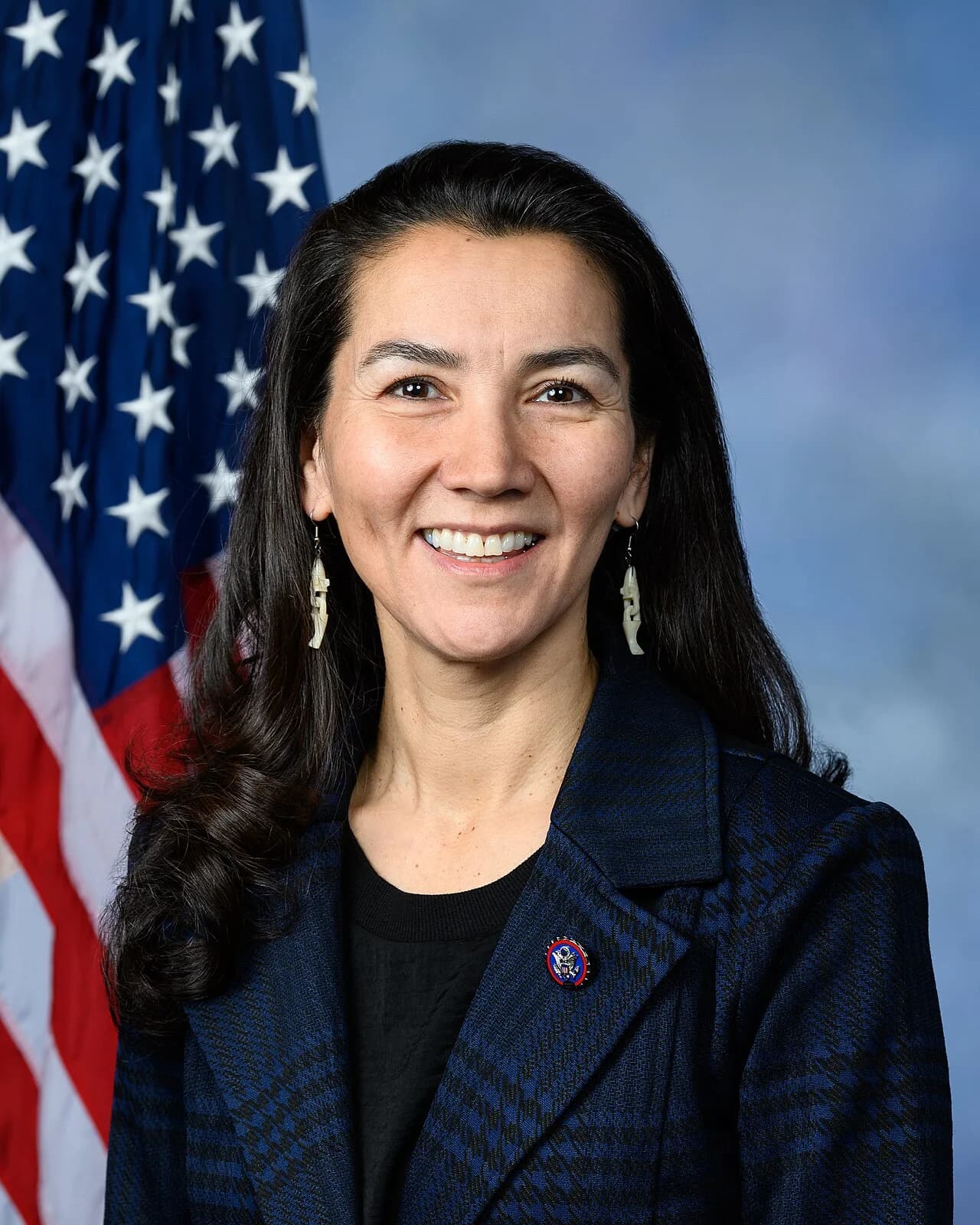
Nearly two weeks after Americans voted in the 3 November midterm elections, one United States Senate seat is still waiting for a winner. In Alaska, Democrat Mary Peltola has kept widening her lead over Republican Senator Dan S. Sullivan as election workers count the last ballots. The Associated Press had not called the race as of the latest updates on Saturday, 14 November (US time), and it is expected to be the last Senate contest in the country to be decided.
The outcome will not change which party controls the next Senate, because Democrats have already won a majority. It will, however, decide how big that majority is, and the race has drawn national attention because of a second candidate with almost the same name as the sitting senator, a federal lawsuit and a criminal investigation.
What happened this weekend
According to the Anchorage Daily News, about 4,000 more ballots were counted on Saturday, taking the total past 283,000. In that count Peltola held 50.1% of first-choice votes against 46.1% for Sullivan, narrowly crossing the 50% mark that matters under Alaska's voting rules. Alaska Public Media's Saturday update put the figures at 49.9% for Peltola and 46% for Sullivan, after about 22,500 ballots were added on Friday and 4,290 on Saturday, and said the AP estimated 97% of the vote had been counted.
The small gap between the two outlets' percentages shows how close Peltola is to the outright-majority line, and why the final count matters. Her lead in raw votes, though, is not small. NBC News, in an analysis published on 14 November, put it at just over 10,000 votes, or 3.7 percentage points.
How Alaska decides a winner
Alaska uses ranked-choice voting in its general elections. Voters can rank candidates in order of preference. If one candidate wins more than half of the first-choice votes, that candidate wins outright. If nobody does, the state runs a tabulation: the last-placed candidate is eliminated and those ballots move to the voters' next choice, round after round, until someone has a majority.
Two other names are on the Senate ballot. Republican Gerald Heikes had 2.1% of first-choice votes in the Daily News figures, and Dan J. Sullivan, a retired teacher from Petersburg with no relation to the senator, had 1.7%.
Timeline
- 22 October: The US Justice Department files a lawsuit seeking to block certification of the result if Senator Sullivan loses, arguing that voters may have picked the wrong Sullivan, Alaska Public Media reported.
- Before polling day: President Donald Trump says confusion over the two similarly named candidates could cost Republicans the seat, according to the Daily News.
- 3 November: Election day. Democrats go on to win control of the Senate.
- After the vote: A federal judge dismisses the Justice Department's case. The department appeals but does not ask for a fast-track schedule.
- 13 November (Friday): The AP calls Alaska's governor's race for Democrat Jonathan Kreiss-Tomkins. The Senate race stays uncalled.
- 14 November (Saturday): Further counting widens Peltola's lead.
- 18 November (Wednesday): Last day to accept absentee ballots mailed from overseas, and the date set for ranked-choice tabulation where it is needed.
- 25 November: The state's target date for certifying results.
The numbers that matter
NBC News set out why Sullivan's path looks very narrow. By its estimate, about 12,000 votes were still outstanding, and Sullivan would need roughly 92% of them just to draw level. On Friday night he won about 38% of newly reported votes. To win outright without a tabulation, Peltola needs about 53.8% of the remaining ballots; she took 58% of Friday night's batch.
A ranked-choice round also looks difficult for the senator. NBC counted about 11,300 tallied ballots whose first choice was someone other than Peltola or Sullivan, a figure that could reach about 12,000. More than 45% of those voters did not rank either of the top two, so their ballots would drop out. At current rates only about 6,600 ballots would move to the two leaders, the network calculated. If Peltola's first-choice lead stays above that number, Sullivan cannot catch up through redistribution. The Daily News added that preliminary second-choice data suggests Peltola would probably win a tabulation, and that voters who backed the Petersburg Sullivan tended to rank Peltola above the incumbent.
The wider picture: a Democratic Senate
Alaska is the last piece of a national result that has already been settled. Democrats won control of the Senate on election night. In Mississippi, the Daily News noted, Democrat Scott Colom became the state's first Black US senator since Reconstruction.
Elsewhere, Anadolu Agency reported on 15 November that Republican Representative Lauren Boebert, a Trump ally, had lost her House seat in Colorado as counting continued.
Perspectives
The two campaigns have clashed over the second Sullivan. Alaska Public Media reported that US Attorney Michael Heyman has announced a criminal investigation into how Dan J. Sullivan was recruited to run, and that Governor Mike Dunleavy has said he is investigating too. Peltola has denied knowing about any recruitment effort, the outlet reported. The Justice Department's argument is that some voters may have meant to choose the senator but marked the other Sullivan. The Daily News pointed out that the Petersburg candidate drew relatively few votes, and Alaska Public Media noted that Peltola's lead is more than double his total.
The courts have also been involved in the count. A state Superior Court judge, Thomas Matthews, turned down a request from the Peltola campaign for a list of rejected absentee ballots, saying the Division of Elections was busy processing ballots from the general election.
Why Indian readers should care
The Senate is one of the two chambers of the US Congress, the body that will shape Washington's laws and oversight for the next two years. A larger Democratic majority means that, after January, President Trump's party no longer controls this chamber. For readers in India who follow US policy on trade, technology, immigration and the Gulf, the size of that majority is worth watching. No reaction from the Indian government to the midterm results appeared in the reporting reviewed for this article, and any concrete effect on India-US ties will depend on what the new Congress does once it sits.
The Alaska race is also a useful case study in how ranked-choice voting works, a system India does not use for its general elections. Under it, a candidate can lead by thousands of votes and still not be declared the winner until every eligible overseas ballot has arrived.
What is established
- Peltola leads Sullivan in first-choice votes. Every count reported by the Daily News, Alaska Public Media and NBC News shows this.
- The AP has not called the race.
- The ranked-choice tabulation, if one is needed, is set for 18 November, and state certification is targeted for 25 November.
- Democrats have already won control of the next Senate.
- A federal judge dismissed the Justice Department's certification lawsuit, and the department is appealing.
What is uncertain
- Whether Peltola will finish above 50% and win outright, or whether a tabulation will be needed. The latest published figures put her at 49.9% to 50.1%.
- How many overseas absentee ballots will arrive by Wednesday's deadline.
- Where the criminal investigation into the recruitment of the second Sullivan will lead. No charges have been reported.
- When the Justice Department's appeal will be heard. Alaska Public Media reported that no decision is expected before the new Congress is sworn in.
What happens next
The Division of Elections will keep counting until the overseas ballot deadline on Wednesday, 18 November, which is also tabulation day. NBC News said a final result may be known that day. If Peltola stays above 50%, no tabulation will be needed for the Senate race. The state then plans to certify on 25 November. Alaska Public Media said no legal obstacle appears to stand in the way of certification, and the winner will take the seat when the new Congress meets.