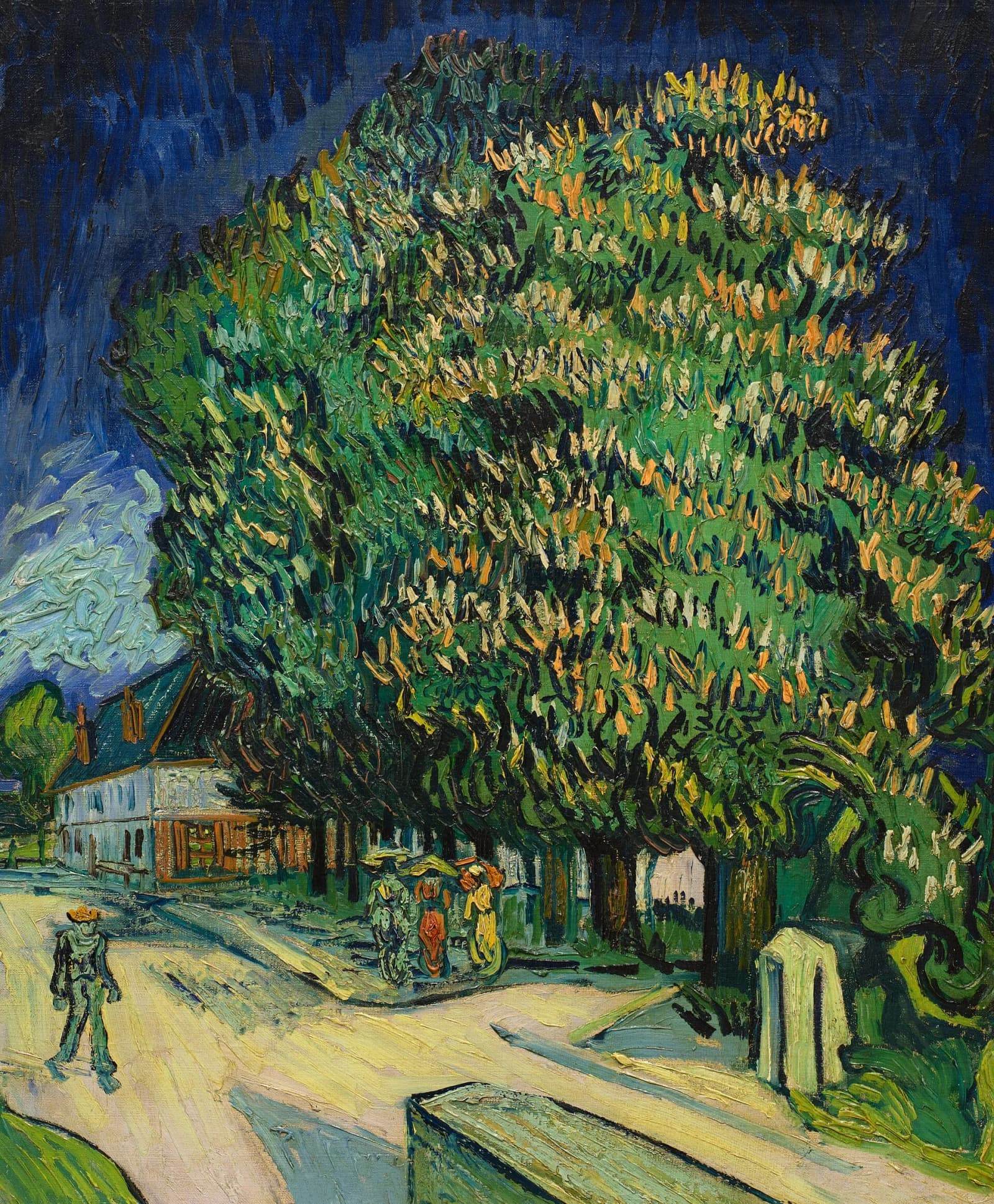
A landscape Vincent van Gogh painted in the final weeks of his life, Châtaigniers en fleurs (Blossoming Chestnut Trees), sold for $190.43 million at Sotheby's in New York on 18 November 2026, the highest price ever paid at auction for a work by the Dutch artist. Sotheby's announced the result as a new auction record for the artist.
The painting led Legendary: The Blaquier-Arrieta Collection, an evening sale of 12 Impressionist and modern works from an Argentine family's collection. It reached the rostrum only after a last-minute settlement of a claim linked to its sale in Nazi-era Germany.
How big is this record?
It beats the previous Van Gogh auction high by more than $70 million. According to CNBC, the earlier record was $117.2 million, paid at Christie's in 2022 for Verger avec cyprès from Paul Allen's collection. CNBC also reported that the new price is the second-highest ever achieved at Sotheby's, behind the $236.4 million paid for Gustav Klimt's Portrait of Elisabeth Lederer in November 2025.
Sotheby's did not name the buyer. CNBC, citing The New York Times, said the winning bidder was veteran New York dealer William Acquavella; Sotheby's has not confirmed this.
What is the painting?
The Sotheby's lot catalogue describes the work as an oil on canvas measuring 70 by 58 cm, executed in Auvers on 24 May 1890. Van Gogh had arrived in Auvers-sur-Oise, north-west of Paris, only days earlier and would die there about two months later. The canvas shows a village road lined with chestnut trees in flower; a lone man in a hat, which some have read as a self-portrait, walks past three women carrying parasols.
Sotheby's described it as "among the most exceptional Post-Impressionist paintings ever to come to the market", according to CNBC. The work had not been seen in public for more than half a century.
Why was the sale contested?
The catalogue's ownership history traces the canvas from the artist's brother Theo and his widow Johanna van Gogh-Bonger to the Berlin dealer Paul Cassirer in 1905. The Jewish publisher Samuel Fischer bought it in 1909, and it stayed with the Fischer family until 1936. Fischer's heirs argued that the 1930s sale was made under pressure from Nazi persecution.
The lot page notes that the painting was offered "pursuant to an agreement between the seller and the heirs" of the Hedwig and Samuel Fischer family. Sotheby's said it helped broker that deal but has not disclosed its terms. The Blaquier family, the sellers, acquired the work in 1975.
How did the rest of the evening go?
CNBC reported that the 12 works from the collection fetched a combined $412 million, short of a pre-sale expectation of about $450 million. A Paul Cézanne Harlequin made $111 million including fees, the report said. Sotheby's own estimate for the Van Gogh was published only as "upon request".
Why it matters
The result shows that the very top of the art market can still absorb nine-figure prices for rare masterpieces with clear, settled title. It also underlines how restitution claims over works sold during the Nazi era are increasingly being resolved through negotiated agreements that allow sales to go ahead, rather than through lengthy litigation. The buyer's identity, and whether the painting will go on public display, remain unconfirmed.