The Tripura High Court has held that compensation recommended by the state's human rights commission is binding on the government, dismissing a challenge by the Inspector General of Prisons and ordering the state to pay ₹4 lakh to the family of a convict who died by suicide inside a central jail.
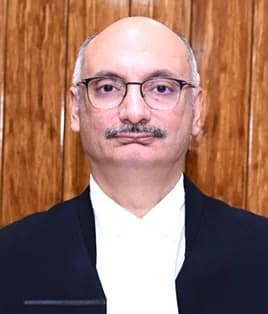
A Division Bench of Chief Justice M.S. Ramachandra Rao and Justice Biswajit Palit dismissed the writ petition on Friday, 13 November 2026, according to the news agency UNI and the legal news portal LiveLaw. The judgment, cited as 2026:THC:1476-DB, directs the state to carry out the Tripura Human Rights Commission's directions within one month and file a compliance report with the court.
The death in custody
The prisoner was serving a 12-year sentence of rigorous imprisonment at Kendriya Sansodhanagar, Bishalgarh. On 23 October 2024 he was found hanging from an exhaust fan in a prison toilet, LiveLaw reported.
The commission found that he had been regularly made to clean the waste of a German Shepherd dog kept at the prison, a job no other inmate was given, and that the warder responsible for supervising him had failed to do so properly. It concluded that discrimination, humiliation and negligent supervision had contributed to the suicide. It recommended ₹4 lakh in compensation for the widow and children, departmental action against the officials concerned, and a departmental inquiry.
What the state argued
The prisons department relied on a magisterial inquiry under Section 196 of the Bharatiya Nagarik Suraksha Sanhita (BNSS), which had found the death to be a suicide and held that jail staff bore no blame. It also argued that the commission should not have made recommendations before departmental proceedings against the officials were complete.
What the High Court held
The Bench rejected both arguments. Relying on a 2021 Full Bench ruling of the Madras High Court in Abdul Sathar v. State, it held that a recommendation made under Section 18 of the Protection of Human Rights Act, 1993 is binding on the government or authority concerned and can be enforced, subject to judicial review. It quoted that ruling's line: "The recommendation of the Commission made under Section 18 of the Act, is binding on the Government or Authority."
On the magisterial inquiry, the court said such proceedings have a "very limited scope", which is to identify the apparent cause of death, such as suicide, homicide or accident. They do not extend to how the incident happened. Because the magistrate had gone into the question of the jail authorities' negligence, the court said, he "had no jurisdiction", and that finding could not bind the commission, as reported by Verdictum.
The Bench also said a pending departmental inquiry did not stop the commission from recording findings and making recommendations. At the same time, it clarified that the commission's findings on the officials' role would not be conclusive in any departmental inquiry, so the officials can still contest the allegations there.
The state had also sought a review from the commission itself, but too late. The commission's report reached the state on 25 February 2026, and reconsideration had to be sought within a month. The court noted that it was sought only on 10 July 2026, and agreed with the commission's decision to reject it as time-barred.
Why it matters
State human rights commissions are often described as recommendatory bodies whose advice governments can sit on. This ruling, from a constitutional bench headed by the Chief Justice, tells the Tripura government that once a commission recommendation survives judicial review, it must be implemented. It also narrows the reach of magisterial inquiries into custodial deaths, which the state had used to argue that its staff were blameless.
What happens next
The state now has one month to pay the compensation and act on the commission's other directions, and must report compliance to the High Court. There was no immediate word on whether the state intends to appeal.
PS · Tripura High Court, Government of Tripura, Attribution