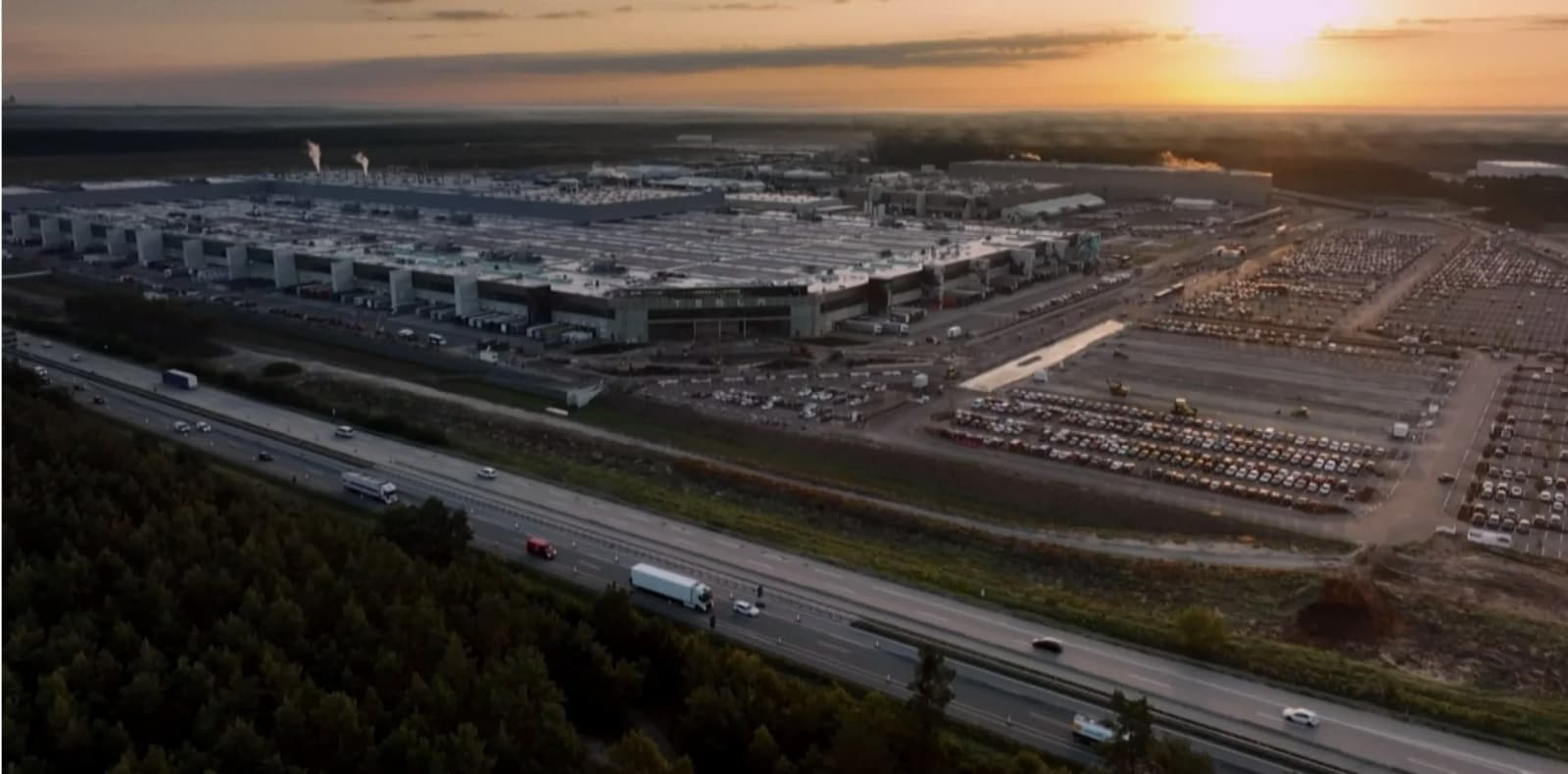
Tesla on Monday, 16 November, announced a €3 billion (about $3.3 billion) expansion of its Gigafactory at Grünheide, just east of Berlin, where it plans to start building its driverless Cybercab in 2029, TechCrunch reported.
The new building will be able to turn out up to 10 lakh (1 million) vehicles a year, André Thierig, Tesla's senior director of manufacturing for the site, said in a LinkedIn post cited by the outlet. Construction is expected to begin in the first half of 2027, and Thierig said the facility would become the most technologically advanced of all Tesla's factories.
What Tesla has said
- Investment: €3 billion, roughly $3.3 billion.
- Location: the existing Gigafactory site at Grünheide in Germany.
- Capacity of the new building: up to 1 million vehicles a year.
- Construction start: first half of 2027.
- Cybercab production in Germany: planned from 2029.
A bigger bet on the Cybercab
The Cybercab is a two-seat autonomous vehicle with no steering wheel or pedals. Tesla first showed it in 2024 and launched it publicly in September 2026, according to TechCrunch. The Berlin plan adds to a shift of resources towards the vehicle: the outlet reported earlier this month that Tesla intends to stop making the Cybertruck in 2027, partly to free up room for Cybercab production at its Austin, Texas factory.
TechCrunch said the move reflects Tesla's aim of becoming an artificial intelligence and robotics company rather than only a carmaker. It noted that this is happening even though demand for the Model 3 and Model Y has held up: Tesla delivered more than 4.86 lakh vehicles in the July–September quarter, about 6,000 more than in the previous quarter, with sales in Europe rising.
Where the robotaxi stands today
About 573 Cybercabs are currently on the road in Austin, with Dallas due to follow, the report said. In all, Tesla has about 1,307 robotaxis registered in Texas, most of them modified Model Y cars. The Cybercabs are not allowed to drive late at night, a restriction Tesla is working to ease, and TechCrunch said they have had no major incidents in more than two months of operation.
The vehicle still faces regulatory questions in the United States. Some of the controls it lacks are required under federal safety standards, and federal regulators are investigating Tesla's self-certification of the Cybercab, according to the outlet. Tesla's self-driving system also relies only on cameras, while competitors such as Waymo add sensors such as lidar.
What happens next
On the timeline Tesla has set out, building work at Grünheide would begin in 2027 and the first German-made Cybercabs would follow in 2029. The report did not say what approvals the expansion or the vehicle would need in Germany or the European Union, or how many jobs the new building would create.
PS · MEHR8000, CC BY-SA 4.0