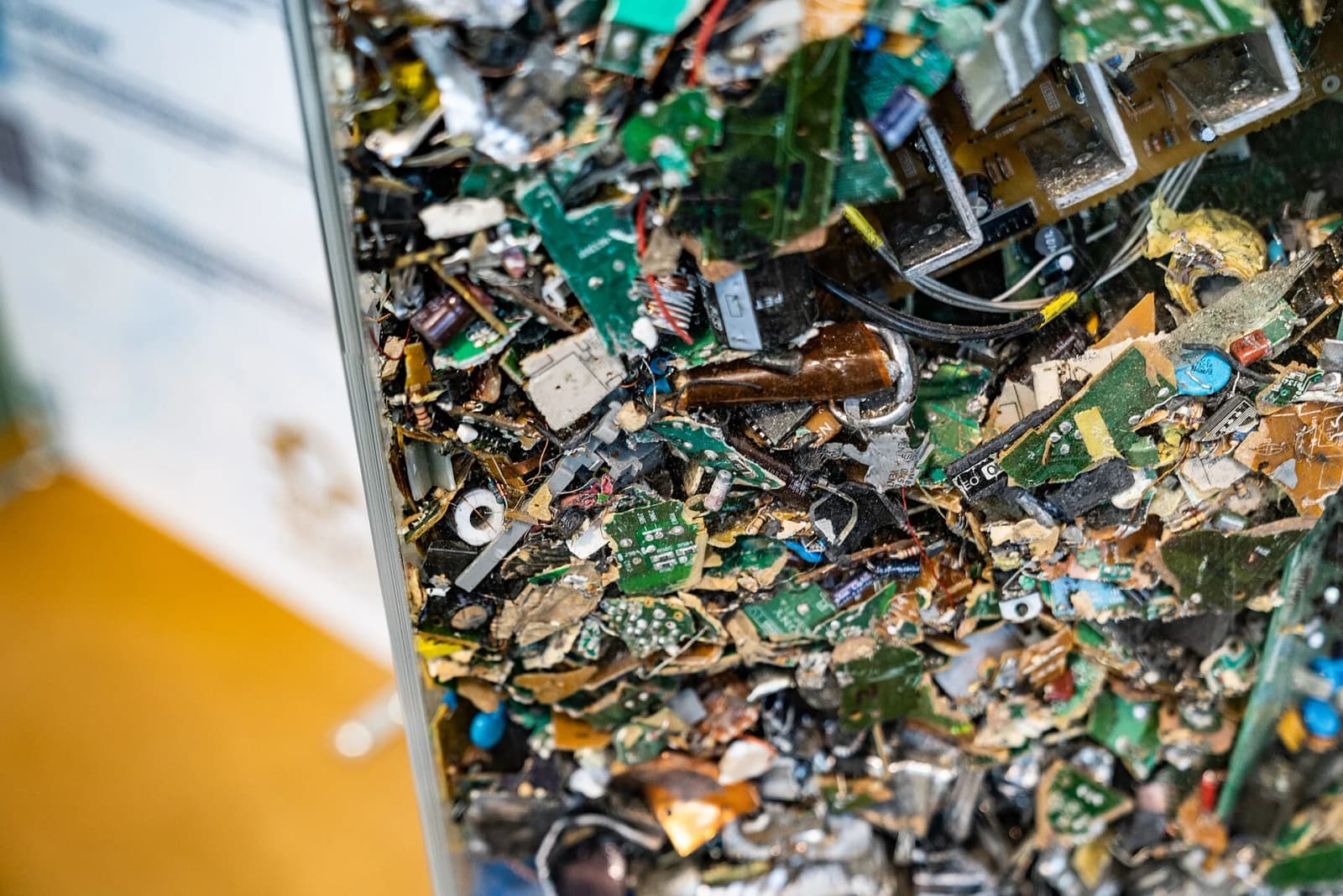
The Technology Development Board (TDB) will put ₹10 crore into a Hyderabad company's project to recover critical metals from discarded electronics and used lithium-ion batteries, the Ministry of Science and Technology said on Monday, 16 November.
TDB, which functions under the Department of Science and Technology (DST), has signed an agreement with Neo Seekermetals Pvt. Ltd. under the Research, Development and Innovation (RDI) Fund, according to the ministry's statement. The statement did not give the date on which the agreement was signed.
What the project involves
The project is titled "Extraction of Critical Metals by Recycling of E-Waste and Lithium-Ion Battery Waste". Its total cost is ₹20 crore, of which ₹10 crore has been approved under the RDI Fund, the ministry said.
The money will not be given as a grant. The ministry said the assistance will be extended through Optionally Convertible Debt.
According to the statement, Neo Seekermetals has developed an integrated, patented recycling process that can handle both e-waste and lithium-ion battery waste, and that is meant to recover valuable metals and battery materials from these mixed waste streams. The statement did not list the specific metals to be recovered or the capacity of the planned facility.
From TRL 5 to commercial scale
The stated aim is to move the technology from Technology Readiness Level (TRL) 5 to TRL 9, which the ministry described as taking it towards commercial-scale deployment. The release did not set out a timeline for reaching that stage.
Why the government is funding it
The ministry linked the project to rising demand for critical minerals as India expands electric mobility, clean energy, electronics and advanced manufacturing. It said that growth raises two connected problems: securing these strategic resources sustainably, and dealing with the increasing volume of electronic waste and end-of-life batteries.
TDB Secretary Rajesh Kumar Pathak said in the statement that India's shift to clean energy and advanced technologies "will require secure and sustainable access to critical minerals", and that building the ability to recover them from e-waste and old batteries at home is an important part of that effort. Through the RDI Fund, he said, TDB is backing technologies that help turn waste streams into valuable resources and strengthen the base of a circular economy.
An authorised representative of Neo Seekermetals, who was not named in the release, said the support would help the company take its technology towards commercial deployment. The company's focus, the representative said, is on "building an efficient and sustainable process for recovering critical and valuable materials from e-waste and lithium-ion battery waste".
What is not yet known
The ministry's statement leaves several details open: where the commercial plant will come up, how much waste it will process, which metals it will yield and when it is expected to start operating. These were not disclosed in the release.