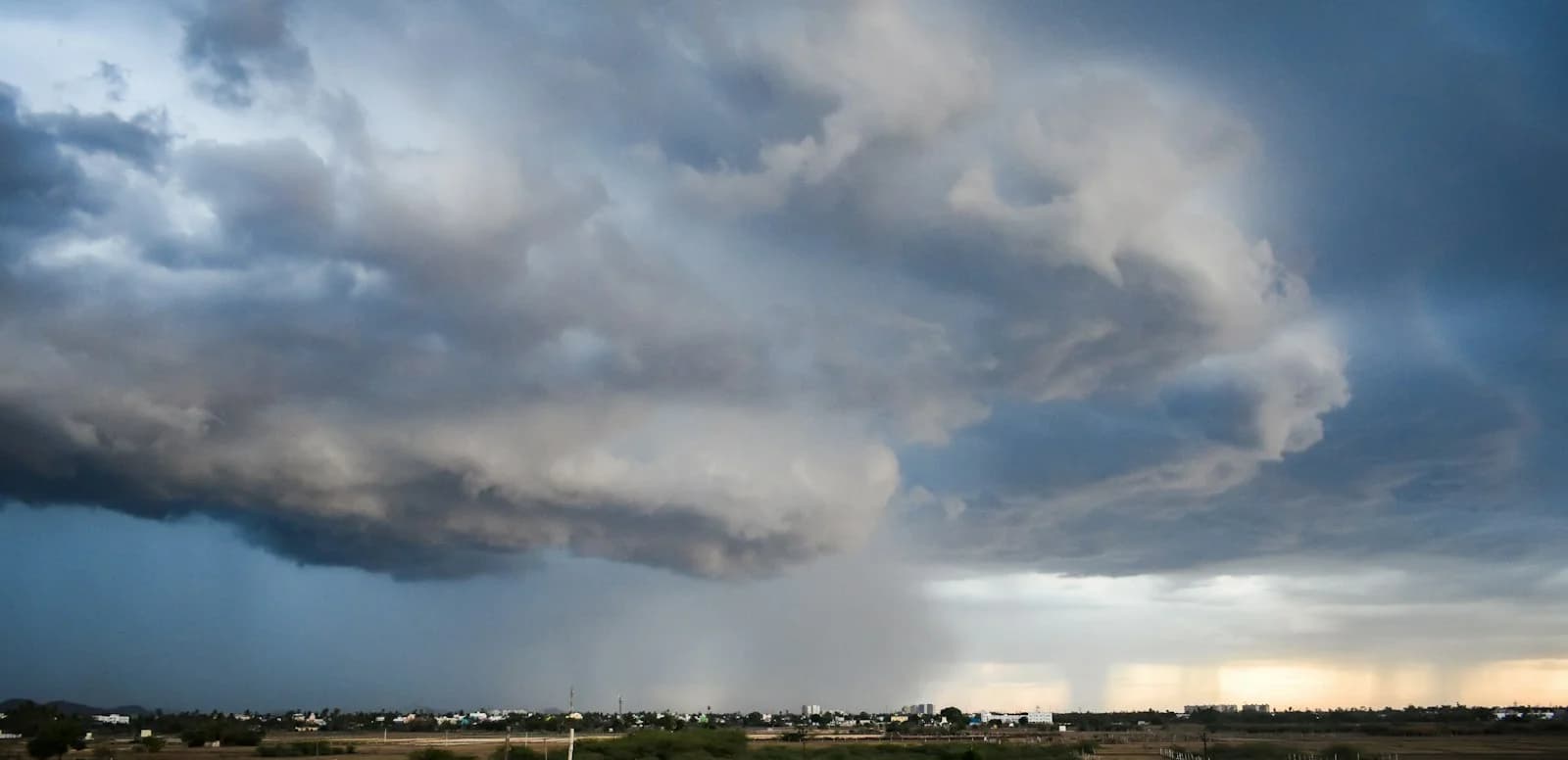
Rain over Tamil Nadu is expected to ease on 29 and 30 November 2026 and pick up again from 1 December, the India Meteorological Department (IMD) said. The outlook comes from the daily weather report the Regional Meteorological Centre (RMC) in Chennai issued at 1:45 pm IST on 28 November 2026. Its heavy rainfall warning covered only 28 November, for 10 districts and the Karaikal area. For the following two days, the centre forecast mostly light rain, with dry weather over much of the state.
Will it rain heavily in Tamil Nadu on 29 November?
No. The bulletin carries no heavy rainfall warning for 29 November. Moderate rain at isolated places, with thunderstorms and lightning, is likely over the Nilgiris, Coimbatore, Theni and Tenkasi districts. Light rain is likely at isolated places in districts next to the Western Ghats and in Chennai, Tiruvallur, Chengalpattu and Thoothukudi. The rest of Tamil Nadu, Puducherry and Karaikal is likely to stay mainly dry.
The heavy rain warning in the same bulletin applied to Day 1, 28 November. It named the Nilgiris, Coimbatore, Cuddalore, Mayiladuthurai, Nagapattinam, Ramanathapuram, Tenkasi, Thoothukudi, Tirunelveli and Kanyakumari districts and the Karaikal area. The forecast for that day also mentioned gusty winds of 30-40 kmph at one or two places.
What is the forecast for Chennai?
For Chennai and its neighbourhood on 29 November, the RMC forecast a partly cloudy sky, light rain in some areas, a maximum temperature of 30-31°C and a minimum of 23-24°C. The Nungambakkam observatory recorded 0.6 mm of rain in the 24 hours to 8:30 am on 28 November, and Chennai airport recorded 3.6 mm. Nungambakkam's total since 1 October 2026, the period covering the northeast monsoon, stood at 677.1 mm.
When does rain return?
For 30 November, the bulletin forecasts only light rain at isolated places over north coastal Tamil Nadu, Puducherry and Karaikal, with the rest of the state mainly dry. Moderate rain at isolated places is then likely to spread over the following days:
- 1 December: Chennai, Tiruvallur, Chengalpattu, Villupuram, Cuddalore, the delta districts, Pudukkottai, Sivaganga, Ramanathapuram, Thoothukudi, Tirunelveli, Kanyakumari, Puducherry and Karaikal
- 2 December: central, delta and southern districts including Tiruchirappalli, Madurai, Dindigul, Theni and Kanyakumari, plus Puducherry and Karaikal
- 3 December: the delta and southern coastal districts, from Thanjavur to Kanyakumari, and Karaikal
- 4 December: the western and southern interior districts, including the Nilgiris, Coimbatore, Tiruppur, Dindigul and Tenkasi
What is driving the weather?
According to the RMC, strong northeasterly winds in the lower atmosphere are carrying moisture from the Bay of Bengal over Tamil Nadu and nearby areas. A trough in the easterlies, which had stretched from southern Lakshadweep to coastal Karnataka across the east-central Arabian Sea, has become less marked. The centre expects no large change in maximum temperatures through 2 December and says they will stay near normal.
How much rain fell in the past day?
In the 24 hours to 8:30 am on 28 November, Adamangalam in Tiruvannamalai district recorded the highest rainfall in the state at 81.2 mm. Coonoor in the Nilgiris recorded 66.4 mm, and Mettupalayam in Coimbatore and Kotagiri in the Nilgiris each logged about 6 cm. Madurai airport was the hottest station in Tamil Nadu at 35°C, while Kodaikanal recorded the lowest minimum among the hill stations, 11.8°C.
Why it matters
Farmers, fishers, travellers to the Nilgiris and residents of low-lying areas plan around district-level forecasts. A dry spell on 29 and 30 November followed by moderate rain from 1 December affects those plans. Districts that were under the heavy rain warning on 28 November, such as the Nilgiris and Coimbatore, are still expected to get moderate rain at isolated places on 29 November.
What happens next
The RMC Chennai issues a fresh daily weather report each afternoon, and district-level warnings can change from one bulletin to the next. Readers should check the latest IMD bulletin before travelling, especially to the hill districts, and follow advisories from district administrations.