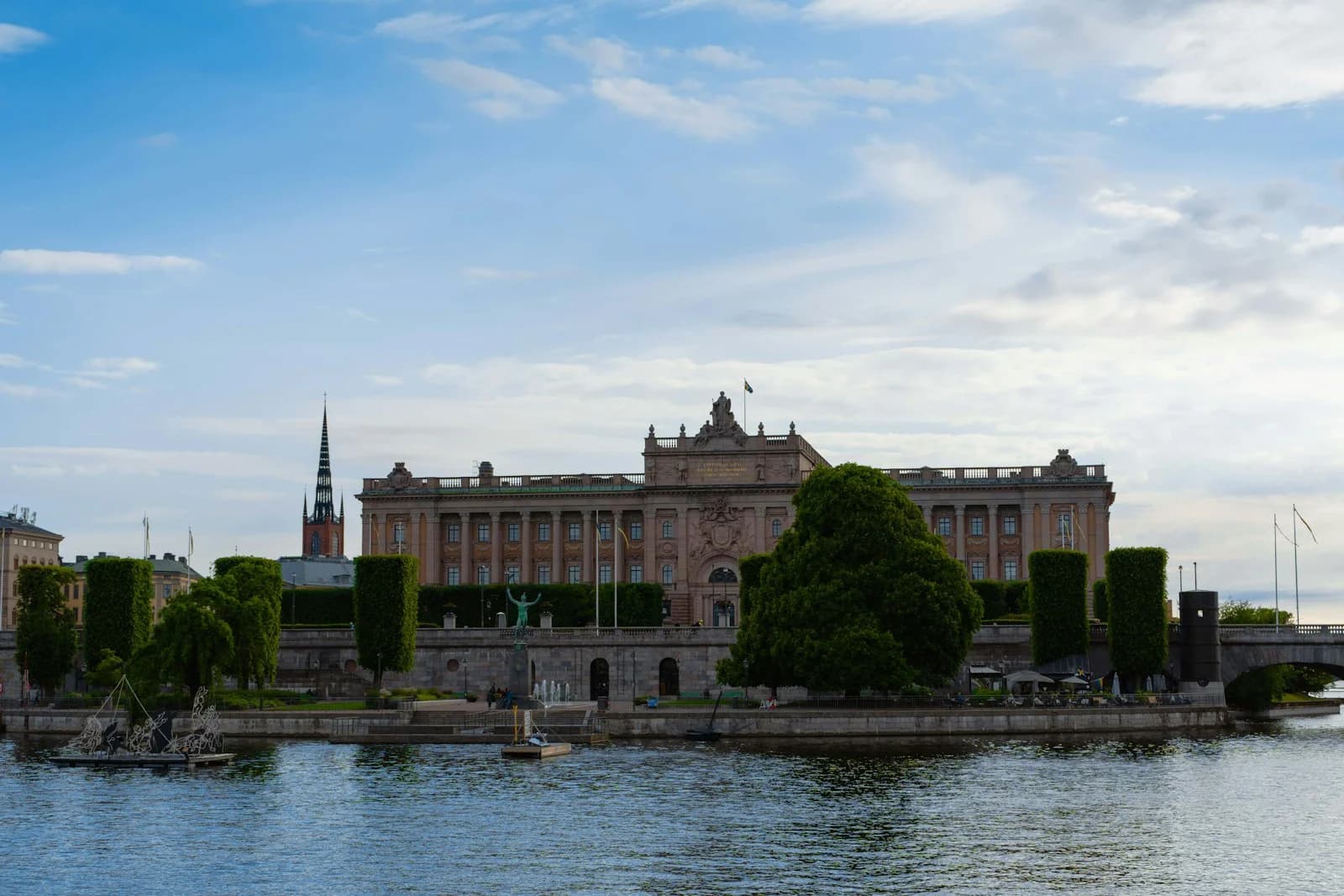
Sweden's Centre Party decided on Sunday, 29 November 2026, to back outgoing Prime Minister Ulf Kristersson for a second term. The decision clears the way for him to win a confirmation vote in the Riksdag in Stockholm on Monday, almost three months after September's general election. The party's national council (förtroenderådet) voted 36 to 23 in favour after a meeting that began at 1 pm at a hotel in Stockholm's Globen area, broadcaster TV4 reported.
Kristersson, leader of the conservative Moderates, would head a four-party centre-right minority coalition of the Moderates, the Centre Party, the Christian Democrats and the Liberals. The anti-immigration Sweden Democrats will not be part of the new government, France 24 reported, citing AFP.
Why does the Centre Party's decision matter?
The decision matters because it gives Kristersson the votes he needs to return to office. Until recently, the Centre Party had supported Social Democrat leader Magdalena Andersson for prime minister. In September's election the centre-left opposition won 176 of the Riksdag's 349 seats and Kristersson's right-wing bloc, which then included the Sweden Democrats, won 173, according to France 24. The four centre-left parties then spent more than two months trying to form a government but could not bridge deep differences between them.
Centre Party leader Elisabeth Thand Ringqvist presented the move as a way out of the deadlock. "After 75 days of political negotiations and deadlock, Sweden can now move forward," she said, according to TV4. She acknowledged that the council's decision was not unanimous and that many in the party were disappointed. TV4 reported that she blamed the Left Party for the failure of talks on the centre-left side, saying it had put its own demands ahead of forming a government led by Andersson.
Thand Ringqvist said the party had chosen the arrangement in which it believed it could have the greatest influence. "It is a coalition government, four parties that will jointly take responsibility for governing Sweden," she said, as quoted by France 24.
How will Monday's vote work?
Sweden uses what is known as negative parliamentarism: a candidate for prime minister is confirmed unless an absolute majority of the Riksdag's members votes against them. The vote is scheduled for 1 pm on Monday, 30 November, or 5:30 pm Indian Standard Time, according to TV4. The Sweden Democrats, who supported Kristersson's 2022–2026 government and had significant influence over its policies, have said they will not vote against him, France 24 reported.
A minority government with a narrow base
If confirmed, Kristersson's coalition would hold 136 seats, well short of the 175 needed for a majority. It would therefore need support from the Sweden Democrats to pass some legislation, France 24 noted. The Centre Party has long refused to work with any government influenced by either the Sweden Democrats or the socialist Left Party, which is why the arrangement has divided its members.
How did rivals and party members respond?
Opposition leaders criticised the decision. Left Party leader Nooshi Dadgostar wrote on social media that the Centre Party had promised its voters it would not make itself dependent on the Sweden Democrats. Andersson said the outcome was "not what a majority of the Swedish people wanted", according to France 24.
There was also discontent inside the Centre Party. Jonas Naddebo, who chairs the party in the City of Stockholm, told TV4 he was "very sad and disappointed" and described the split in the party as very serious.
What happens next?
If the Riksdag confirms Kristersson on Monday as expected, he will form a minority cabinet that needs votes from outside the coalition, including the Sweden Democrats, to pass some of its laws. How long the new coalition lasts may depend on whether the Centre Party's divided membership continues to accept the arrangement.