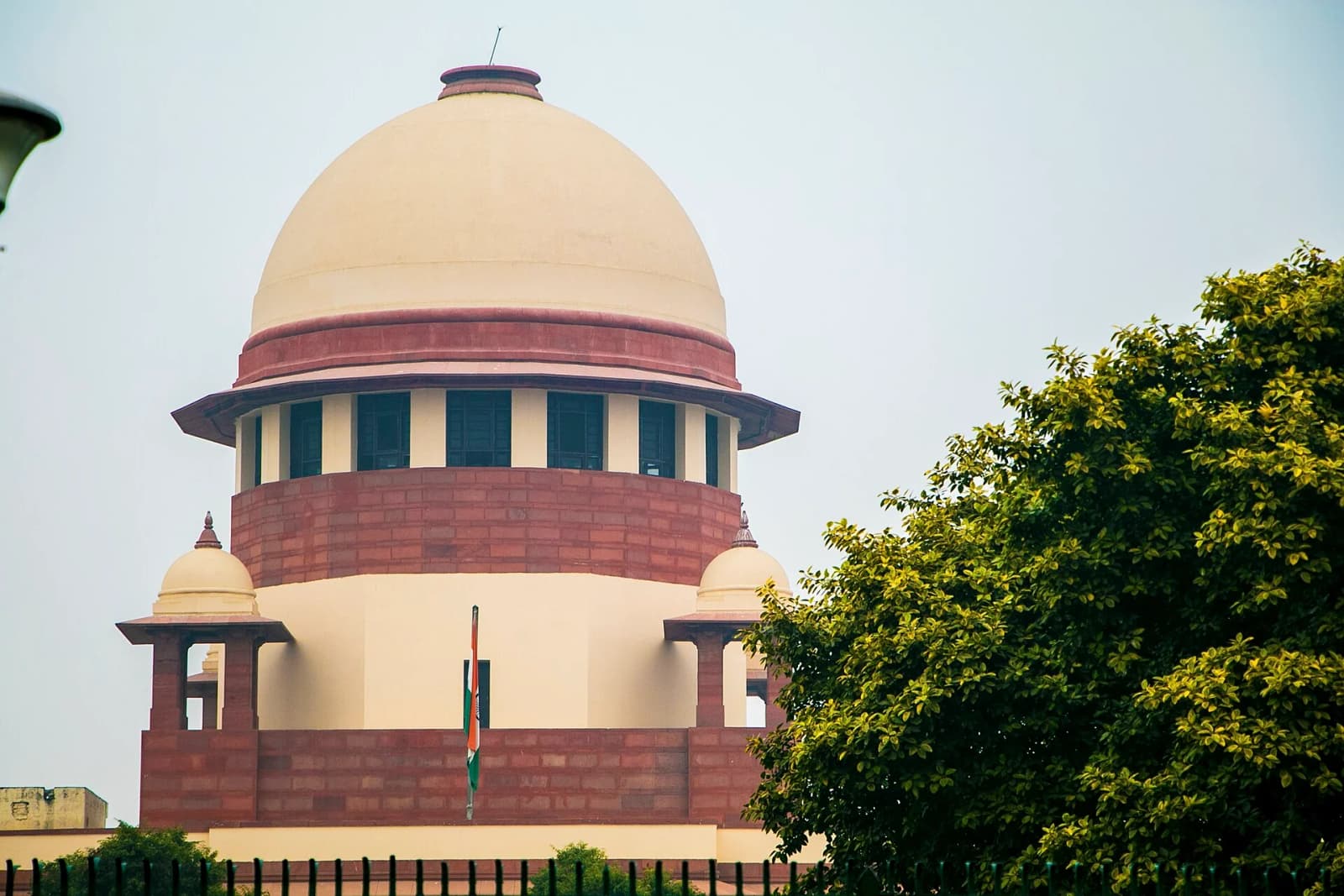
The Supreme Court of India on 27 November 2026 closed a four-year-old public interest litigation (PIL) by financial journalist Sucheta Dalal that sought a single, searchable system to help heirs and nominees trace the money and investments of people who have died. A bench of Justice Vikram Nath and Justice R. Mahadevan in New Delhi said the steps already taken by the Union government, the Reserve Bank of India (RBI) and the Securities and Exchange Board of India (SEBI) meant no further court directions were needed, according to a report by the legal news website LiveLaw.
The court had reserved its order on 17 November. While disposing of the case, Sucheta Dalal v. Union of India (Writ Petition (Civil) No. 185 of 2022), the bench praised the petition as a responsible use of PIL that was not filed for personal benefit, and asked the authorities to keep improving how accessible, efficient and transparent their claim systems are.
What did the petition ask for?
The petition asked for a centralised online database through which legal heirs could find unclaimed bank deposits, shares, dividends, mutual fund units, insurance money and provident fund balances belonging to a deceased person. Money that lies unclaimed for long periods is moved into official pools such as the RBI's Depositor Education and Awareness Fund (DEAF) and the Investor Education and Protection Fund (IEPF), and families often do not know where to look.
Earlier in the case, the court had asked the Centre and the RBI why heirs could not simply be told about the accounts of a deceased relative, while also weighing concerns about privacy and impersonation.
What the government and regulators told the court
As reported by LiveLaw, the authorities placed the following on record:
- Ministry of Corporate Affairs: more than 3 lakh claims had been processed through the IEPF portal up to March 2026, with about 10% still pending. Unclaimed dividends of Rs 52.85 crore and 3.58 crore shares were transferred in 2025-26.
- Department of Financial Services: a three-month national drive titled "Your Money, Your Right", run from October to December 2025 across deposits, insurance, mutual funds, dividends and shares, had returned about Rs 6,453 crore to rightful owners as of 18 April 2026. It also cited the 2025 banking law amendment allowing up to four nominees.
- RBI: its UDGAM portal for searching unclaimed deposits has 30 banks on board, covering about 90% of unclaimed deposits.
- SEBI: its MITRA platform helps investors, nominees and heirs trace inactive or unclaimed mutual fund folios, backed by awareness campaigns.
Why the petitioner said gaps remain
Advocate Prashant Bhushan, appearing for Dalal, argued that no effective step had been taken for insurance money. He also said UDGAM still requires a user to know which bank held the account, whereas families need one database that lists all accounts once a deceased person's name is entered. The bench did not issue directions on these points but noted that individual grievances can be taken to the competent authority under the law.
Why it matters
For many households, the death of an earning member is followed by months of paperwork, and assets that nobody knows about can sit untouched for years. The court's order puts the government's and regulators' figures on the judicial record, but it ends court supervision. Whether a single search across banks, insurers, depositories and provident fund bodies is ever built now rests with the Centre and the regulators.
What happens next?
The petition stands disposed of with no further monitoring by the court. Families with a specific claim that is stuck can still approach the bank, company, insurer or regulator concerned, and then the competent authority under the law, as the bench noted.
According to Bar & Bench, the bench also gave Dalal liberty to raise specific grievances with the competent authority, including the Ministry of Social Justice and Empowerment, which handles the Senior Citizens' Welfare Fund, and to return to the court if she is not satisfied with the response.
Photo source · Subhashish Panigrahi, CC BY-SA 4.0