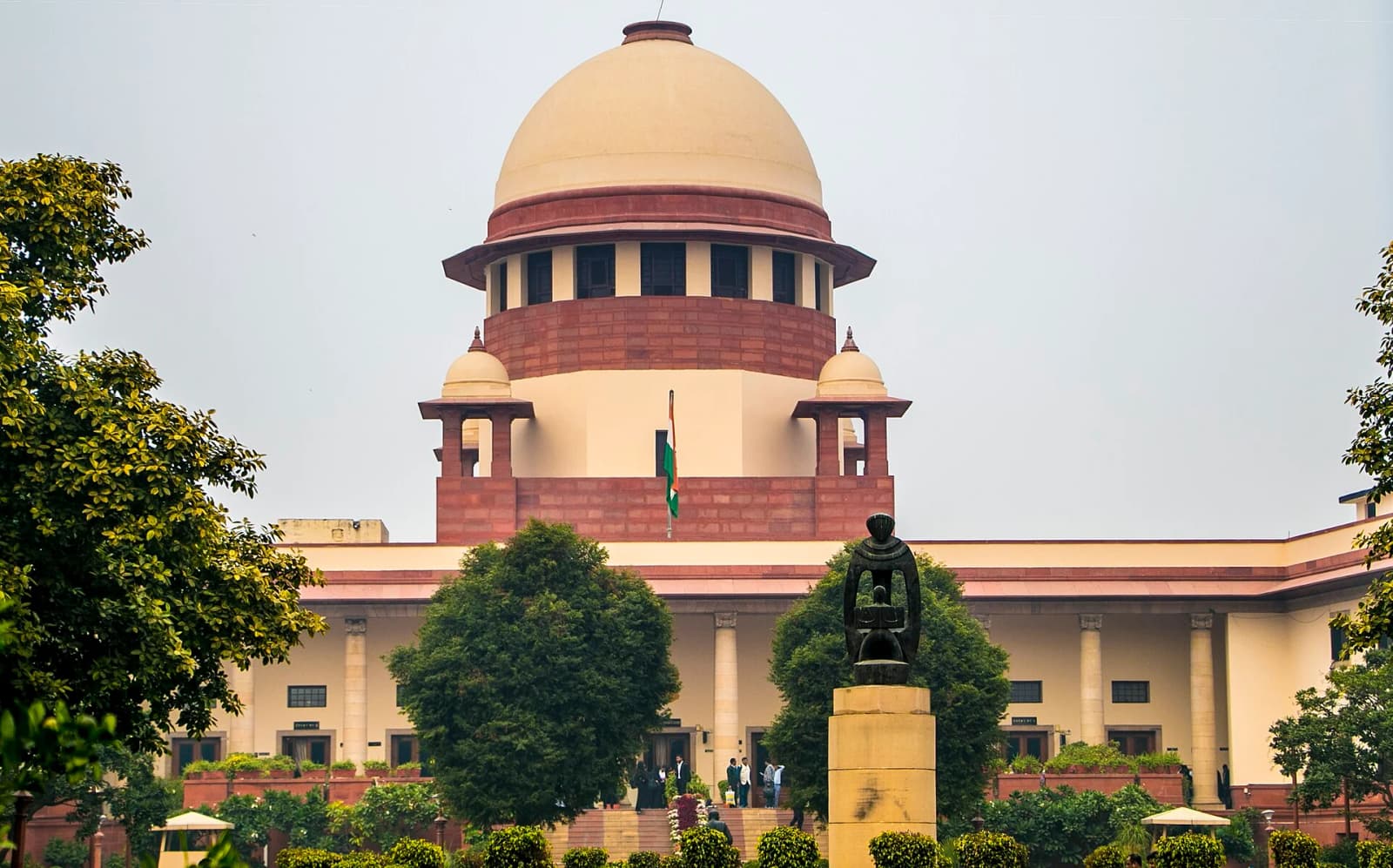
The Supreme Court of India has put on hold a Kerala High Court judgment that cleared the state government's plan to abolish the Kerala Police Officers' Association (KPOA) and move its members into two other police associations, LiveLaw reported on 24 November 2026. A bench of Justice B.V. Nagarathna and Justice Sanjeev Sachdeva stayed the High Court Division Bench ruling of 12 November 2026.
The stay means the KPOA's abolition and the transfer of its members stay on hold while the top court hears the association's challenge. The petition is listed as The Kerala Police Officers Association vs State of Kerala, SLP(C) No. 40131-40132/2026. The exact date of the order and the next hearing date were not stated in the reports checked.
What did the Kerala government order?
Kerala has three recognised police associations: the Kerala Police Association (KPA), the KPOA and the Kerala Police Senior Officers' Association (KPSOA). A government order dated 27 July 2026 decided to abolish the KPOA. Civil Police Officers, Senior Civil Police Officers, Grade Assistant Sub Inspectors, Assistant Sub Inspectors and Grade Sub Inspectors were to join the KPA. Directly recruited Sub Inspectors and officers in the promotional line, including Inspectors, Deputy Superintendents of Police and non-IPS Superintendents of Police, were to join the KPSOA.
According to a July 2026 report by Northlines, the order also split the KPOA's bank accounts, deposits and other assets 60:40 between the KPA and the KPSOA, and provided for ad-hoc committees to take over the association. The report said the KPOA had nearly 11,000 members.
How did the High Court rule?
The associations argued that they function under government-approved bylaws that cannot be changed against those rules, and that the right to form associations under Article 19(1)(c) of the Constitution includes the right to keep a chosen membership. A Single Judge of the High Court quashed the government order, holding it contrary to the bylaws and noting that Rule 8 of the Police Forces (Restriction of Rights) Rules, 1966, requires a chance to make a representation before an association's recognition is withdrawn.
On 12 November, a Division Bench of Justice A.K. Jayasankaran Nambiar and Justice Preeta A.K. reversed that decision on the State's appeals. It held that the associations were created by a 1979 government order, with membership fixed by rank rather than personal choice, and that the restructuring did not violate Article 19(1)(c). The bench said the associations were "not voluntarily constituted bodies in which members exercised individual choice".
Why does this case matter?
The Constitution allows the rights of members of police forces to form associations to be restricted, and the dispute tests how far a state government can reorganise recognised police bodies without their consent. When the High Court first stayed the order in July, Northlines reported, the state argued that the KPSOA followed a National Police Commission recommendation and that the change would benefit the force, while then Leader of the Opposition Pinarayi Vijayan called the move undemocratic.
What happens next?
The Supreme Court will now examine the KPOA's appeal against the Division Bench ruling. Until it decides, the association continues to exist and its members are not to be moved into the KPA or the KPSOA. LawChakra also reported the stay on 24 November.
Photo source · Subhashish Panigrahi, CC BY-SA 4.0