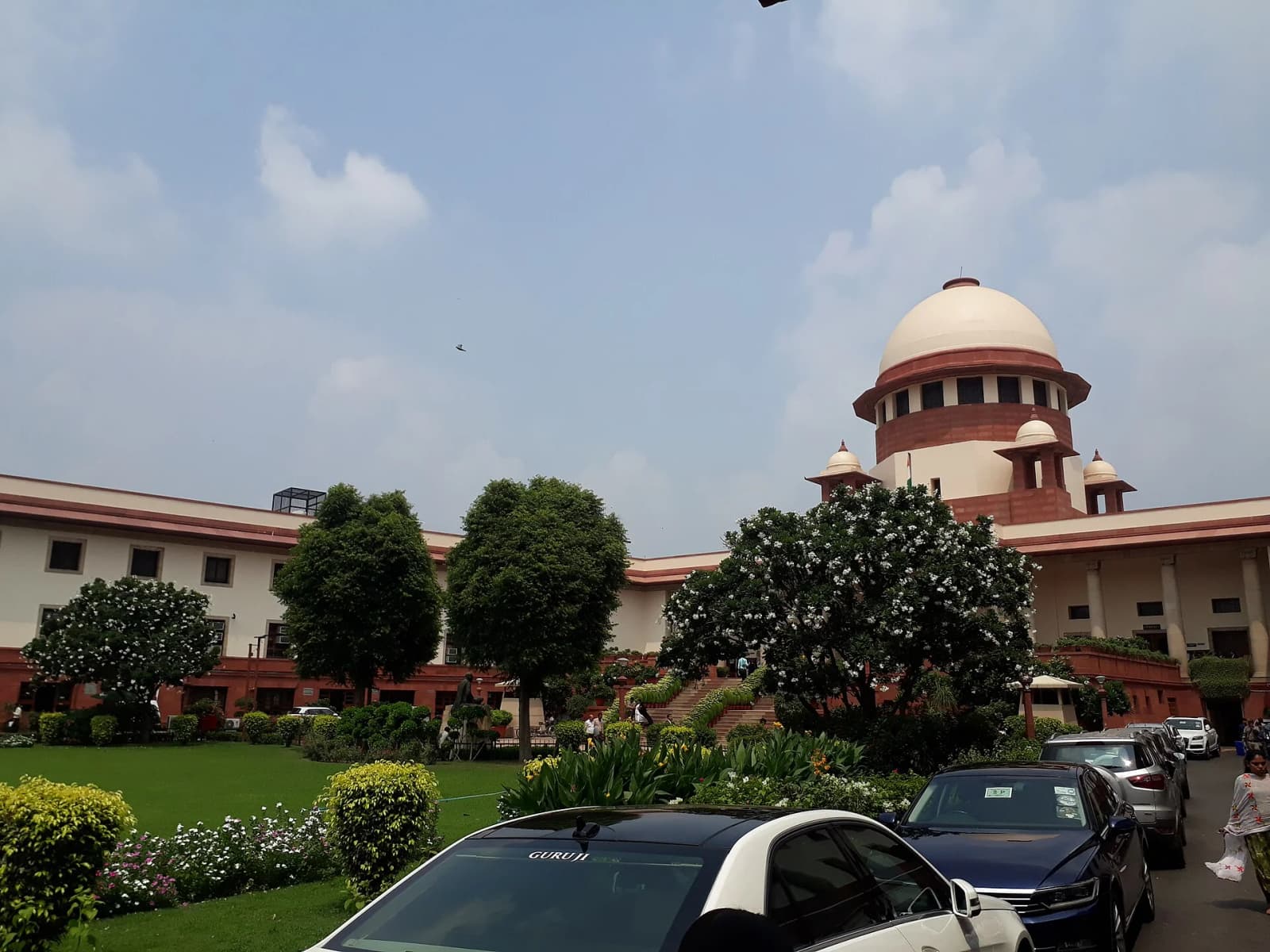
The Supreme Court of India on 19 November 2026 directed the Election Commission of India (ECI) and Delhi's Chief Electoral Officer (CEO) to verify a complaint that false Form 7 applications were filed to strike genuine voters off the electoral roll in Delhi's Mustafabad Assembly constituency during the ongoing Special Intensive Revision (SIR), and to take remedial steps if the allegations are found true.
A bench of Chief Justice of India Surya Kant, Justice Joymalya Bagchi and Justice V Mohana disposed of the writ petition filed by Congress leader Ali Mehdi without expressing any view on the merits, according to a LiveLaw report of the hearing. The court asked the authorities to verify the allegation and take remedial measures strictly in accordance with law.
What did the petitioner allege?
Mr Mehdi alleged that deletion objections in Mustafabad were not filed by genuine objectors and targeted real voters. Form 7 is the form used to object to a person's inclusion in the electoral roll, for example on the ground that the voter has died or moved away.
His petition relied on a report in The Hindu, which found that most of the Booth Level Agents (BLAs) in whose names the forms were filed denied signing them, and that some voters marked as dead or shifted were alive and living at their listed addresses. According to LiveLaw, his counsel told the court that 36 of the 37 Form 7 applications filed were false, and said a report had found 28 electors facing deletion living at the addresses on record. He also told the bench that the police had refused to register a First Information Report (FIR) on his complaint.
What did the judges say?
The bench observed that the ECI has no control over BLAs because they are agents of political parties. Justice Bagchi remarked that if a BLA files a fraudulent application, the commission can blacklist that agent, but its powers go no further. On the refusal to register an FIR, Justice Bagchi told the petitioner to approach a magistrate.
Noting that Mr Mehdi had already complained to the police, the ECI and the CEO, the court declined to examine the allegations itself and left it to the election authorities to check them. LiveLaw's report does not record any formal response from the ECI or the Delhi CEO at the hearing.
Background to the Delhi SIR dispute
The complaint is one of several challenges to the revision of Delhi's electoral rolls now before the court. MapMyTimes earlier reported on petitioners seeking the Supreme Court's directions on alleged Form 7 misuse in Delhi.
A Siasat Daily report dated 30 October 2026, citing The Hindu, said Mustafabad had received 843 objections since 31 August and that 28 residents had been marked as dead or permanently shifted through Form 7 applications, at least 19 of whom had valid identity documents and were found at their homes. Petitioners also told the court that, in a separate Uttar Pradesh SIR matter, the bench had earlier asked the ECI to act against bulk filing of fake Form 7s.
Why it matters
A wrongly accepted Form 7 can remove an eligible citizen from the voter list, and in practice the burden of getting back on the roll falls on the voter. The order does not decide whether the Mustafabad objections were false, but it places responsibility on the ECI and the Delhi CEO to check the specific complaint and correct the roll if needed.
What happens next?
The petition has been disposed of, so no further Supreme Court hearing is scheduled in this case. The ECI and the Delhi CEO are now expected to verify the complaint, while the petitioner may pursue his demand for a criminal case before a magistrate, as the bench suggested. Other challenges to the Delhi SIR remain pending before the court.
Photo source · Pinakpani, CC BY-SA 4.0