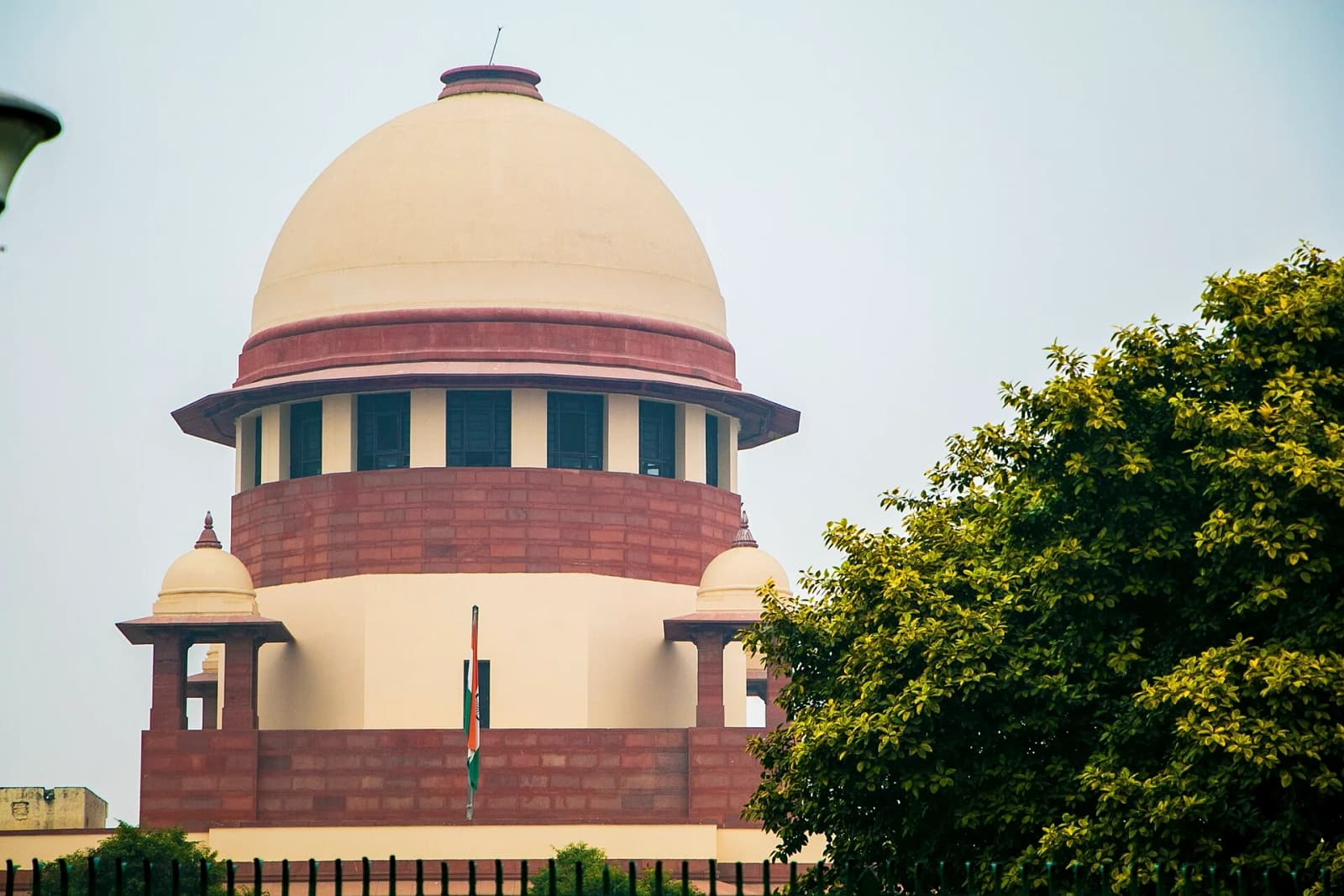
The Supreme Court of India ruled in New Delhi on 27 November 2026 that a Debts Recovery Tribunal (DRT) which issues a recovery certificate can itself enforce it against a borrower's property located outside its territorial limits, and is not obliged to send the certificate to the tribunal where the property sits.
A bench of Justice Pamidighantam Sri Narasimha and Justice Alok Aradhe, with Justice Aradhe writing the judgment, allowed an appeal by State Bank of India (SBI) against a Madras High Court decision that had halted recovery proceedings, LiveLaw reported. The case is Assistant General Manager, State Bank of India v. S. Loganathan and Others.
What did the Supreme Court decide?
The court held that the word "may" in Section 19(23) of the Recovery of Debts and Bankruptcy Act, 1993 cannot be read as "shall", so transferring a recovery certificate to another tribunal for execution is a matter of discretion, not a legal requirement. It said a tribunal's power to decide a claim under Section 19(1) is separate from its power to execute a certificate, and that the Code of Civil Procedure, 1908 does not limit execution under the 1993 law.
"Where Parliament intended a territorial restriction on execution under the Code, it enacted one expressly," the bench observed, according to a detailed report by Law Trend. The judges said the transfer provision "must not be permitted to become a means of delaying the fruits of an adjudication."
The ruling endorsed earlier views of the Gujarat and Bombay High Courts and said contrary decisions of the Delhi, Punjab and Haryana, and Calcutta High Courts did not state the correct law.
How did the case reach the court?
According to the reports, the borrower and his late wife were partners in a firm that took credit facilities from SBI's Commercial Branch in Tiruchirappalli between 2004 and 2006 and, as guarantors, mortgaged two properties in K. Sathanur village in Tiruchirappalli district. That area falls under the jurisdiction of DRT Madurai, where SBI first filed for recovery in 2010.
At the borrower's request, the case was moved to tribunals in Chennai. On 16 September 2020, DRT Chennai held SBI entitled to Rs 1,50,77,944, and a recovery certificate was issued on 7 January 2022. The tribunal's Recovery Officer attached both properties and took physical possession of one. On 22 August 2025, the Madras High Court ruled that only DRT Madurai could execute the certificate.
The Supreme Court set that order aside, restored the recovery proceedings including an attachment order of 13 January 2023, and noted that the borrower could show no prejudice since the move to Chennai had been at his own request.
Safeguards for borrowers
The bench laid down a five-step test that tribunals must follow when deciding whether to keep or transfer execution. They must establish the property's location, ownership and jurisdiction; identify what execution involves, such as occupation, tenancy or third-party claims; check whether their own Recovery Officer can act with local help; weigh convenience, speed, cost and prejudice; and record a reasoned order.
The decision should ordinarily be taken when the certificate is issued and, in any case, before any coercive step against property outside the tribunal's limits, with notice to both the lender and the borrower. The Presiding Officer, not the Recovery Officer, must exercise the discretion, the court said.
Why it matters
Debts Recovery Tribunals handle loan recovery cases filed by banks and financial institutions across India; MapMyTimes recently reported on DRT Jaipur's plan for a special Lok Adalat to settle 4,000 loan cases. The judgment settles a split among High Courts on whether execution must move to the tribunal where the property is located. For borrowers, the procedural safeguards mean a tribunal must hear them before acting against property outside its area.
What happens next
The court directed the Recovery Officer of DRT-III, Chennai, to resume execution from where it stopped, follow the new test and safeguards, and preferably finish within six months. It declined to decide the borrower's other pleas, including on fraud, and imposed no costs.
Photo source · Subhashish Panigrahi, CC BY-SA 4.0