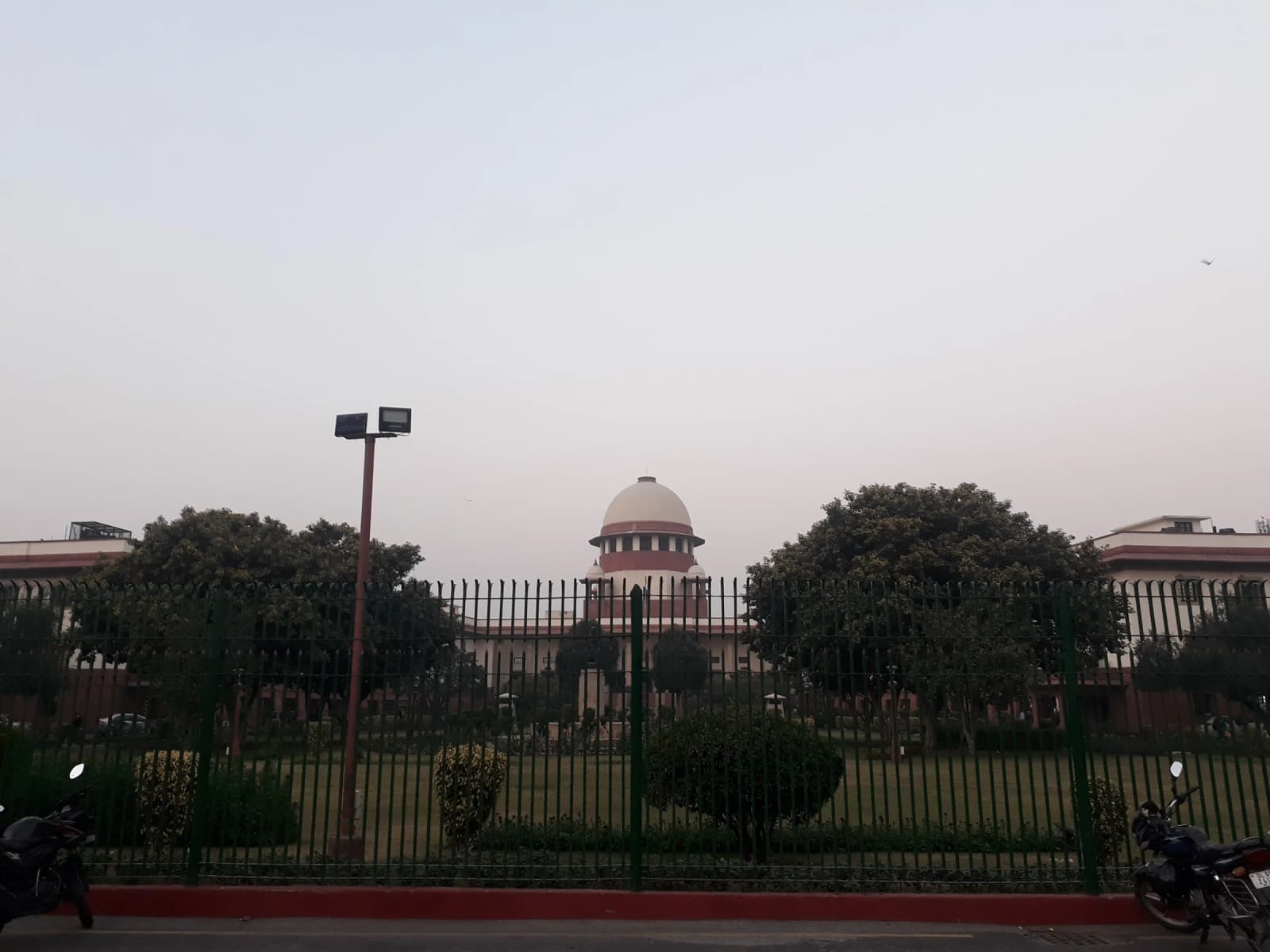
The Supreme Court of India on 19 November 2026 dismissed a petition by the Enforcement Directorate (ED) challenging the interim bail granted to Samajwadi Party leader Mohammad Azam Khan in a money laundering case, leaving in place an Allahabad High Court order passed two days earlier.
A bench of Justice M.M. Sundresh and Justice P.B. Varale said it would not interfere because the High Court had only granted interim relief, LiveLaw reported. The bench added that the High Court's observations were prima facie and should not influence the final decision in the case.
What did the Allahabad High Court order?
The Allahabad High Court granted Khan interim bail on 17 November 2026 after finding that the ED had not given him written grounds of arrest when it took him into custody on 31 October. A division bench of Justice Rajiv Gupta and Justice Devendra Singh also said the timing of the arrest "clearly underlines the motivated and mala fide nature of the present proceedings", according to a PTI report carried by ThePrint.
Khan, 78, a 10-time MLA from Rampur, was arrested outside the Rampur district jail gate shortly after he was released on bail in a separate case involving his son's alleged dual PAN cards. PTI reported that he walked out of Dasna jail in Hapur district on 18 November, a day after the High Court order.
What is the ED case about?
The money laundering probe is linked to the Maulana Mohammad Ali Jauhar Trust, which Khan founded, and concerns alleged diversion of government funds and irregularities in land acquisition and the construction of Mohammad Ali Jauhar University in Rampur, PTI reported. Khan's counsel told the High Court the case was registered in August 2019. Khan has described the proceedings as political vendetta; the allegations have not been tested at trial.
What did the ED argue in the Supreme Court?
Additional Solicitor General S.V. Raju, appearing for the ED, argued that the grounds of arrest had in fact been supplied and that Khan had refused to accept them outside the jail. He objected to the High Court's prima facie finding of mala fides, said the order had been "passed hastily" and that the agency "did not even have time to file a full reply". He also argued that the interim order effectively operated as a final one.
Senior Advocate Kapil Sibal appeared for Khan. Before the High Court, Sibal had argued that the arrest violated Article 22(1) of the Constitution and Section 19(1) of the Prevention of Money Laundering Act (PMLA), which require that an arrested person be told the grounds of arrest.
Earlier in the week, a bench led by Chief Justice of India Surya Kant had declined to stay the High Court order immediately but agreed to list the ED's plea urgently. According to The Tribune's PTI report, the bench of Justices Sundresh and Varale then dismissed the plea on Thursday.
Why does this matter?
The case is the latest in which courts have tested whether investigating agencies met the procedural safeguard of giving an accused written grounds of arrest under the PMLA. The Supreme Court's ruling does not decide that question in Khan's case: it only declines to disturb a temporary order, and it specifically kept the High Court's remarks from binding the final hearing.
What happens next?
The High Court gave the ED one week to file a detailed counter-affidavit and Khan 10 days to file a rejoinder, and listed the matter for 10 December 2026, when it is expected to take up the main challenge to the arrest. Khan remains on interim bail until then.
Photo source · Pinakpani, CC BY-SA 4.0