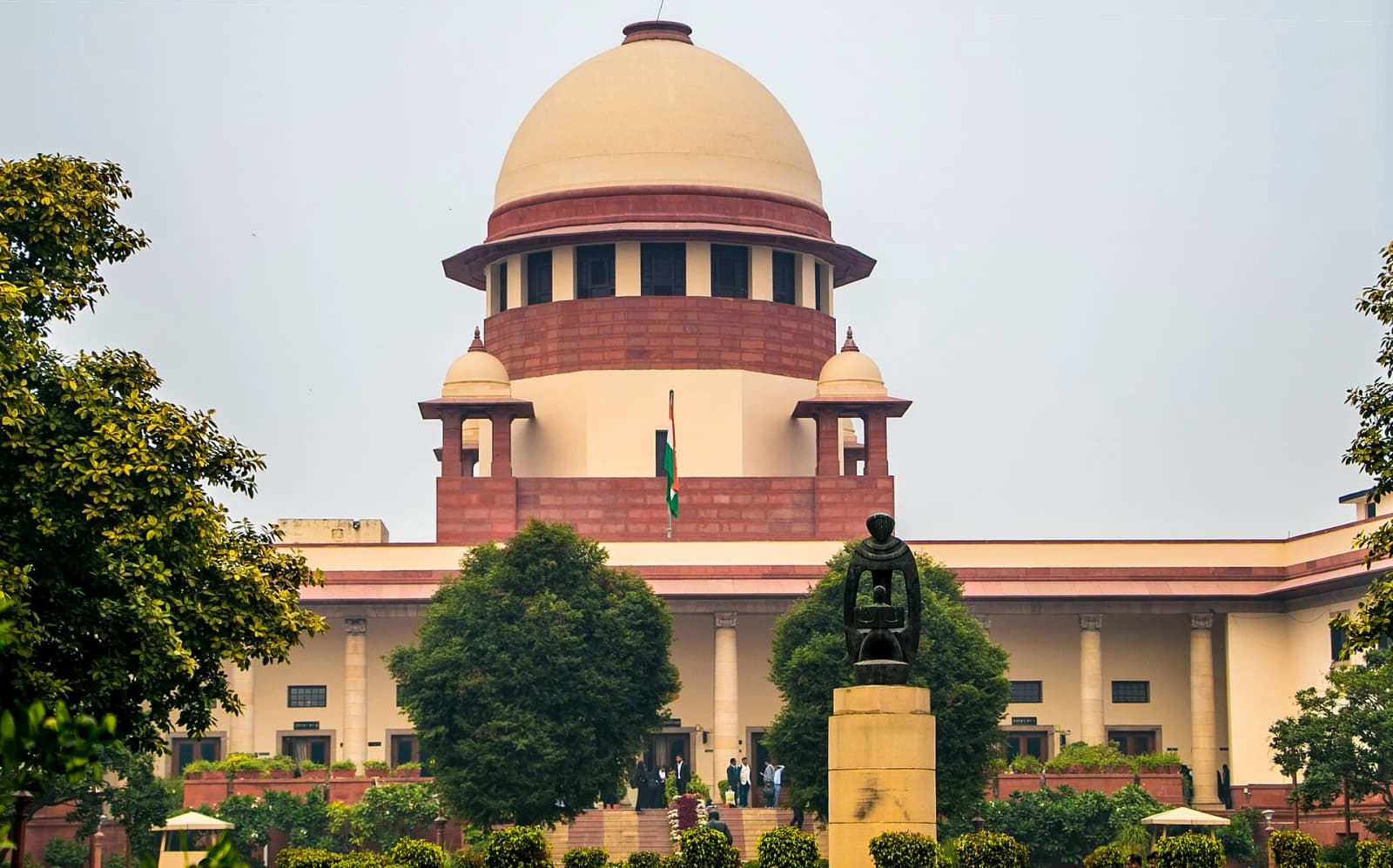
The Supreme Court of India has asked the Centre and the states to consider a complete ban on the retail sale of acid by private sellers, including online and doorstep delivery, and to allow medical sales only through pharmacies attached to government hospitals. The order, passed on 23 November 2026 by a bench of Chief Justice of India Surya Kant, Justice Joymalya Bagchi and Justice V. Mohana in New Delhi, was reported by legal news outlets on 28 November 2026.
The bench was hearing a public interest litigation filed by Shaheen Malik, an acid attack survivor who was attacked in 2009 and argued the matter in person.
What exactly has the Supreme Court proposed?
The court has asked governments to frame rules or laws that would stop private persons from selling acid at retail, according to reports of the order by LawBeat and LawChakra. Where acid is needed for medical use, it could be sold only by pharmacies or medical stores attached to government hospitals, and only with prior written approval from the Chief Medical Officer or Civil Surgeon.
Every permitted sale would be logged on a prescribed form recording the buyer's Aadhaar or another government photo identity card, the quantity, the purpose, and the buyer's address and contact details. The buyer would sign a declaration that the acid will be used only for the stated purpose.
Who would be held responsible if acid is misused?
The buyer. The bench suggested that a purchaser should be liable for any diversion or misuse of the acid, including misuse by someone else, whether or not the buyer knew about it. The form may also ask for details of the buyer's immovable property, which could be attached under law to pay for a victim's treatment or compensation.
Education and faster trials
The court also asked the Union government, through the Ministry of Education and the Ministry of Health and Family Welfare, to consider setting up an expert committee to prepare a model module on preventing acid attacks, emergency response and survivors' rights for schools and colleges. The committee would consult bodies including the National Council of Educational Research and Training (NCERT), the University Grants Commission (UGC), the National Medical Commission, the National Legal Services Authority (NALSA) and the National Commission for Women, as well as burn-care experts and survivor-led groups.
Separately, the bench directed the Jammu and Kashmir High Court to expedite five pending trials in cases where victims were allegedly forced to swallow acid.
How did the case reach this point?
The order builds on earlier hearings in the same petition. In August, the court asked the Centre whether a complete retail ban should be imposed, and in October it found that existing guidelines on acid sales had not worked and sought an expert review, LawChakra reported. Solicitor General Tushar Mehta, appearing for the Union government, pointed out that criminal procedure law already lets courts order accused persons to pay compensation to victims.
Malik's own case has become an example of delay. The court had earlier described the 15-year wait in her prosecution as a mockery of the legal system. "In 2009, the attack took place and till 2019 nothing happened. I had lost all hope in law and justice," she told the court, according to LawBeat, which also reported that the Chief Justice said the court would ensure she had a good lawyer when her case is taken up in the High Court.
Is this a binding ban?
Not yet. The order asks the Union and state governments to consider a comprehensive framework through legislation or rules; a ban would take effect only once governments act on it. No date for the next hearing has been reported.
Photo source · Subhashish Panigrahi, CC BY-SA 4.0