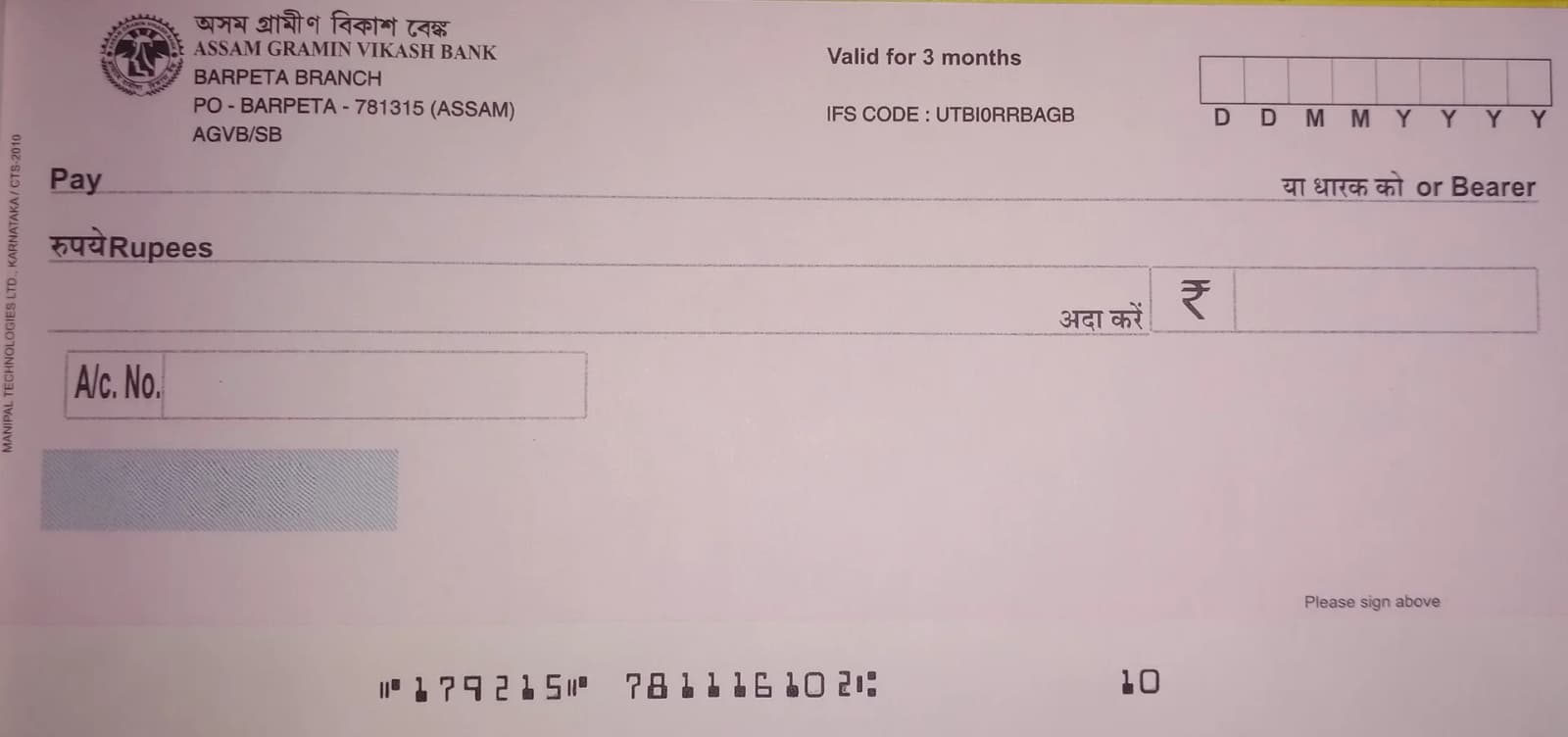
An asset reconstruction company (ARC) that buys a bank's bad loan can take the bank's place as the complainant in a pending cheque bounce case, the Supreme Court has held, but only if it can strictly prove at trial that it is the "holder in due course" of the dishonoured cheques. The ruling, by a bench of Justice Dipankar Datta and Justice Sheel Nagu, was reported on Wednesday, 18 November, as 2026 LiveLaw (SC) 1166.
The court dismissed a special leave petition filed by Kishore Avarsekar and others against Assets Care and Reconstruction Enterprises Ltd, leaving the prosecution against them to continue before the magistrate.
How the case reached the Supreme Court
The dispute began with three post-dated cheques given to Axis Bank, which were later dishonoured. Axis Bank then assigned the loan to the ARC. According to LiveLaw's report of the judgment, the assignment deed expressly covered the three cheques, the bank's return memos, the demand notice issued under Section 138 of the Negotiable Instruments Act, and the right to carry on pending proceedings.
In 2018, a Metropolitan Magistrate allowed the ARC to be substituted as the complainant. A Sessions Court rejected the accused persons' revision petition in 2021, and the Bombay High Court turned down their writ petition in August 2026, after which they moved the top court.
What the accused argued
The petitioners said there was no settled Supreme Court ruling on the point and relied on two Bombay High Court decisions. They argued that an ARC is neither the payee named on the cheque nor a holder in due course, and that the phrase "other proceedings of whatever nature" in the SARFAESI Act should be read narrowly, alongside words such as "suit" and "appeal".
What the court decided
The bench rejected the narrow reading. It held that the words "other proceeding of whatever nature" in Section 5 of the SARFAESI Act are "deliberately unqualified" and can take in a cheque bounce complaint linked to a financial asset the ARC has acquired, even though such a complaint is criminal in form. It also said the two Bombay High Court rulings dealt with different statutory provisions, and that the High Court "was right in not being guided thereby."
The court explained that Section 5 of the SARFAESI Act vests the bank's rights in the ARC, keeps pending proceedings alive, and lays down a substitution procedure that requires the original lender's consent. Under the law, it noted, "the ARC is deemed to be the lender."
The condition attached
An assignment, however, does not by itself turn an ARC into the payee or a holder in due course, the bench said. It held that the ARC "has to be put to strict proof" on that point. According to the report, the ARC must show that the cheques themselves, and not just the underlying debt, were transferred to it; that an endorsement or assignment makes it a holder in due course under Sections 8 and 9 of the Negotiable Instruments Act; that the ingredients of a Section 138 offence are met; and that it is not trying to improve on the original complainant's case.
These are questions of fact to be settled on evidence at trial, the court said.
Why it matters and what's next
The ruling settles that a loan sale to an ARC does not automatically end a cheque bounce prosecution started by a bank, while placing the burden of proof squarely on the ARC. The accused remain free to raise their other legal objections before the trial magistrate, where the case will now proceed.
PS · Chiring chandan, CC BY-SA 4.0