Eleven days after an explosion tore a crater beneath a railway line near the India–Pakistan border in Rajasthan, investigators say they have made their first arrests. A 21-year-old woman and a 22-year-old man from Gurdaspur in Punjab have been held over the 3 November blast on the Anupgarh–Suratgarh section in Sri Ganganagar district, and police suspect handlers in Pakistan directed the plot. Several national outlets reported the arrests on 14 and 15 November, and the case is now among the most-followed security stories in the country.
The arrested pair have been named in reports as Mahakdeep Kaur and Davinder Singh. Some outlets spell his name Devendra. The Week reported their ages as 21 and 22. According to reports, they were picked up in a joint operation by the Rajasthan Anti-Terrorism Squad (ATS) and Rajasthan Police, working with police in Gurdaspur, and have been brought to Rajasthan for questioning.
What happened on the night of 3 November
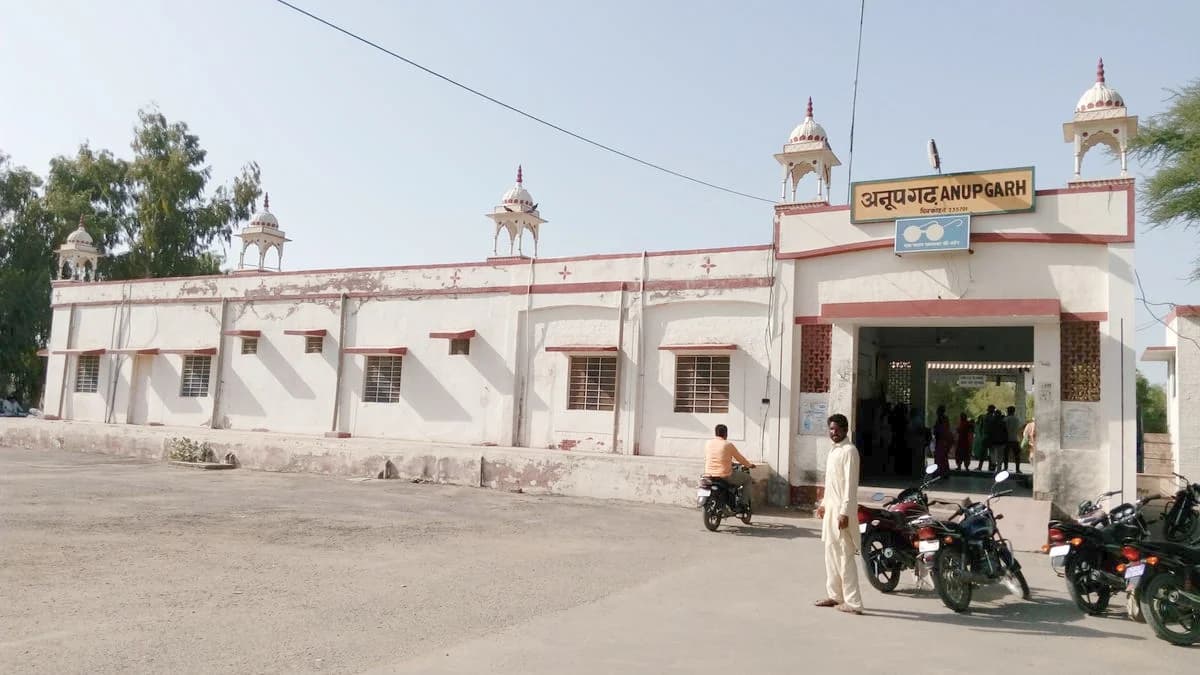
PTI reported that the explosion went off at about 9:45 pm on Tuesday, 3 November, near 50 GB village on the Suratgarh–Anupgarh route. The spot falls under the Ramsinghpur police station, and the Free Press Journal reported that it is roughly 40 km from the international border. Police told PTI that a passenger train had crossed the stretch about 45 minutes before the blast. No one was hurt.
The blast damaged two concrete supports beneath the track and left a hole about two feet deep. Villagers living roughly 200 metres away heard it, ran to the line and alerted the authorities. As a precaution, North Western Railway cancelled four services on the Suratgarh–Anupgarh section the next day, PTI reported.
Teams from several agencies arrived within hours, including local police, the ATS, the CID, forensic experts and a dog squad. Railway Protection Force Inspector General Jyoti Kumar told PTI that the local police were leading the investigation and that "teams from the NIA and ATS have also arrived."
Early caution from officials
In the first days after the blast, officials avoided drawing conclusions. Sri Ganganagar Superintendent of Police Harishankar said it was "too early to ascertain the exact nature of the incident." He also said police had found no established link to roughly 7.5 kg of RDX recovered earlier in the border region.
That earlier haul had already put the district on alert. The Free Press Journal reported that in October, security agencies recovered arms and explosives in the Rawla Mandi area of Sri Ganganagar, including RDX, pistols and hundreds of cartridges. The material was reportedly dropped from Pakistan by drones.
Union Railways Minister Ashwini Vaishnaw travelled to Jaipur on 5 November and discussed the case with the Rajasthan Chief Minister, the Director General of Police and the Chief Secretary. "All aspects are being examined as part of the preliminary investigation and review," he said. He added that once initial evidence was available, the state police would decide whether the National Investigation Agency needed to be involved.
What investigators now allege
Reports published on 15 November set out the police's account of the conspiracy. Officials have not yet placed this account before a court, so it remains unproven.
- Pakistan-based handlers: The Week, citing an NDTV report that quoted police officials, said Kaur was in touch with two handlers in Pakistan known as "Chacha" and "Shah." Several outlets reported that the handler called "Shah" gave the pair the job of carrying out the blast.
- How she was allegedly drawn in: According to The Week, the handlers won Kaur's trust through romantic conversations and offers of money. Police sources described this as a method often used by Pakistan's Inter-Services Intelligence (ISI).
- Money trail: Daijiworld reported that police allegedly found money sent from Pakistan to a bank account in Kaur's name. Reports differ on the amount, and it has not been officially confirmed.
- Weapons: Police reportedly recovered two pistols and 46 cartridges from the accused. Investigators suspect the weapons came from across the border.
- Repeated visits: The Daily Jagran, citing a News18 report, said the pair first visited Sri Ganganagar around 6 October and made a failed attempt to plant explosives on 12–13 October. They succeeded on their third trip, on 3 November. According to the report, they arrived without any material, and the IED was handed to them in packets at several points.
The Daily Jagran reported that Bikaner Range Inspector General Om Prakash and SP Harishankar were questioning the accused themselves. Reports also said that several other people suspected of helping the pair have been detained for questioning. None of them has been named.
Why this matters
The Anupgarh–Suratgarh line runs through a sensitive stretch close to the western border. It carries passenger trains used by local residents. Police allege the plot was aimed at a passenger train and failed only because the train had already passed. If that is right, the gap between a damaged track and a major disaster was a matter of minutes.
The case also shows the tactics investigators say are being used. According to police accounts in the reports, the handlers recruited young people over the internet with romance and small payments, rather than relying on trained operatives. Police say the pair travelled to the site more than once and collected explosive packets locally, which suggests a wider support network that agencies are still trying to map.
For passengers, the immediate disruption has been limited to the precautionary cancellations in the days after the blast. No further suspension of services on the route has been reported.
What is established and what is not
Established: An explosion damaged the track near 50 GB village at about 9:45 pm on 3 November, roughly 45 minutes after a passenger train had passed, and no one was hurt. Central and state agencies, including the NIA and ATS, visited the site. Two Gurdaspur residents have been arrested, and police have publicly said they suspect a Pakistan link.
Not yet established: No formal charges have been made public, and no named officer has given an on-record account of the evidence linking the pair to the blast. The exact amount of money allegedly paid has not been officially confirmed. It is also unclear whether the case will be handed to the NIA, and how many others were involved. Details such as the timeline of visits and the handlers' nicknames come from police sources quoted in the media, not from a formal statement.
What happens next
Investigators are tracing the money transfers and the route by which the weapons were supplied. They are also trying to work out how the accused received instructions from Pakistan, according to reports. More arrests are expected. The accused are likely to be produced before a court in Rajasthan for remand. Separately, a decision on whether the NIA should formally take over the probe remains with the authorities, as Vaishnaw indicated earlier this month.
PS · Kaushal Bishnoi, CC BY-SA 4.0