South Korea's Supreme Court on 19 November 2026 overturned part of the insurrection conviction of former Prime Minister Han Duck-soo over his role in former President Yoon Suk Yeol's December 2024 martial law declaration, and sent the case back to the Seoul High Court. Han's 15-year prison sentence was set aside, but he remains in custody, according to Yonhap news agency, as carried by The Korea Times. In a separate ruling the same day, the court made final a four-year prison term for Yoon's wife, Kim Keon Hee.
What did the Supreme Court decide?
The court ruled that Han's conduct before the martial law declaration could not, on the evidence, be treated as proof that he meant to subvert the constitutional order. That part of the case centred on his proposal to convene a Cabinet meeting, which prosecutors said was meant to give the decree a veneer of procedural legitimacy.
According to Korea JoongAng Daily, the majority held that calling a Cabinet quorum was not in itself evidence of intent to help Yoon, and that prosecutors had not proven that intent beyond reasonable doubt. The majority said conduct before and after the declaration had to be assessed separately, and that legal principles must not bend because of how serious a crime is.
The court did not clear Han. It found no legal error in his convictions for making a false official document and for perjury, and said some of his conduct after the declaration could support a finding of intent. Yonhap reported that convictions for trying to collect Cabinet members' signatures on a martial law document, and for reviewing Yoon's order to cut power and water to some media outlets, were upheld.
Was the martial law itself ruled illegal?
Yes. The court said Yoon's 3 December 2024 declaration was unconstitutional and illegal. Chief Justice Cho Hee-dae said the decree "violates the basic rights of the people" and that there was "no question on its unconstitutionality and illegality", Yonhap reported.
How did the judges split?
The ruling was by majority, with three justices dissenting. The dissenters said Han knew the declaration was unconstitutional and illegal but still took part in the Cabinet deliberations. One dissenting justice said Han "took no action whatsoever" to stop it and accused the majority of giving him "a free pass", JoongAng Daily reported.
How did the case get here?
A special counsel team led by Cho Eun-suk indicted Han in August 2025. A Seoul district court sentenced him to 23 years in prison on 21 January 2026. In May, the Seoul High Court upheld the main convictions, including playing a key role in an insurrection, but acquitted him on some counts and cut the term to 15 years. The full bench of the Supreme Court took up the case in August, citing its historical importance.
What about Kim Keon Hee?
The Supreme Court finalised Kim's four-year prison sentence and a 50 million won fine. She was convicted over a Deutsch Motors stock price manipulation scheme and over accepting two Chanel bags and a Graff diamond necklace from a former Unification Church official seeking favours. JoongAng Daily said it is the first prison sentence on criminal charges against her to become final; she still faces a separate Supreme Court trial on other bribery charges.
What happens next?
The Seoul High Court must now decide afresh on Han's criminal responsibility on the insurrection charge. Han, who did not attend the hearing, is held at the Seoul Detention Center in Uiwang. The ruling came a day before his detention period was due to expire. Separately, an appeals court is scheduled to rule on 26 January on Yoon, who was sentenced to life imprisonment in February for leading an insurrection.
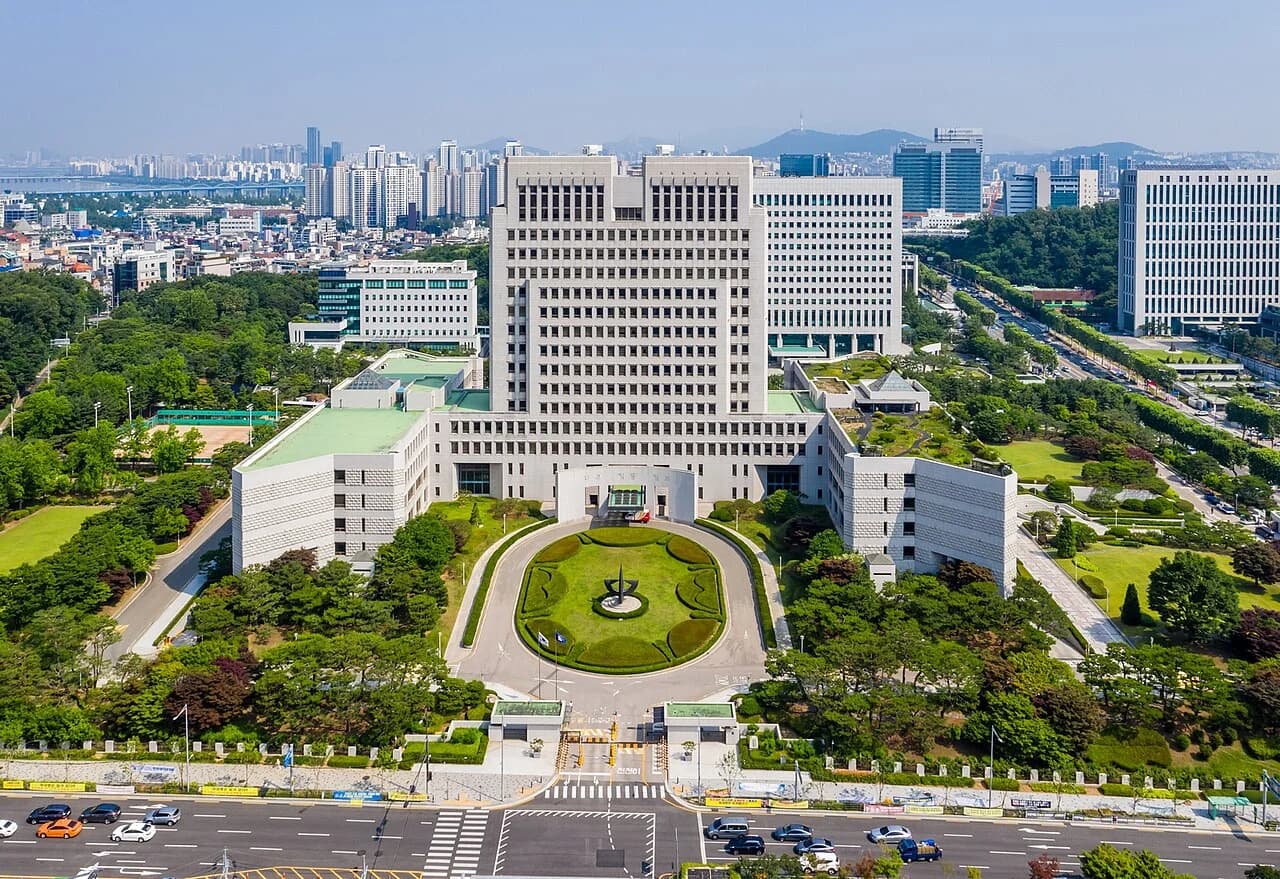
Photo source · Seoul Institute, CC BY 4.0