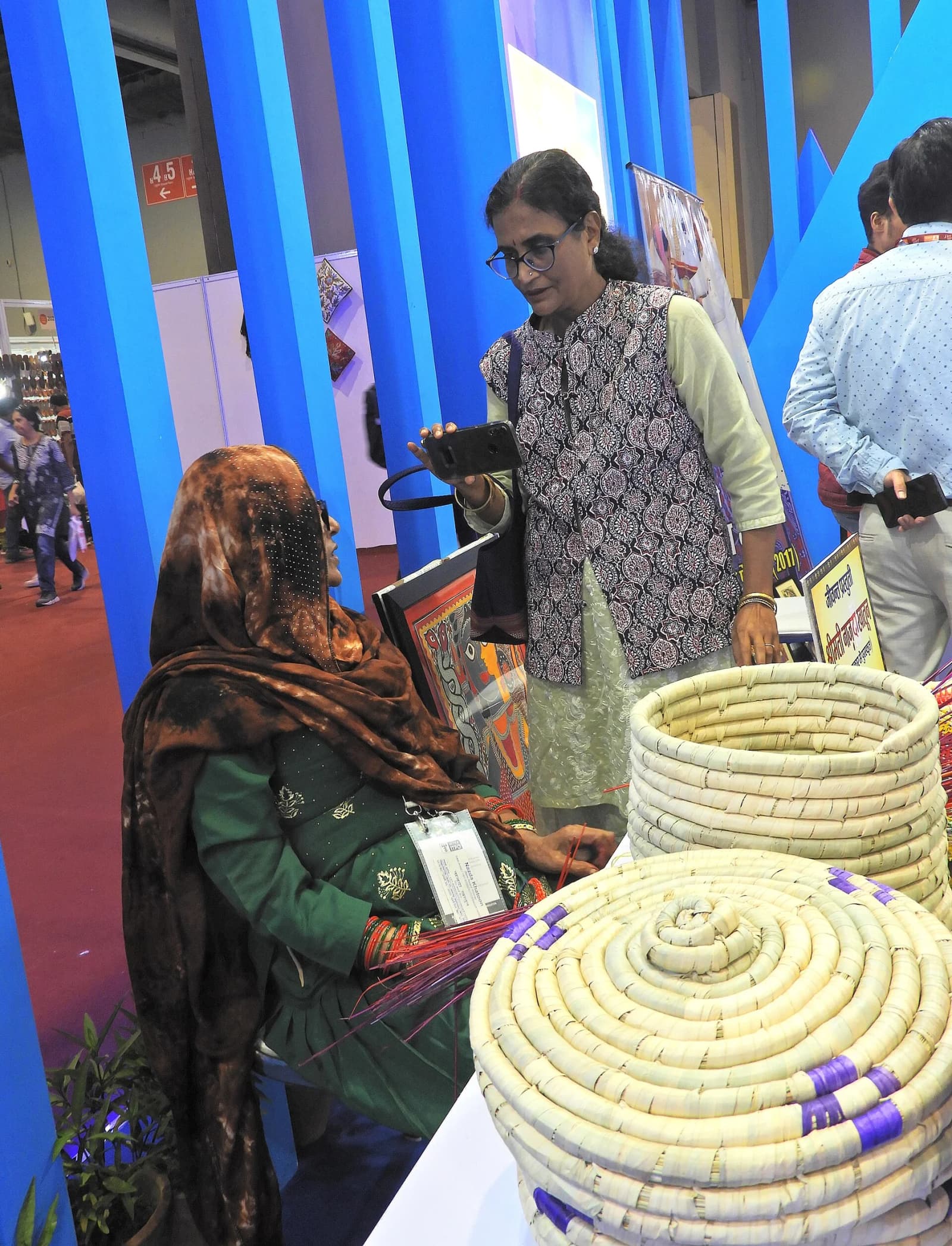
More than 130 artisans from 19 states are selling handicrafts, handloom goods and other traditional products from the Ministry of Social Justice and Empowerment's pavilion at the 45th India International Trade Fair (IITF) 2026 in New Delhi, the ministry said on Friday, 14 November. It is also using the pavilion to promote TULIP, its new brand for traditional artisans.
The fair is being held at Bharat Mandapam and opened on 13 November, according to the ministry. Its stall is in Hall No. 5, on the ground floor of the ITPO complex.
Who is taking part
The artisans have come through the ministry's three apex corporations: the National Scheduled Castes Finance and Development Corporation (NSFDC), the National Backward Classes Finance and Development Corporation (NBCFDC) and the National Safai Karamcharis Finance and Development Corporation (NSKFDC).
The ministry said the pavilion is meant to give artisans and entrepreneurs from Scheduled Castes, Backward Classes, Safai Mitras and De-Notified, Nomadic and Semi-Nomadic Tribes (DNTs) a national stage where they can exhibit their work and sell it directly to buyers.
A senior ministry official said the stalls carry a wide mix of handicrafts, handloom items and handmade articles that reflect the country's regional craft traditions. He said the fair lets artisans meet customers face to face, test new markets and earn income through direct sales.
What is TULIP?
The main focus of the ministry's participation is the TULIP brand, short for Traditional Artisans' Upliftment Livelihood Programme. According to the official, Union Social Justice and Empowerment Minister Dr Virendra Kumar launched the initiative recently at the Shilp Samagam Mela at Dilli Haat in the capital.
The ministry says TULIP is designed to give traditional artisans a stronger platform to display and market their products, and to raise the visibility of artisan-made goods in both Indian and international markets. The official said the brand also aims to create lasting livelihood opportunities by linking traditional skills with what buyers want today, while preserving India's craft heritage.
Why it matters
For many small craftspeople, the hardest part is often getting their products in front of buyers, not making them. The ministry argues that taking part in large national exhibitions helps such artisans build market links, encourages entrepreneurship and moves beneficiaries towards greater economic self-reliance.
The official said the pavilion adds a social empowerment angle to a trade fair that is otherwise dominated by commerce and industry. It brings the products of artisans from marginalised communities into the mainstream marketplace. He said platforms like this let artisans from different social and geographical backgrounds show what they can do and strengthen their place in the market.
The ministry described the effort as part of its wider commitment to inclusive growth and sustainable livelihoods for disadvantaged sections of society, in line with the government's 'Sabka Saath, Sabka Vikas' principle.
What happens next
Visitors to IITF 2026 at Bharat Mandapam can buy products directly from the artisans at the ministry's Hall No. 5 pavilion while the fair lasts. The ministry has said it will keep supporting artisans' participation in national-level exhibitions and trade fairs, and that TULIP will be the main vehicle for taking their products to wider national and international markets.
PS · Goutam1962, CC BY-SA 4.0