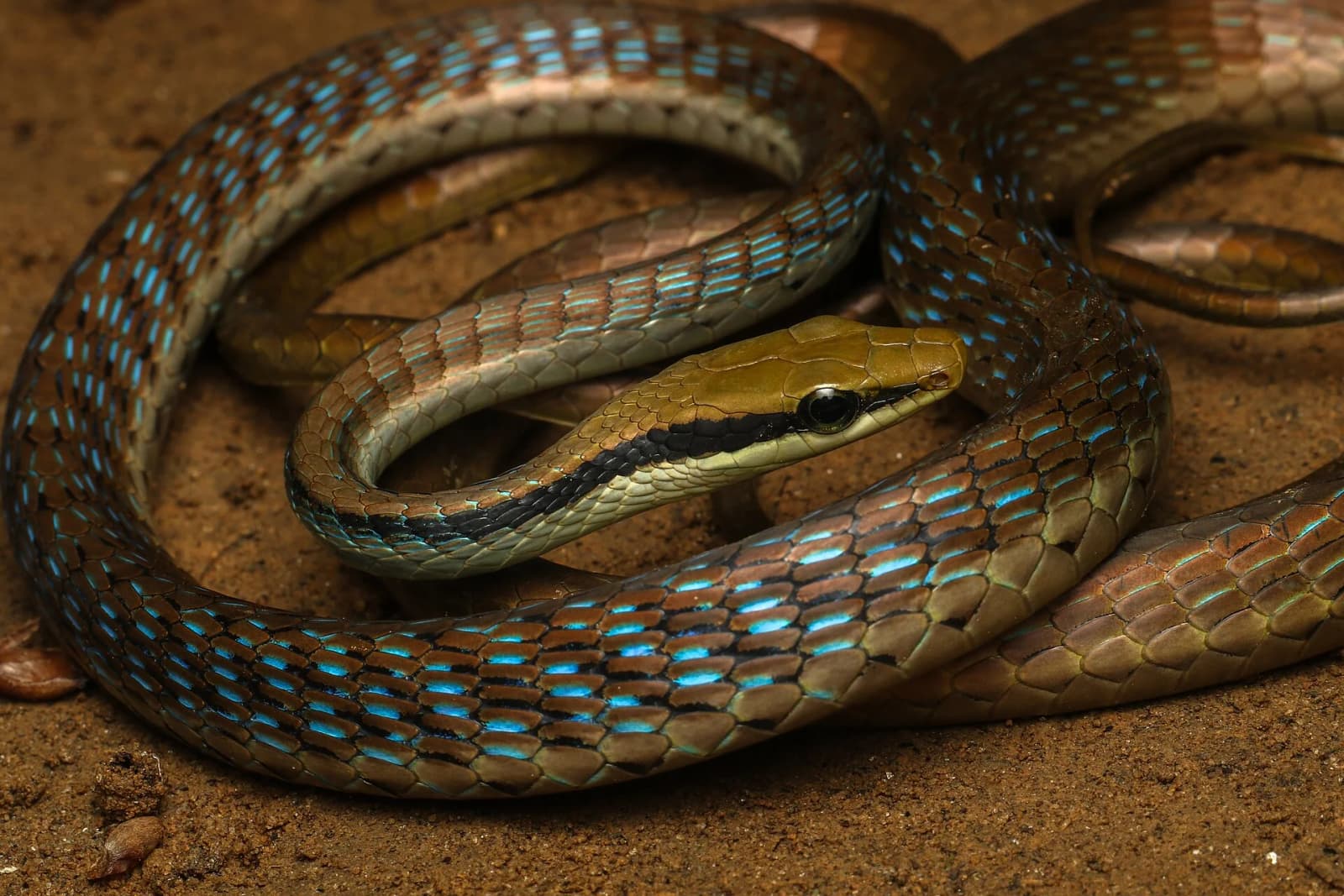
Researchers have formally described a distinct tree snake species from India's Western Ghats, naming it Dendrelaphis beddomei—or Beddome's bronzeback—in honour of 19th-century British naturalist and botanist Colonel Richard Henry Beddome.
Published in the peer-reviewed journal Taprobanica on November 12, 2026, the study by S.R. Ganesh, S.N. Poornaprajna, Ashok Kumar Mallik and Gernot Vogel resolves long-standing confusion in which the snake had been misclassified under the large-eyed bronzeback (Dendrelaphis grandoculis).
Distinctive Anatomy and Scale Traits
Careful morphological analysis revealed clear differences between the two species. Beddome's bronzeback has a bright red or pink tongue rather than a black or dark-grey one, carries up to 168 subcaudal tail scales compared with fewer than 133 in its lookalike, and possesses a longer loreal scale alongside a smaller second postocular scale.
It also shows subtle pale-white stripes and spots along the lower flanks near the tail, helping field researchers distinguish it across dense foliage.
Lowland Habitat and Roadkill Threats
Unlike related hill species, Dendrelaphis beddomei occupies secondary forests as well as rubber and arecanut plantations between 44 metres and 1,038 metres above sea level from Wayanad in Kerala to Uttara Kannada in Karnataka.
Several examined specimens came from roadkill collected near Sullia and Agumbe, including an individual carrying nine eggs. Because its lowland and plantation-edge habitat overlaps heavily with busy roads, the authors proposed classifying the species as Near Threatened under IUCN Red List criteria.