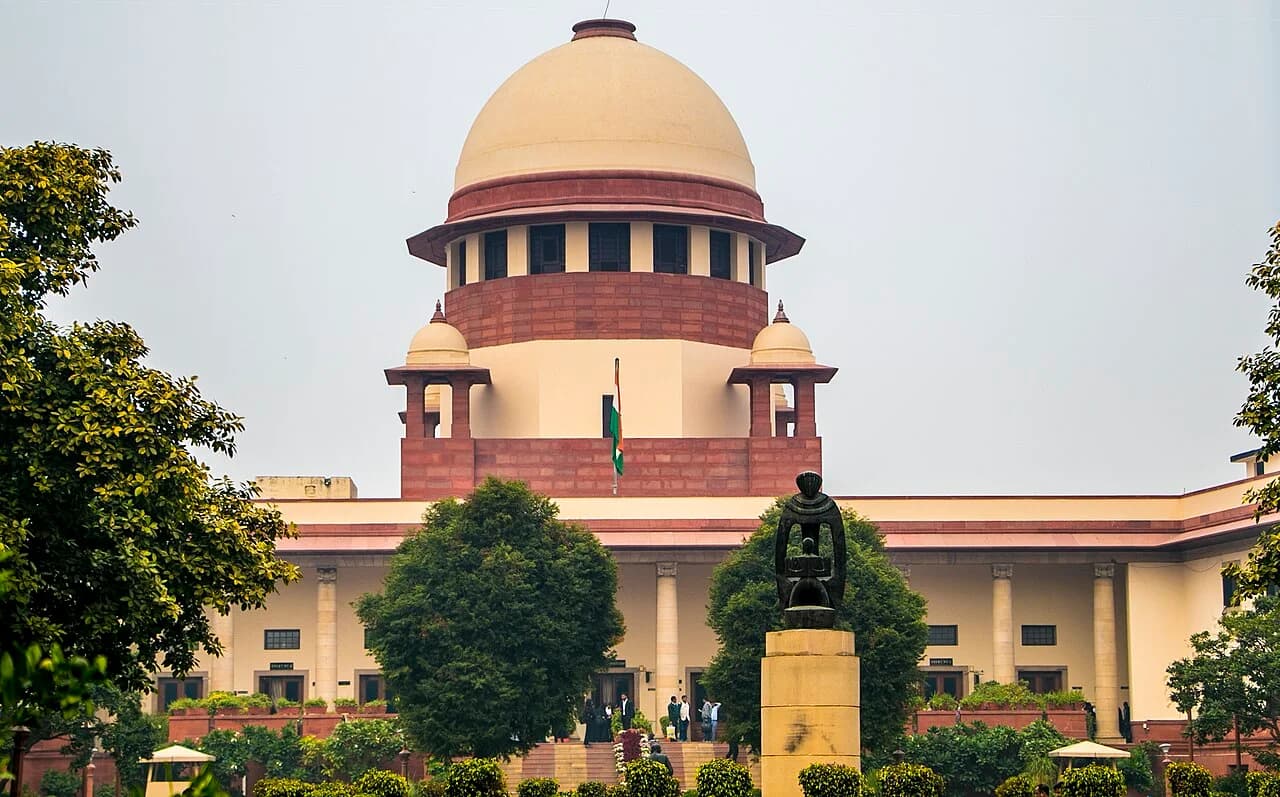
The Reserve Bank of India has asked the Supreme Court to review its judgment that struck down the Rs 8,415-crore write-off of Yes Bank's additional tier-1 (AT-1) bonds. The review petition was filed on Friday, 13 November, and appeared on the court's website on Monday, 16 November 2026, according to Reuters, as carried by The Hindu. Yes Bank filed its own review petition the same day.
What the RBI wants
According to Mint, the central bank argues that the Supreme Court did not adequately consider the RBI's Basel III Master Circular, which governs AT-1 bonds and how they absorb losses. The petition also raises the distinction between a pre-specified trigger and the point-of-non-viability trigger under the regulatory framework, the paper reported.
Mint reported that the RBI has asked for the review to be heard in open court and for the 15 October judgment to be stayed while the plea is considered. An email query sent to the RBI was not answered, Reuters said.
Yes Bank's separate plea
Yes Bank told stock exchanges on Friday that it had filed a review petition, without disclosing the grounds, Reuters reported. Mint reported that the bank's plea cites the possible effect of restoring the bonds on its capital position. The bank had earlier estimated that reinstating the bonds could lower its Common Equity Tier-1 ratio by around 240–250 basis points, according to Mint.
How the dispute began
The case goes back to the rescue of Yes Bank in March 2020. Mint's account of the timeline is as follows:
- On 5 March 2020 the Centre placed the bank under a moratorium, and the RBI superseded its board and appointed an administrator.
- A draft reconstruction scheme proposed permanently writing down the AT-1 bonds, but that provision was dropped from the final scheme notified on 13 March 2020.
- On 14 March 2020 the administrator nevertheless wrote down AT-1 bonds worth Rs 8,415 crore — Rs 3,000 crore issued in December 2016 and Rs 5,415 crore issued in October 2017.
- Axis Trustee Services, representing bondholders, challenged the move. In January 2023 the Bombay High Court quashed it, holding that the administrator could not write down the bonds when the final scheme did not give him that power.
- Yes Bank, the RBI and the Union government appealed to the Supreme Court.
What the Supreme Court held in October
On 15 October 2026, a bench of Justices Dipankar Datta and Augustine George Masih upheld the High Court ruling, Mint reported. The bench held that the administrator could not assume a regulatory power that had not been conferred, and rejected the argument that the write-down was needed to save the bank, saying "mere necessity" could not override the procedure laid down in law.
Earlier this month, Axis Trustee Services filed a contempt petition in the Supreme Court alleging that Yes Bank had failed to provide a "concrete roadmap" for restoring the bonds and implementing the judgment, according to Reuters.
Japan's Sumitomo Mitsui Banking Corporation now holds a 24% stake in Yes Bank, Reuters noted.
What happens next
A review petition is not a fresh appeal. Mint explained that under Article 137 of the Constitution the Supreme Court can review its own judgments on limited grounds, such as an error apparent on the face of the record, and that such petitions are generally heard in chambers by the same bench that delivered the original judgment. The court will now decide whether the grounds raised by the RBI and Yes Bank are enough to reopen the 15 October ruling. No hearing date was reported.
PS · Subhashish Panigrahi, CC BY-SA 4.0