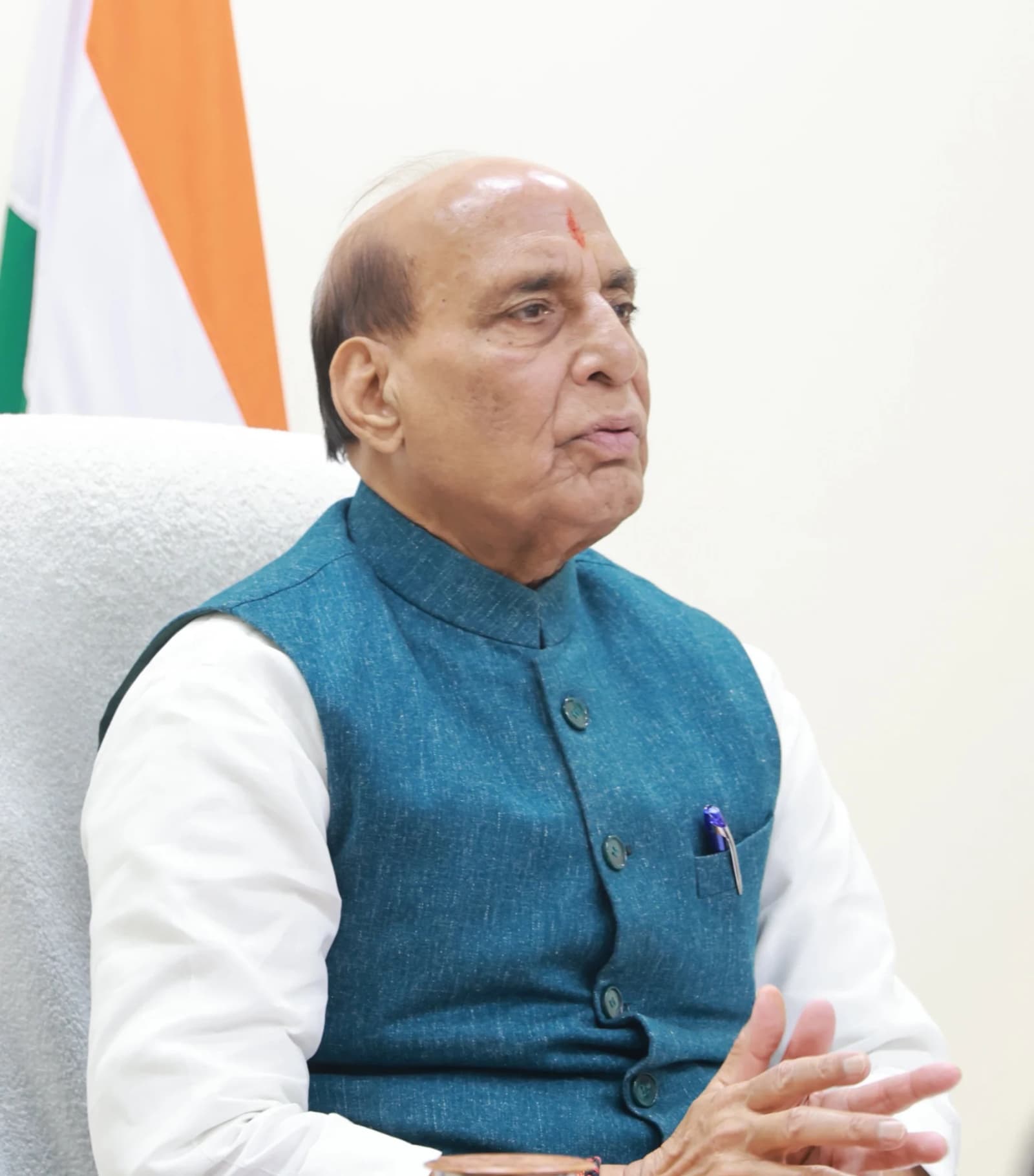
Defence Minister Rajnath Singh on 15 November 2026 urged India to become a developer, innovator and global leader in advanced technologies rather than only a user of them, and singled out non-destructive testing (NDT) as a field where the country must build its own capabilities to strengthen defence preparedness. He made the remarks while addressing, virtually, a conference of NDT professionals in Hyderabad, according to a Ministry of Defence release issued through PIB.
The occasion was the 36th Annual Conference on Non-Destructive Evaluation and Enabling Technologies, held together with the 15th International Symposium on Non-Destructive Testing in Aerospace. The ministry said the three-day event, organised by the Indian Society for Non-Destructive Testing, has drawn more than 2,000 professionals, researchers, industry experts and students.
What NDT is, and why the military cares
Singh explained NDT by comparison with medicine: much as ultrasound and X-rays let doctors look inside the body without surgery, NDT methods let engineers find hidden flaws in critical parts without taking them apart or damaging them, the release said.
He argued that as Indian defence systems grow more sophisticated, every material, component, assembly and manufacturing step has to meet the highest standards. "Hidden defects can affect operational availability, increase maintenance requirements, reduce the service life of equipment and, in critical situations, jeopardise mission success," he said, adding that the aim should be to prevent defects by building quality into each stage of manufacturing, not merely to detect them.
According to the ministry, Singh said there can be no compromise on the integrity of test results in strategic applications such as missiles, aircraft, naval platforms and spacecraft, where quality is a matter of operational reliability and national security.
A push for home-grown tools
"We must strengthen our indigenous capabilities in advanced inspection technologies, specialised sensors, evaluation equipment and associated software," the minister said, linking domestic capability to reducing technological dependence and securing defence supply chains. He said public sector undertakings, private manufacturers, start-ups and MSMEs all have a role in raising quality assurance across the defence industry, and described self-reliance in defence as a strategic necessity, not only an economic goal.
Singh also pointed to artificial intelligence, machine learning, robotics, advanced sensors, digital twins and predictive analytics as technologies that are widening what inspection can do. He called on India to develop its own solutions suited to its strategic and industrial needs rather than simply adopt such tools, and said investment in research, equipment, software and skilled people could help Indian technologies find markets abroad.
Context
The minister cited progress in missiles, naval platforms, aerospace, radar and space applications, and referred to the commissioning of INS Vikrant, India's first indigenous aircraft carrier, as a milestone. He also credited the Innovations for Defence Excellence (iDEX) programme and the Technology Development Fund with encouraging experimentation in the defence sector.
What happens next
Singh called for a whole-of-government and whole-of-ecosystem approach in which government, industry, academia and research laboratories work together. The ministry said the conference is meant to support knowledge exchange and the wider adoption of advanced inspection and evaluation technologies across sectors, including defence and aerospace.