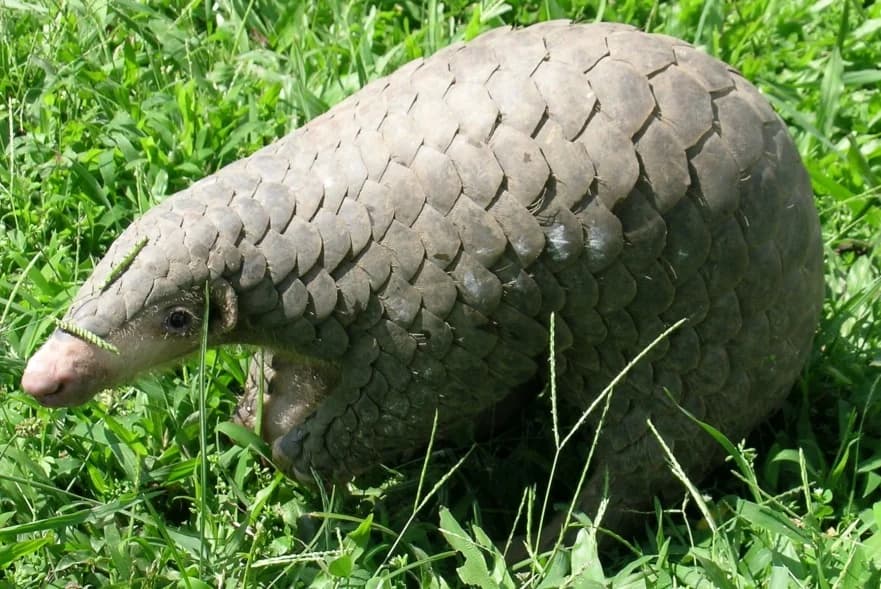
A critically endangered Chinese pangolin spotted near a residential settlement in Meluri, Nagaland, was safely rescued and returned to forest habitat on November 24 through coordinated action by members of the Pochury Naga community and the Nagaland Department of Environment, Forest and Climate Change.
Swift Rescue Following Community Awareness Campaign
Local resident Ngoushutho Ngouri spotted the scaly mammal crossing a road near homes and chose to protect it rather than disturb it, immediately alerting the Meluri Forest Range rapid response team. Forest personnel took custody of the animal, carried out a thorough health check confirming it was uninjured, and joined local residents in releasing it inside a secure forest area.
Ngouri credited his response to awareness gained during October's six-day Pangolin Cup football tournament—organised by the Wildlife Trust of India (WTI) with the Meluri Range Sports Association and the state Forest Department—which drew at least 10,000 spectators across eight village teams. During that tournament, the apex Pochury Hoho leadership enacted a ban on pangolin hunting and trade across 30 villages, backed by a Rs 50,000 fine.
Expanding Customary Conservation Across Northeast India
Located near the Indo-Myanmar border, Meluri sits along a corridor vulnerable to illegal wildlife trafficking. Both the Chinese pangolin (Manis pentadactyla) and Indian pangolin (Manis crassicaudata) carry the highest legal protection under Schedule I of the Wild Life (Protection) Act, 1972.
The Pochury Naga resolution adds to broader village-led protections across Nagaland and Manipur, where more than 300 villages—including 42 Sangtam Naga villages in Kiphire district that banned hunting in February 2026 and 230 Tangkhul Naga villages in Manipur since August 2024—are using customary governance alongside forest and border enforcement agencies to curb pangolin poaching.