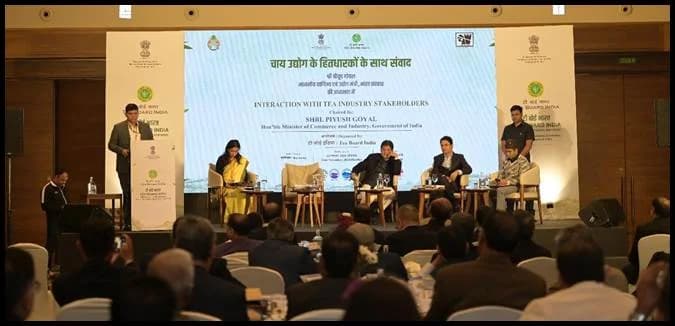
Union Minister of Commerce and Industry Piyush Goyal met representatives of the Indian tea industry at Kurseong in West Bengal's Darjeeling district on 22 November 2026, with the revival of Darjeeling tea, faster and more reliable tea auctions, and higher exports at the top of the agenda, according to a release from the Ministry of Commerce and Industry issued through the Press Information Bureau (PIB) that night.
The interaction was organised by the Tea Board India. Darjeeling's Member of Parliament Raju Bista and Kurseong MLA Sonam Lama attended, along with senior West Bengal government officials, tea associations and stakeholders from different parts of the tea value chain, the ministry said.
What was discussed at the Kurseong meeting?
The meeting covered the revitalisation of the Darjeeling tea industry, reform of the auction system, tea research, quality, export promotion, the welfare of plantation workers, and initiatives under the government's Export Promotion Mission (EPM), the release said.
A separate brainstorming session focused on the tea auction system. Participants stressed technology-driven reforms, more transparency, better operational efficiency and fewer transaction-related difficulties, so that auctions become faster and more responsive to what the industry needs. Ease of Doing Business was described as a key priority, with an emphasis on simpler processes across the tea value chain.
How much tea does India export?
India exported 282.11 million kg of tea worth USD 988.13 million in financial year 2025–26, the ministry said. It described India as the world's largest producer of black tea and the third-largest tea exporter globally.
On exports, stakeholders made suggestions on widening India's presence in international markets, improving market access and strengthening the global positioning of Indian tea. The discussions also pointed to the need for the government, the Tea Board and the industry to work together to promote Indian tea in both traditional and emerging markets, using opportunities under the Export Promotion Mission.
Research help for small tea growers
Research and development was flagged as central to improving the quality, productivity and competitiveness of Indian tea. According to the release, the services of tea research will be extended to small tea growers. The participants also discussed encouraging innovation and better scientific practices to meet changing quality requirements in domestic and overseas markets.
Welfare scheme for tea workers in West Bengal
The welfare of plantation workers and their families was another major theme. The meeting referred to the proposed implementation of the Pradhan Mantri Cha Shramik Protsahan Yojana (PMCSPY), which the ministry said is aimed at improving the welfare of tea workers in West Bengal, particularly women and their children. Its intended benefits cover education, healthcare and better living conditions, and the meeting stressed that the scheme must be implemented effectively.
Why it matters
Tea is a sizeable export earner, and the ministry said the sector makes a significant contribution to the country's agricultural economy and export earnings. Holding a minister-level meeting in the Darjeeling hills puts the region's own problems on the table alongside wider issues such as auction reform and export competitiveness.
What happens next?
The release did not announce specific decisions, funding figures or deadlines. It said the discussions underscored the need for a coordinated approach on reviving the Darjeeling tea industry, modernising tea trading infrastructure, strengthening research and quality assurance, raising exports and improving worker welfare. Details on the PMCSPY's rollout and any changes to the auction system are yet to be made public.
Photo source · Press Information Bureau, Government of India, PIB copyright policy