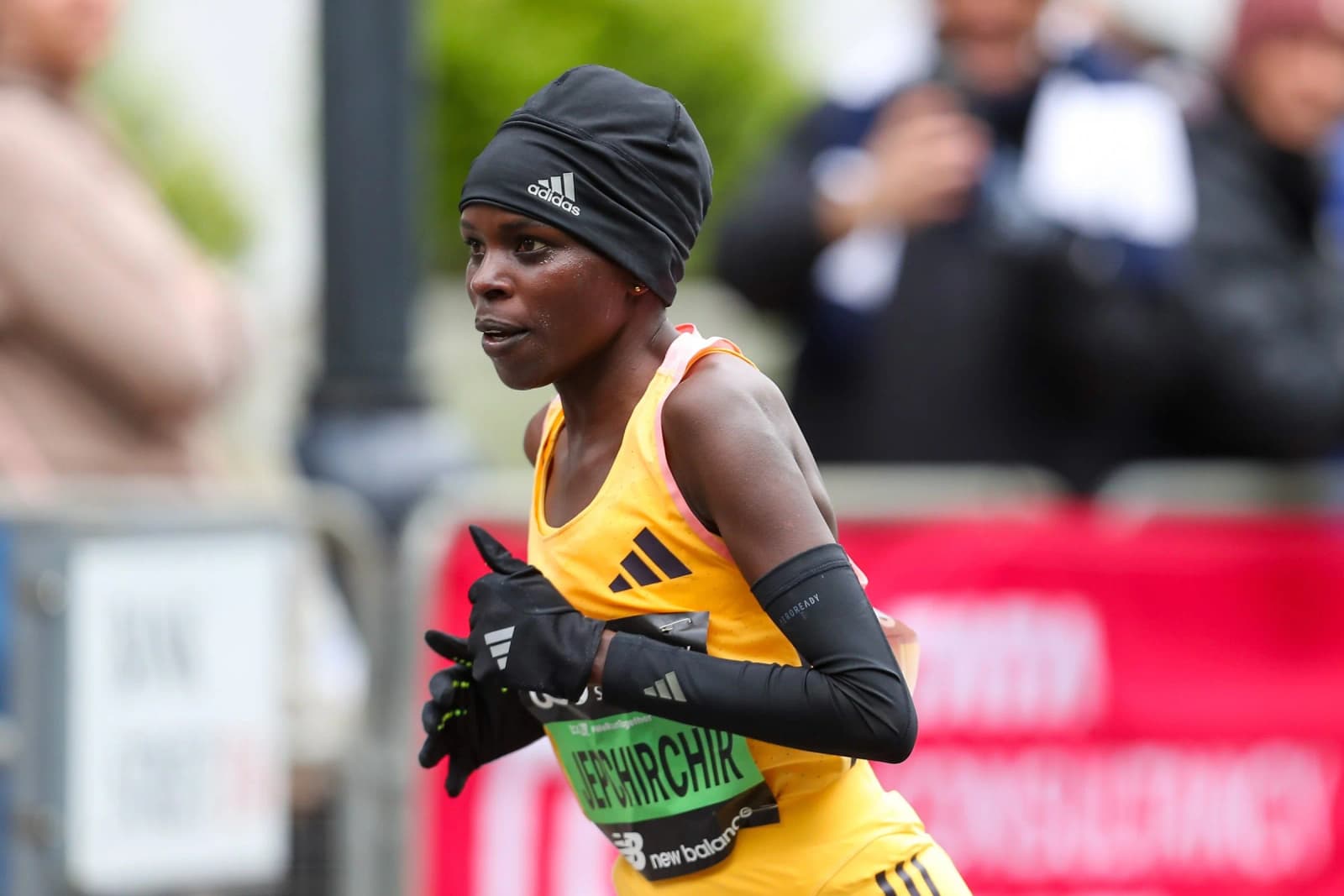
Kenyan distance runner Peres Jepchirchir, the 2021 Olympic marathon champion and 2025 world champion, has been banned from competition for three years for using the blood-boosting drug erythropoietin (EPO), the Athletics Integrity Unit (AIU) announced on Thursday, 19 November 2026. All of her results since 17 July 2026 have been wiped out, including her win at the Sydney Marathon in Australia in late August.
The AIU, the independent body that runs anti-doping for World Athletics, said the 33-year-old's case rested on an out-of-competition sample that tested positive for EPO. According to The Associated Press, the sample was collected on 17 July 2026 at Kapsabet in western Kenya, roughly six weeks before her Sydney victory.
How did the case unfold?
Jepchirchir first denied doping and later accepted the charge. She was provisionally suspended in October. AP reported that in an interview with AIU staff she denied injecting or being given EPO, but on 27 October she signed a form admitting breaches of two anti-doping rules and accepting the sanction. Al Jazeera said the two violations were the presence of a prohibited substance and its use or attempted use.
Her race-day test in Sydney had come back negative, the Sydney Marathon said. The finding came from testing carried out away from competition, which AIU chief executive Brett Clothier described as "one of the most powerful tools we have in protecting clean sport", according to ABC News in Australia.
Who is the new Sydney Marathon champion?
Irine Cheptai of Kenya is set to be named the 2026 women's champion in Sydney. The 34-year-old crossed the line second in 2 hours 22 minutes 11 seconds, and the promotion gives her a first World Marathon Majors title, ABC reported. Ethiopia's Shure Demise Ware moves up to second and her compatriot Haven Hailu Desse to third.
Cheptai had already drawn attention at the race for handing her drink to Australian Paralympian Michael Roeger, a gesture that made her a finalist for World Athletics' 2026 International Fair Play Award. Race director Wayne Larden said organisers were "disappointed for every athlete, partner and fan affected" and that all other tests from the event had been cleared.
Why does this matter for Kenyan athletics?
Jepchirchir is among the most decorated road runners of her generation. Besides her Olympic and world titles, she has won the New York (2021), Boston (2022) and London (2024) marathons and once held the half-marathon world record.
Her ban adds to a long list of Kenyan cases. ABC reported that more than 140 Kenyan athletes have been sanctioned since the AIU was set up in 2017. Women's marathon world record holder Ruth Chepng'etich received a three-year ban in 2025, and former New York Marathon winner Albert Korir was banned for five years in March 2026.
The AIU announced two more Kenyan sanctions on the same day. Veronica Loleo, a silver medallist in the half-marathon at the 2026 world road running championships, was banned for three years for EPO, while Ronald Korir, fourth at the 2023 Berlin Marathon, received six years after abnormalities in his athlete biological passport, AP reported.
Clothier said Kenyan authorities had made "a lot of progress in the fight against doping in the last five years" but that "there is still a long way to go". The comments come as Kenya prepares to stage events at the highest level: it has been awarded the 2029 World Athletics Championships, which would be the first edition held in Africa.
What happens next?
Jepchirchir accepted the sanction and the disqualification of her results, according to AP and Al Jazeera. The Sydney Marathon has said Cheptai is set to be elevated to 2026 women's champion, which will make the Kenyan's runner-up finish the official winning result.
Photo source · Katie Chan, CC BY-SA 4.0