Pakistan and the Maldives have agreed in principle to set up joint working groups to expand trade, study a direct shipping service between Karachi and Malé, and help the Maldives import essential goods from Pakistan, according to a statement issued on Thursday, 19 November 2026, after a virtual ministerial meeting.
The two countries want to raise bilateral trade to $200 million, a target set by Pakistan's Prime Minister Shehbaz Sharif and the Maldives' President Mohamed Muizzu, The Express Tribune reported. A Pakistani ministerial delegation of officials and business representatives is to visit the Maldives in December.
Who took part and what was agreed?
The meeting brought together Pakistan's commerce and maritime affairs ministers, a prime ministerial adviser and the commerce secretary, along with the Maldives' trade minister. Pakistan was represented by Commerce Minister Jam Kamal Khan, Maritime Affairs Minister Muhammad Junaid Anwar Chaudhry, Haroon Akhtar Khan, Adviser to the Prime Minister on Industries and Production, and Commerce Secretary Jawad Paul. The Maldives was represented by Mohamed Saeed, Minister of Economic Development, Transport and Trade.
According to The Nation, the working groups will include government officials, technical experts and private-sector representatives, each with a designated focal person and a timeline. They are to assess commercial viability, identify barriers to trade and transport, and send recommendations for ministerial review. Jam Kamal Khan also proposed a virtual meeting between Pakistani suppliers and Maldivian buyers before the December visit, which he said would likely take place in the second or third week of the month, subject to confirmation by the Maldivian side.
What does the Maldives want to buy?
Saeed listed construction materials, rice, flour, sugar, fruits and vegetables, and pharmaceuticals as priority sectors, The Express Tribune reported. He said cargo types and volumes would decide whether a direct shipping route is viable. Chaudhry said Pakistan was ready to explore the service if cargo volumes are sufficient, and pointed to possible cooperation in ports, fisheries and maritime training. Haroon Akhtar Khan said a direct link could boost trade in construction materials and hospitality supplies, and that Pakistani drug makers could supply the Maldivian market.
How does this connect to Muizzu's Pakistan visit?
The meeting follows up on President Muizzu's state visit to Pakistan in October. Radio Pakistan reported that he left Islamabad on 23 October after talks with President Asif Ali Zardari and Prime Minister Sharif, an exchange of agreements and memoranda of understanding, and a Pakistan-Maldives business forum. The visit coincided with 60 years of diplomatic relations between the two countries.
Why it matters for India
Several of the goods on the Maldives' priority list are ones India already supplies under a special arrangement. Under a bilateral trade agreement dating to 1981, India's Directorate General of Foreign Trade (DGFT) has allowed exports of essential commodities to the Maldives for 2026-27 that are exempt from any existing or future export curbs, India Shipping News reported in April. The quotas include 230,429 tonnes of rice, 114,621 tonnes of wheat flour, 67,719 tonnes of sugar, and 1.3 million tonnes each of river sand and stone aggregate for construction. The DGFT framed the arrangement as part of India's "Neighbourhood First" policy.
The Pakistan-Maldives talks do not change those arrangements, and neither side has said how much cargo a Karachi-Malé route would carry. But a direct shipping link would give the Maldives another source for food staples and building materials in the Indian Ocean, where India has long been its main supplier.
What next?
The working groups are yet to be formally constituted. The next steps are the proposed supplier-buyer meeting and the Pakistani delegation's visit to Malé in December, which still needs confirmation from the Maldivian government.
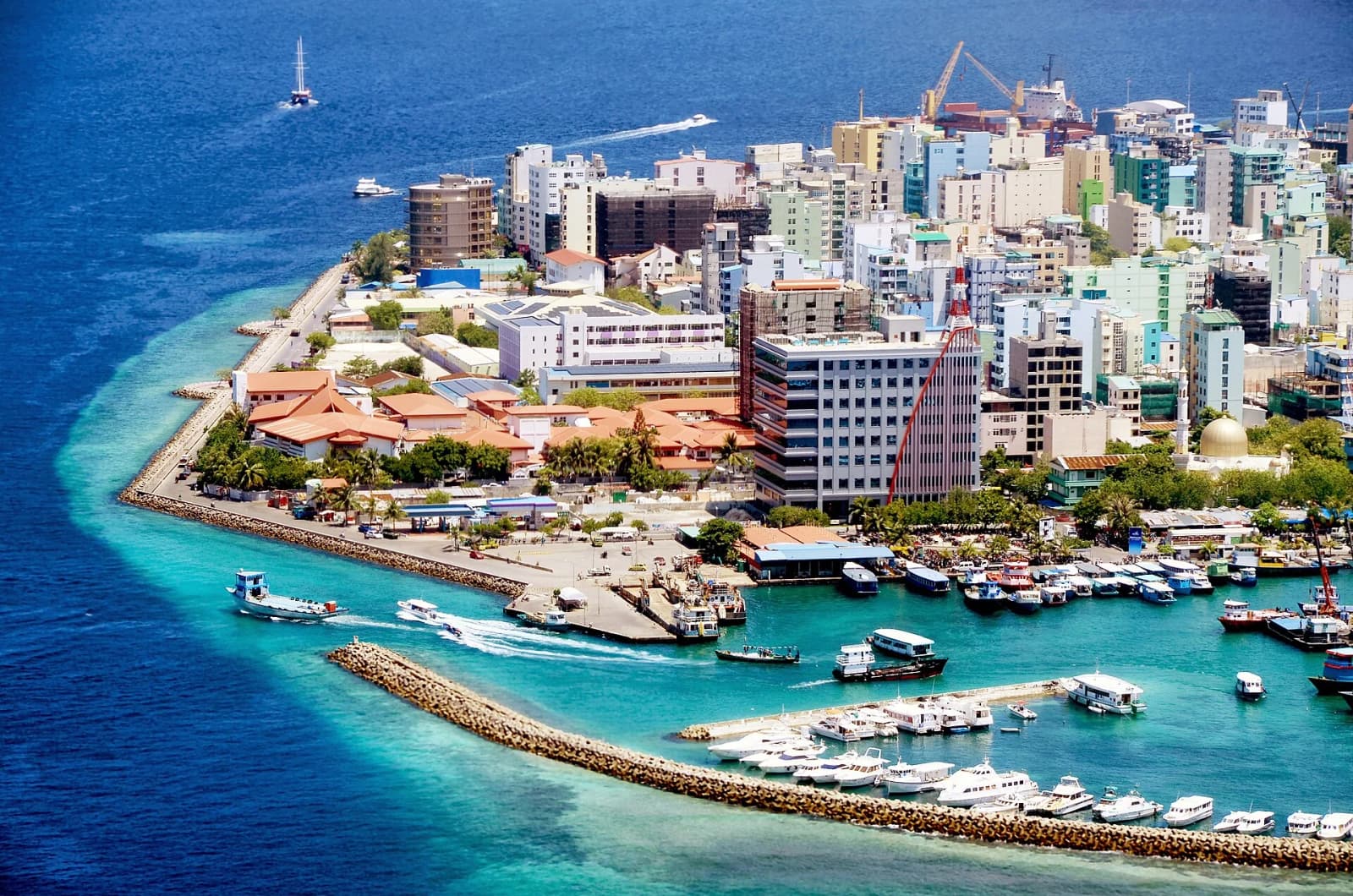
Photo source · Ibrahim Asad, CC BY 3.0