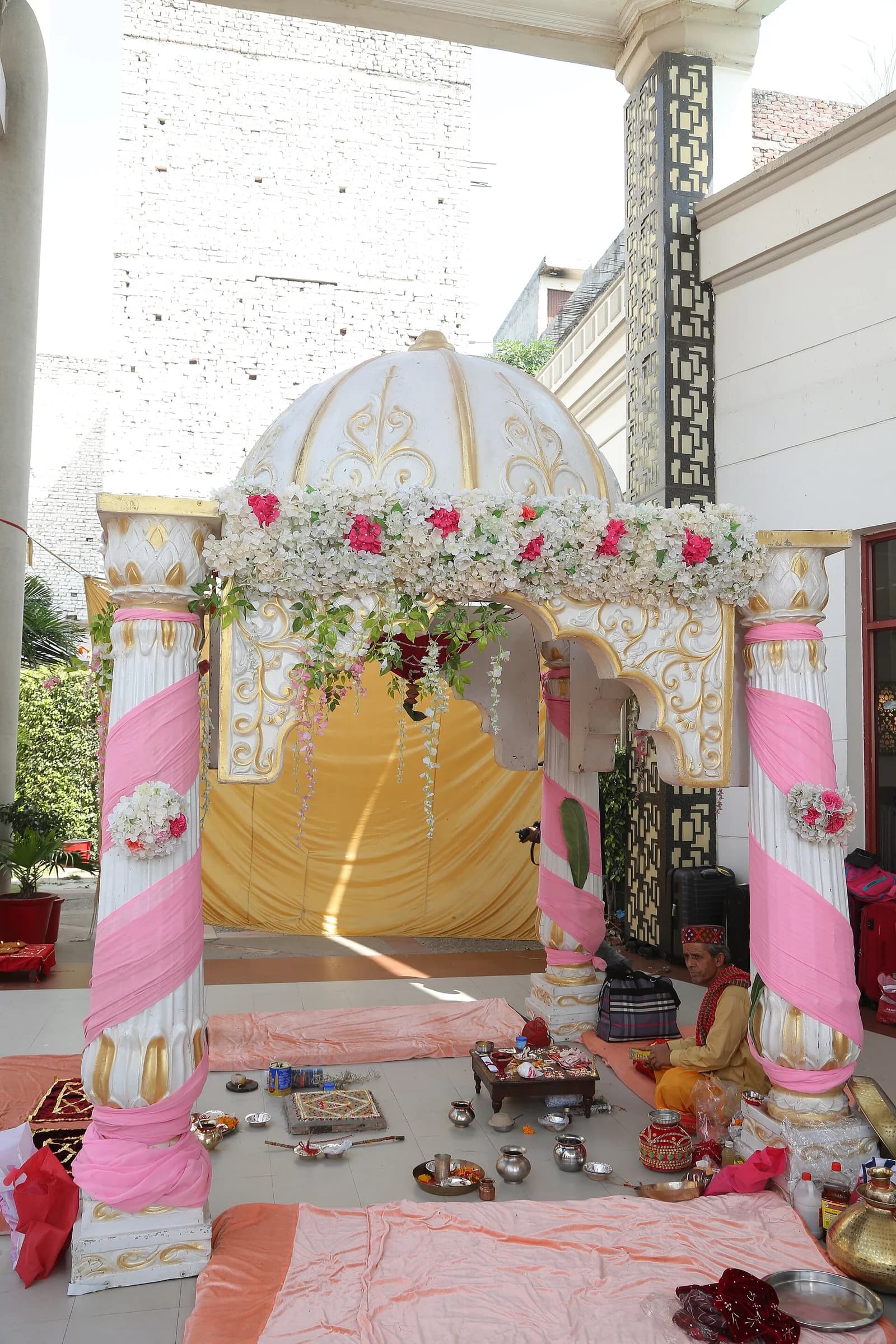
This is a MapMyTimes opinion piece. India's wedding season opened on Saturday, 21 November 2026, and the Confederation of All India Traders (CAIT) expects it to be one of the busiest on record. In a projection released on 19 November, the traders' body said about 52 lakh weddings between 21 November and 15 December could generate business worth roughly ₹7.5 lakh crore. Our view: the boom is welcome, but the people who pay for it, cook for it and work through it deserve as much attention as the headline number.
What is CAIT projecting for this wedding season?
CAIT projects about ₹7.5 lakh crore in spending on goods and services across roughly 52 lakh weddings in under four weeks, according to the projection as reported by ANI. It puts goods at about ₹4.05 lakh crore (54%) and services at about ₹3.45 lakh crore (46%). Jewellery and precious metals are the largest goods category at ₹1.2 lakh crore, followed by apparel, sarees and garments at ₹90,000 crore. Catering and food services are estimated at ₹75,000 crore, and marriage venues, banquet halls and hotels at ₹60,000 crore. Delhi-NCR alone is expected to see about 5 lakh weddings worth ₹2.5 lakh crore.
CAIT says the figures come from consultations with more than 300 trade leaders and 550 trade associations in 25 states. CAIT National President B C Bhartia said the numbers show the strength of India's domestic market and consumer demand.
Why should readers treat the numbers with care?
Because they are a trade body's estimate, not official statistics. CAIT represents traders who stand to gain from the season, and its method, a survey of trade leaders and associations, is not the same as measured household spending. The figures are useful as a signal of mood among sellers. They should not be read as a forecast every family is expected to match.
Who carries the load?
CAIT itself estimates that the season will create about 1.25 crore temporary, seasonal and part-time jobs for decorators, caterers, photographers, transporters and hospitality workers. That is a large workforce whose work, by CAIT's own description, is short-term. Venue owners, caterers and event companies that profit from a ₹7.5 lakh crore season can afford to pay these workers on time, give them safe working hours on crowded wedding dates, and keep basic records of who worked and for how much.
Food safety is the other pressure point. With catering valued at ₹75,000 crore, very large quantities of food will be cooked in temporary kitchens. Recent events show how quickly mass cooking can go wrong: in Madhya Pradesh's Balaghat district, more than 100 children and 12 adults fell ill after eating chowmein at a village fair, and in Pune, Maharashtra's Food and Drug Administration suspended the licences of eight eateries over hygiene lapses. State food safety departments would do well to step up checks on licensed caterers and banquet kitchens during peak dates, and caterers should expect them.
What is the strongest case against this view?
The strongest counter-argument is that weddings are private celebrations, and how families spend is their own business. Seen that way, the season is simply a large, decentralised stimulus that puts money into the hands of jewellers, weavers, tent-makers, cooks and musicians, many of them small businesses. CAIT has also urged families to buy Indian-made products, which could help local manufacturers and artisans. Policing that spending, or moralising about it, would help no one.
We accept most of that. Our argument is not that families should spend less. It is that a season this large is also a public matter: it fills roads, kitchens and workplaces, and it relies on a temporary workforce that has little bargaining power.
What should happen next?
Three modest steps would help. First, CAIT and other industry bodies should publish their survey method alongside the headline estimate, so readers can judge it. Second, venues and caterers should treat worker pay and kitchen hygiene as part of the service they sell, not as costs to cut on busy dates. Third, food safety regulators and local bodies should plan inspections and traffic management around the published auspicious dates, which run until mid-December. A wedding season that leaves workers paid, guests healthy and streets passable is a better advertisement for India's domestic market than any single number.
Photo source · Wikilover90, CC BY-SA 4.0