This is a MapMyTimes opinion piece, reflecting the view of the MapMyTimes editorial desk. It responds to the declaration of Kerala's Wayanad as India's first e-waste-free district at a function in Kalpetta on 27 November 2026, which MapMyTimes reported here. Wayanad deserves credit. The harder test starts now: keeping the label true when the next phone, charger or mixer grinder breaks.
What did Wayanad actually achieve?
Wayanad collected 102.85 tonnes of electronic waste in about three months, according to The New Indian Express, across all 23 grama panchayats and three municipalities under the district's BHOOMI initiative, part of the state's Nirmalam waste-free Kerala campaign. Agriculture Minister and Kalpetta MLA T. Siddique, who led the drive, credited local bodies, the Haritha Karma Sena, sanitation workers, departments, traders, restaurant owners and residents.
The method matters more than the headline. As Jagran Josh described it, members of the Haritha Karma Sena, Kerala's women-led green workforce, went door to door; Clean Kerala Company and KITE lifted bulk scrap from government offices and schools; and a call centre and buffer window ran until 10 November to catch missed homes. Of an earlier tally of 97.26 tonnes, 58.80 tonnes came from institutions and 38.46 tonnes from homes and businesses. Collected scrap is routed through Clean Kerala Company to recyclers authorised by the Central Pollution Control Board, the report said.
That is a real public good in an ecologically sensitive Western Ghats district, where electronics dumped or burnt in the open can leach heavy metals into soil and water. And it was done through trusted local workers rather than an app that most households would ignore.
The strongest case against the celebration
Sceptics have a fair point. Electronic waste is not a stock that can be cleared once; it is a flow that every household keeps generating. A "free" label earned after a time-bound sweep can encourage complacency, and officials themselves acknowledge, according to Jagran Josh, that the status holds only if collection continues rather than remaining a one-time effort. Critics could also argue that under India's E-Waste (Management) Rules, 2022, the legal burden of collection rests largely on producers through extended producer responsibility, so a district campaign powered by local bodies and community workers risks shifting costs away from manufacturers who profit from the devices.
Both concerns deserve to be taken seriously. Neither is a reason to belittle what Wayanad has done. They are reasons to design what comes next.
What should happen next?
- Make collection permanent. Fixed drop-off points in every panchayat and municipal ward, with scheduled Haritha Karma Sena pickups, would turn a campaign into a service.
- Publish the numbers. Monthly figures on tonnes collected and tonnes handed to authorised recyclers, by local body, would let residents and auditors check that the label still holds a year from now.
- Bring producers in. The district and the state should seek formal tie-ups with producers and their compliance agencies so that extended producer responsibility helps fund what local workers are doing.
- Certify, then re-certify. A periodic, independent review would give "e-waste-free" a meaning other districts can trust and copy.
The bottom line
Wayanad has shown that a hill district with an organised local workforce can pull roughly a hundred tonnes of hazardous scrap out of homes and offices in a single season. That is worth studying across India. The goal now should be to make sure the district is still e-waste-free next November, and to show others how it stayed that way.
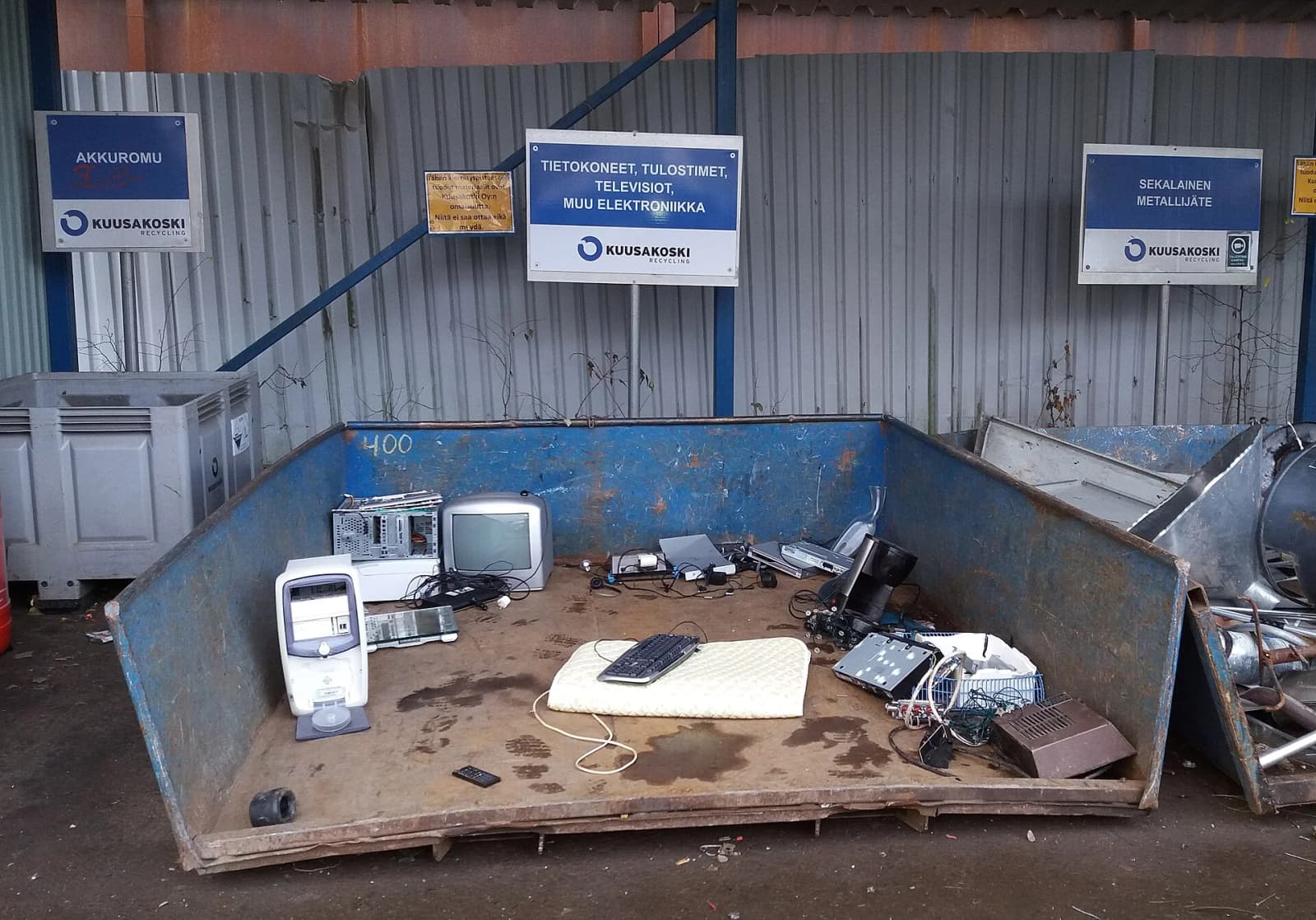
Photo source · Tiia Monto, CC BY-SA 4.0