This is a MapMyTimes opinion piece. It reflects the editorial view of MapMyTimes and is based on the news event described below.
On 27 November 2026, the Union Ministry of Road Transport and Highways announced that motorists who deliberately hide their number plates, or skip a FASTag, to avoid paying at barrier-free Multi-Lane Free Flow (MLFF) toll plazas will face a penalty of five times the user fee, as MapMyTimes reported. In our view, the principle is sound: a toll system without gates cannot survive if hiding a plate is cheaper than paying. But a penalty this steep, enforced largely by cameras, will be only as fair as the process behind it, and that process has not yet been spelt out.
What exactly has the ministry said?
The ministry's release, as reported by PTI and Business Today, says the penalty will be charged over and above recovery of the user fee itself, which means a deliberate evader would pay the toll plus five times the toll. It covers masking, tampering with or concealing the registration number on the front, the rear or both, in cases where the FASTag also could not be detected, as well as not affixing a FASTag at all. The ministry says the penalty will apply only where the act is established to have been done with intent to evade the fee, and that offending vehicles will be identified through a "robust, technology-driven process". It is meant to apply at every MLFF plaza and at any new location where the system is introduced, with the penalty going to the Authority.
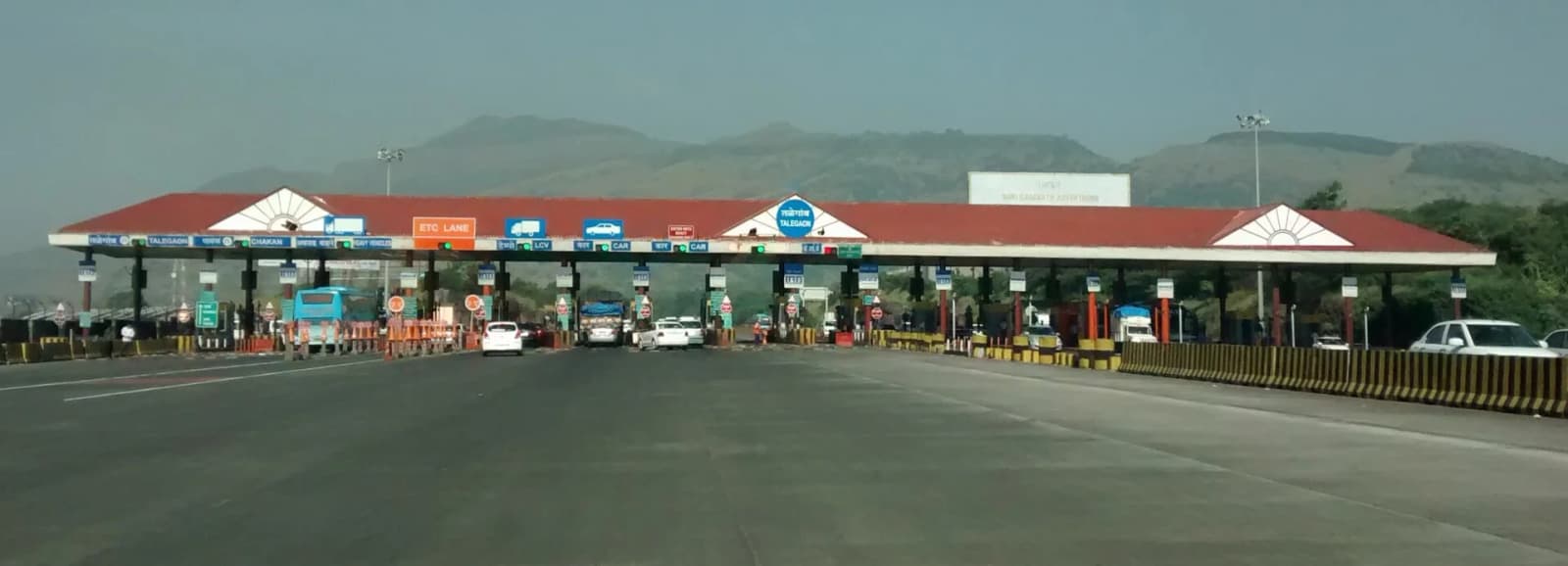
MLFF removes the boom barrier altogether. Overhead gantries carry FASTag readers and Automatic Number Plate Recognition (ANPR) cameras, and the fee is deducted while vehicles keep moving, which the ministry says cuts waiting time, congestion, fuel use and emissions.
Why a strong deterrent makes sense
When there is no barrier, the only thing that stands between a vehicle and a free ride is whether the system can recognise it. A driver who smears mud on a plate or removes the FASTag is not making an honest mistake, and a penalty that merely recovers the toll would invite repeat attempts. A clear, heavy cost for proven, deliberate evasion protects the honest majority who pay, and it protects the case for barrier-free tolling itself. If MLFF leaks revenue, the pressure to bring back gates and queues will grow.
The ministry has also drawn an important line by limiting the penalty to cases where intent is established. That is the right instinct, and it should be written firmly into the final rule.
The strongest objection deserves a hearing
The most serious argument against the measure is not that evaders deserve leniency. It is that an automated system can confuse an honest motorist with a cheat. A plate can be dirty after rain, bent in a minor accident, partly blocked by a bicycle rack or misread by a camera at night. A FASTag can fail without the driver knowing. If the system treats every unreadable plate as deliberate concealment, the burden of proving innocence shifts to ordinary citizens, many of whom will find out about a penalty only after it has been raised. A sixfold total charge for a misread is a heavy price for someone who did nothing wrong, and a dispute process that is slow or opaque would erode trust in MLFF faster than evasion ever could.
This concern is not hypothetical in design terms. Under the existing MLFF arrangement at the Shahjahanpur plaza on the Delhi-Jaipur stretch of NH-48, News On AIR reported in August 2026 that users with insufficient balance or an invalid FASTag receive an electronic notice and must pay the normal fee within 72 hours, after which the fee doubles. That is a graded system with a window to respond. The new fivefold penalty needs the same kind of care.
What is still missing?
Reports differ on whether the ministry has "decided" the penalty or only "proposed" it, and none of the coverage we reviewed names a start date, the legal instrument that will notify it, or how a motorist can contest a charge. Those gaps matter more than the multiplier.
What should happen next
MapMyTimes believes the final rule should do four things. First, it should be formally notified, with the standard of proof for "intent" defined in writing, for example repeat detections or physical evidence of tampering rather than a single unreadable image. Second, every penalty notice should carry the camera images relied upon and give the motorist a fixed window to respond before the penalty becomes payable. Third, there should be a simple online appeal with a time limit for a decision and a human reviewer. Fourth, the ministry and NHAI should publish periodic figures on unidentified vehicles, penalties raised and penalties overturned, so the public can judge whether the system is catching cheats or catching commuters.
Barrier-free tolling is a genuine improvement for India's highways. A tough penalty for deliberate evasion can help it succeed, provided the rules make it easy to tell a cheat from a motorist with a muddy plate.
Photo source · Rsrikanth05, CC BY-SA 4.0