This is a MapMyTimes opinion piece. It responds to the decision on 28 November 2026 by Accredited Social Health Activists (ASHAs) in Karnataka to continue their indefinite strike at Freedom Park in Bengaluru after rejecting Chief Minister D.K. Shivakumar's offer of an extra Rs 2,000 a month from 1 January 2027. The workers want a fixed Rs 15,000. The gap between the two numbers is large, but the bigger gap is one of trust, and that one can be closed quickly.
Why the workers' distrust is understandable
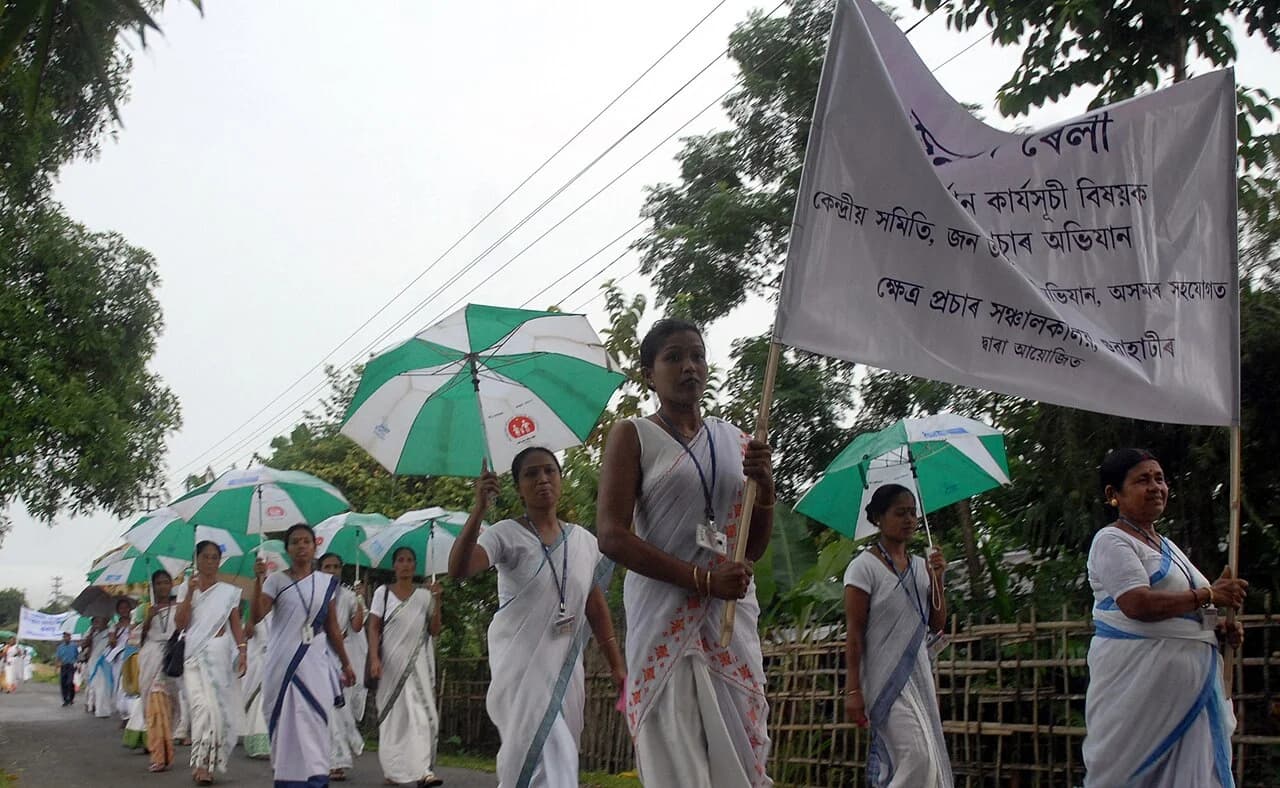
ASHAs are not peripheral to public health. The National Health Mission describes the ASHA as the link between the community and the health system, and the first port of call for health needs in a village. In 2022 the World Health Organization honoured India's more than one million ASHAs with a Global Health Leaders Award. In Karnataka, South First reports, about 41,785 ASHAs each cover 250 to 300 households.
Yet the state pays them a fixed Rs 5,000 a month, and the Chief Minister himself said the amount had not been revised for three years. Workers told South First that a January 2025 strike ended on a promise of Rs 10,000 that, they say, was never delivered in full. That history explains why the union's state secretary, D. Nagalakshmi, said the protest would not stop "until a copy of the order is handed over to us". Asking for a government order is not obstinacy. It is a reasonable request from people who say they have been disappointed before.
The strongest case for the government
The state government's position deserves a fair hearing. Mr Shivakumar has said the honorarium is meant to be shared with the Centre and that the Union government has not raised its part. He has said decisions of this size "cannot be made in a day" and must go through ministers, the Cabinet and the legislature. A jump from Rs 5,000 to Rs 15,000 for more than 40,000 workers is a serious recurring cost, and any state must weigh it against other commitments. An offer of Rs 2,000 with a fixed start date is a real increase, not a token.
The Centre's role, however, needs clearer numbers in public. A Union Health Ministry reply in Parliament in November 2024 said primary responsibility for supporting ASHAs lies with states, and listed central support including a fixed incentive, insurance cover and pension eligibility. Onmanorama reported in July 2025 that a later parliamentary reply said the Centre had raised its fixed incentive from Rs 2,000 to Rs 3,500. If that is correct, the state's claim that the Centre still pays Rs 2,000 needs explaining. Either way, workers should not be left in the middle of a dispute over who pays.
What a fair settlement could look like
First, Karnataka should issue a written government order for the Rs 2,000 rise now, with the date it takes effect, so the offer is no longer just an announcement. Second, it should publish a short schedule for reaching a higher fixed amount over the next budget cycle, with figures the workers can check. Third, the state and the Union Health Ministry should jointly set out what each pays today, including incentives, so the public can see the real total. Fourth, pending incentives and retirement dues, which the workers say are overdue, should be cleared on a published timeline.
The union, for its part, could accept a phased path in exchange for a binding order, rather than holding out for the full Rs 15,000 at once. Each day of the strike puts more strain on the households these workers serve, especially pregnant women and young children.
The bottom line
A health system that relies on ASHAs for so much should be able to tell them, in writing, what they will be paid and when. Karnataka has already moved. Putting that move on paper, and settling the Centre-state arithmetic in public, would be the quickest way to bring the workers back to the villages that need them.
Photo source · Ministry of Information and Broadcasting/PIB, GODL-India