Two in three adults who took Novo Nordisk's experimental obesity drug CagriSema lost at least 5% of their body weight within the first eight weeks, and those early responders went on to lose an average of 25.4% by the end of a 68-week trial, the Danish drugmaker said on Sunday.
The findings, a post hoc analysis of the company's phase 3 REDEFINE 1 study, were presented at ObesityWeek 2026 in Washington, DC. Novo Nordisk described them as hypothesis-generating, meaning they are not meant to change clinical decisions on their own.
What the analysis found
According to the company's release, 67.8% of participants on the 2.4 mg/2.4 mg dose of CagriSema qualified as early responders. Their mean weight loss was 7.8% at week 8, against 3.4% for the "delayed responders". By week 68, early responders had lost 25.4% on average, compared with 17.8% for delayed responders, based on observed data.
- 73.3% of early responders reached at least 20% weight loss at week 68, versus 37.2% of delayed responders.
- Women were more likely to be early responders, the company said, citing figures of 71.8% for the early group against 59.5% for the delayed group.
"In clinical practice, it can be hard to know early on how an individual patient will respond to treatment," said Dr W. Timothy Garvey of the University of Alabama at Birmingham, an author of the analysis. Martin Holst Lange, Novo Nordisk's chief scientific officer and head of R&D, said people respond to obesity treatment "differently and over different timeframes".
Quality of life and side effects
A second analysis presented at the meeting looked at physical and psychosocial function using a standard questionnaire. At week 68, 73.1% of CagriSema users reported a meaningful improvement in physical function, against 49.1% on placebo, the company said.
Side effects were mainly gastrointestinal. In REDEFINE 1, 79.6% of CagriSema users reported such events, compared with 39.9% on placebo, including nausea (55% vs 12.6%), constipation and vomiting. Novo said these were mostly mild to moderate and transient, and 5.9% of patients on CagriSema stopped treatment because of adverse events, versus 3.5% on placebo.
What CagriSema is
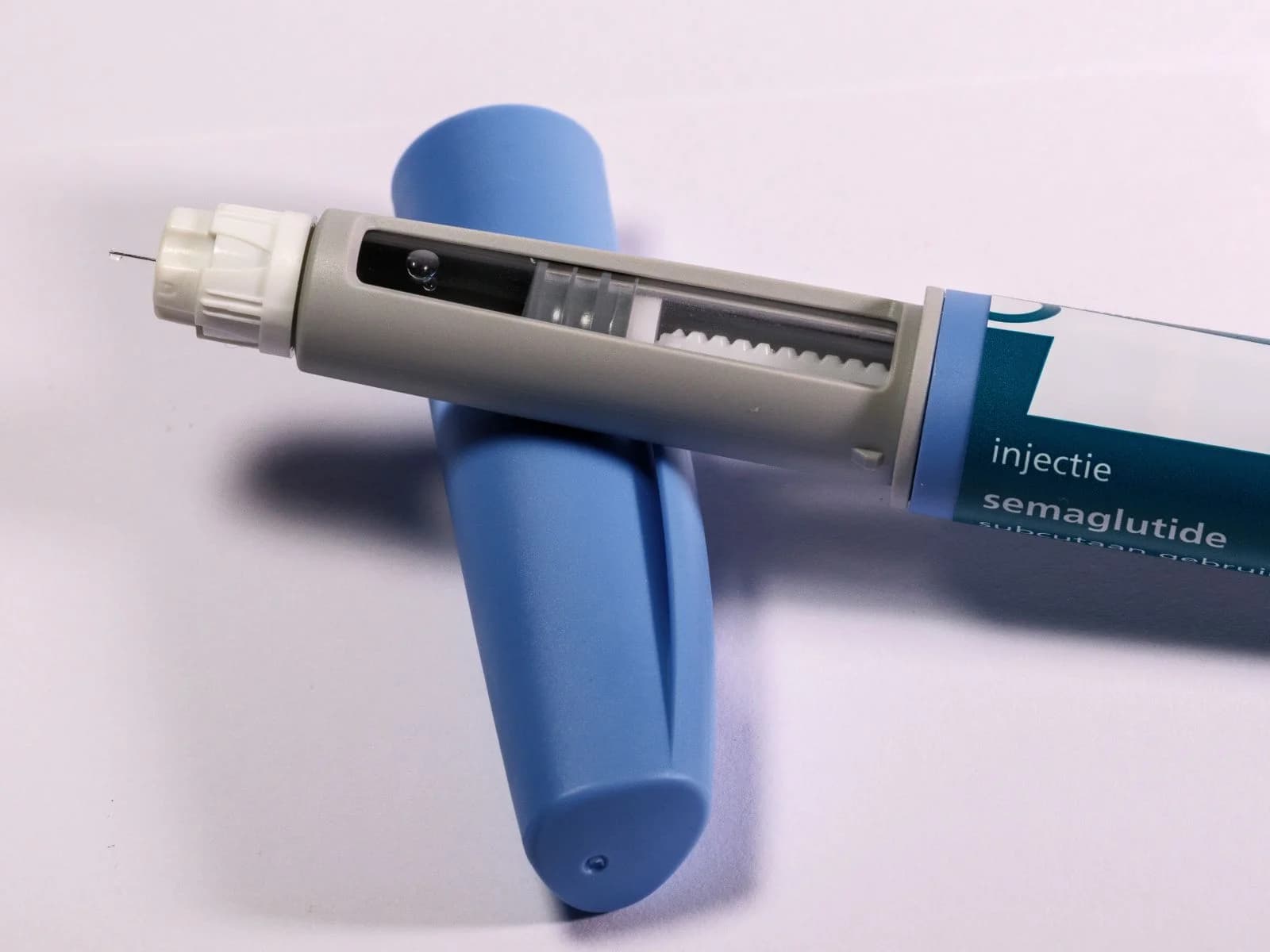
CagriSema is a once-weekly injection that combines cagrilintide, a long-acting amylin analogue, with semaglutide, the GLP-1 drug sold as Wegovy and Ozempic. REDEFINE 1 enrolled 3,417 adults with obesity, or overweight with at least one related condition, who did not have type 2 diabetes.
Novo also highlighted separate phase 3 REDEFINE 9 data at the meeting showing about 21% average weight loss with lower doses of CagriSema; those results were published in The Lancet Diabetes & Endocrinology, the company said.
Why it matters
The data arrive as Novo competes for share in the fast-growing obesity-drug market, where BioSpace noted that companies at ObesityWeek are pushing beyond GLP-1 drugs alone. CagriSema is a key pipeline asset for the company.
What next
Novo filed for US approval of CagriSema 2.4 mg/2.4 mg for weight management in December 2025, and says it expects a decision from the Food and Drug Administration in the fourth quarter of 2026. The drug is not yet approved in the United States.