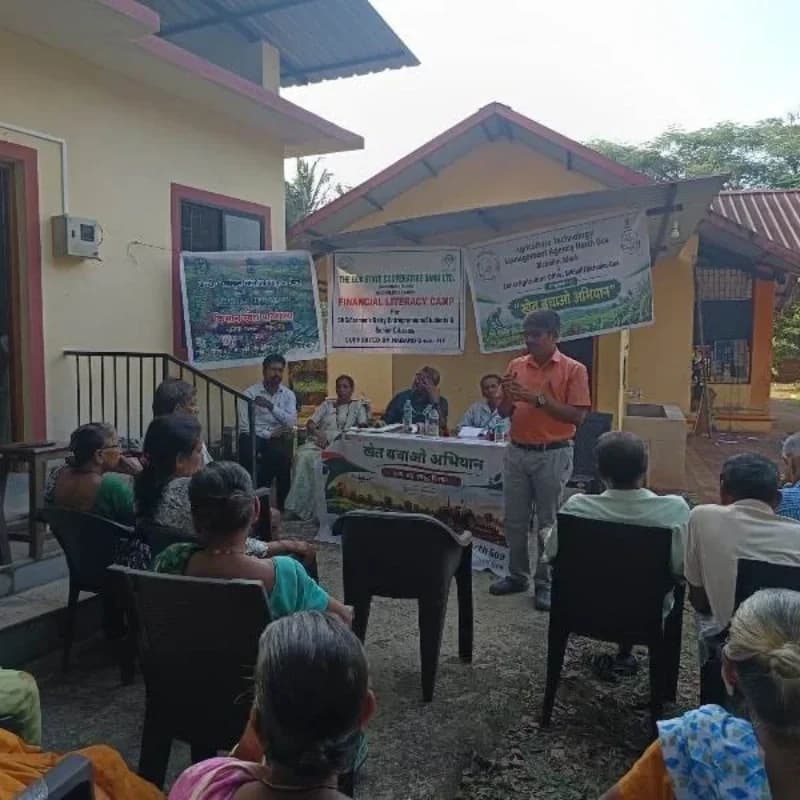
Panaji: Farmers in North Goa were encouraged to retain useful organic material on their farms rather than burn crop residues during a training programme at Piligoa village panchayat in Bicholim. ICAR–Krishi Vigyan Kendra, North Goa, conducted the session on November 6 under the Khet Bachao Abhiyan for the 2026 rabi season; the government released details on November 9.
The programme brought together 36 farmers—20 women and 16 men—and six officials. The KVK, which functions under ICAR’s Central Coastal Agricultural Research Institute, worked with Goa’s Directorate of Agriculture, ATMA North Goa and the Goa State Cooperative Bank’s Bicholim branch.
Keeping organic material useful
The central message was that leftover plant material need not be treated simply as waste. Senior scientist and KVK head N. Bommayasamy discussed its role in soil structure, moisture retention, nutrient cycling and microbial activity. He urged farmers to avoid burning residues and consider recycling methods suited to their farms.
The options discussed included mulching, composting and vermicomposting, using material as livestock bedding, incorporating suitable residues into soil, mushroom cultivation and biochar production. These were presented as different possible uses, rather than one method that every farmer should adopt in the same way.
The institute linked better residue management with maintaining soil organic matter and using available farm resources more effectively. The announcement did not report measured changes in yields or farm incomes from this particular programme.
Training also covered access to services
Assistant Agriculture Officer Dattaprasad Jog spoke about agricultural services, including the Soil Health Card and Kisan Credit Card. The session also covered the preparation and need-based use of locally made botanical and microbial farm inputs as part of integrated crop and soil management.
Bank branch manager Deepak S. Malik explained application procedures and information available on the Kisan Credit Card, Atal Pension Yojana and PM-KUSUM. Participants were encouraged to check eligibility and documentation with the bank. Attendance at the workshop was not described as an automatic approval for a loan, pension or subsidy.
The local session was a practical extension activity within the rabi campaign: it combined discussion of field residues with guidance on where farmers could obtain further agricultural and banking information.