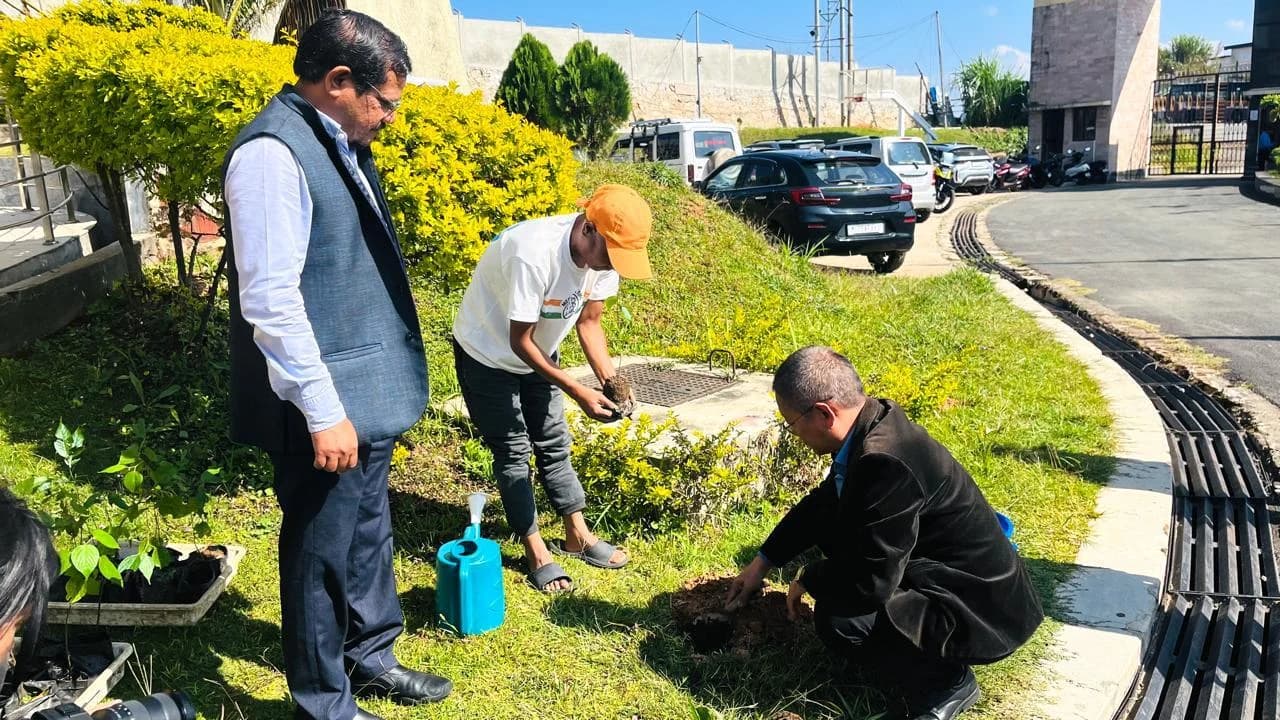
The National Institute of Fashion Technology (NIFT) in Shillong has planted 100 cherry blossom trees at its Umsawli campus and says it will now build a garden of natural dye and fibre plants to serve as a living laboratory for sustainable textiles, the Ministry of Textiles said on 14 November 2026.
The institute describes the plantation as the first step in a wider plan to make NIFT Shillong one of India's leading sustainable fashion campuses, combining the region's biodiversity and indigenous knowledge with design education and industry links.
Who was there
The drive was led by Campus Director Prof Dr Binaya Bhusan Jena, whom the ministry described as an advocate of a farm-to-fashion approach. Guests included Dr Nripemo Odyuo, Scientist-E and Head of Office at the Botanical Survey of India's Eastern Regional Centre in Shillong, and Prof Dr Rasananda Panda, Professor and Registrar of MICA, Ahmedabad, along with faculty and staff.
Why cherry trees in Shillong
The choice of tree carries local meaning. In Meghalaya, the autumn flowering of the Himalayan cherry (Prunus cerasoides) has become closely tied to Shillong's Cherry Blossom Festival, the ministry noted. The institute hopes the trees will give the campus a distinctive green identity, support biodiversity and raise its profile in the state's cultural and tourism landscape.
A garden for dyes and fibres
The larger project is a Natural Dye and Natural Fibre Garden. Drawing on Northeast India's botanical resources and traditional textile knowledge, it is meant to test the cultivation and use of dye-yielding plants and fibres such as ramie, kenaf, flax (linen) and Bombax ceiba (silk cotton), depending on whether they suit local growing conditions, according to the release.
One focus area will be blending these plant fibres with eri silk, which is closely linked to the region's indigenous weaving heritage. The ministry pointed to eri-ramie combinations as promising, pairing eri's softness and warmth with ramie's strength and durability. Research is also planned on extracting natural dyes, traditional colouring methods, fibre processing and products that could be fully biodegradable, depending on their materials and processing.
Why it matters
The campus wants to link botanical scientists, textile researchers, designers, artisans, weavers and entrepreneurs. By joining indigenous skills with modern research and development, the institute aims to encourage responsible use of resources, new materials and livelihood opportunities rooted in regional knowledge, the ministry said. The presence of the Botanical Survey of India and MICA, it added, reflects the cross-disciplinary nature of the effort.
What next
The release did not give a timeline or budget for the dye and fibre garden. The longer-term goal, it said, is an ecosystem for natural fibre cultivation, conservation of indigenous dyes, material innovation and student-led experiments, as part of a model of fashion education that is environmentally conscious and locally rooted.
PS · PIB