The National Highways Authority of India (NHAI) has received 32 bids for two elevated corridor projects along the Ganga and Varuna rivers in Varanasi, Uttar Pradesh, the Ministry of Road Transport and Highways said in a release issued through the Press Information Bureau on 27 November 2026. The two corridors, with a combined length of about 89.2 km, are meant to ease traffic in the city and improve access to its railway stations, airport, river port and major religious sites.
The Cabinet Committee on Economic Affairs approved both projects in July 2026. Each will be built in two packages under the Hybrid Annuity Model (HAM), a public-private model in which the government pays part of the construction cost and the rest is paid to the developer in instalments over time.
How many bids did each package get?
All four packages drew multiple bidders, according to the ministry. The Varuna corridor received eight bids for Package-I and seven for Package-II, while the Ganga corridor received eight bids for Package-I and nine for Package-II.
What is the Varuna Elevated Corridor?
The Varuna corridor is a 43.2 km, six/four-lane, mostly elevated road linking NH-31 with the Varanasi Ring Road along the Varuna river, at a capital cost of Rs 10,998.32 crore. The ministry describes it as a major component of the Varanasi Decongestion Plan. It is expected to improve access to Varanasi Airport, Kashi, Varanasi City and Varanasi Junction railway stations, Deen Dayal Upadhyaya Junction, Ramnagar Port, Sampurnanand Sanskrit University, the ghats and the neighbouring Chandauli region.
According to the release, travel time between NH-31 and Kashi Railway Station will fall from about 40 minutes to 20 minutes.
What is the Ganga Elevated Corridor?
The Ganga corridor is a 46 km, six-lane elevated road connecting NH-19 with the Varanasi Ring Road (NH-135B) along the riverbank, at a capital cost of Rs 14,447.64 crore. It includes a 910-metre cable-stayed bridge and a 1.32 km extradosed foot-over-bridge-cum-major bridge, along with loops, ramps, link roads and service roads.
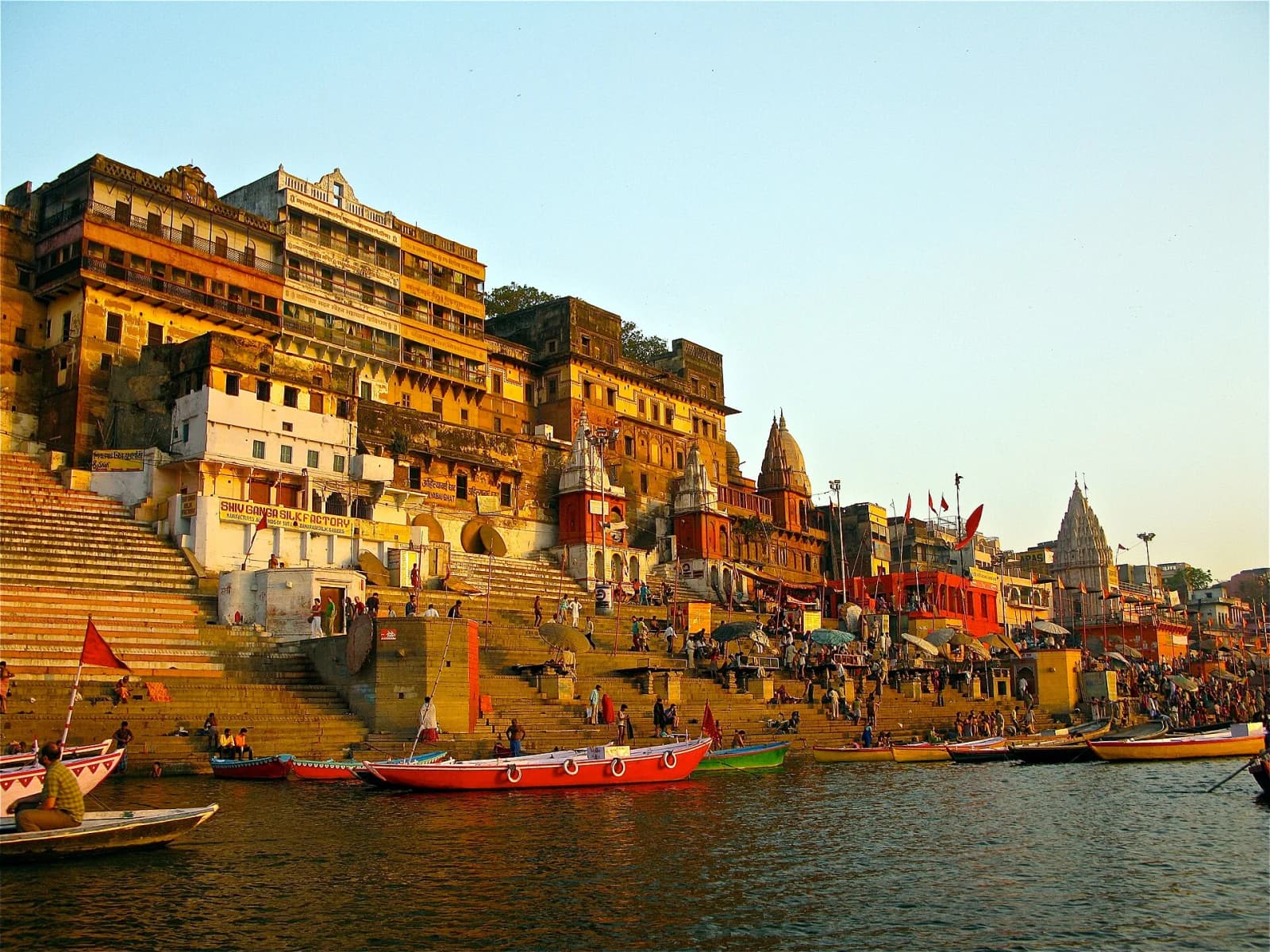
The ministry says average travel time on the route will fall from about 60 minutes to 20 minutes, and the journey between NH-19 and Kashi Railway Station from about 50 minutes to about 25 minutes. The corridor will connect to Ramnagar and Banaras Hindu University (BHU), Lal Bahadur Shastri Airport and the Ramnagar port of the Inland Waterways Authority of India, and improve access to the Kashi Vishwanath Temple, Namo Ghat and Ramnagar Fort.
Why does it matter for Varanasi?
Varanasi receives large numbers of pilgrims and tourists, and its old core around the ghats has narrow, crowded roads. Both corridors are designed for operating speeds of 80–100 km/h and are aligned with the PM Gati Shakti National Master Plan. The ministry says they will reduce vehicle operating costs, improve road safety and speed up freight movement across eastern Uttar Pradesh. The Varuna corridor will also improve access to an economic node and a social node in Chandauli and six logistics nodes.
The city is also working on visitor services: Uttar Pradesh Tourism recently launched a 15-language GPS audio tour covering all 84 ghats of Varanasi.
What happens next?
NHAI will now evaluate the bids before awarding contracts for the four packages. The release does not give a timeline for awarding the contracts or for construction.
Photo source · Ken Wieland, CC BY-SA 2.0