Israel's caretaker Prime Minister Benjamin Netanyahu on 28 November 2026 offered to let his main rival, Yashar party leader Gadi Eisenkot, serve first as prime minister in a rotating national unity government, a dramatic shift in the coalition standoff that has gripped Israel since the 27 October general election. The two men are due to meet on Sunday morning, 29 November, in Herzliya, near Tel Aviv.
What exactly did Netanyahu offer?
Netanyahu proposed that Eisenkot take the first turn as prime minister while he himself serves as alternate prime minister at the start of the term, according to Al Jazeera's report on his post on X. Netanyahu said his Likud party, as the largest in parliament, would "naturally" lead a unity government, but that he was setting that principle aside because of "the gravity of the existential danger" and the risk of a government unable to confront it.
Former prime minister Naftali Bennett had pushed for a rotation in which Eisenkot serves first, according to The Times of Israel.
How has Eisenkot responded?
Eisenkot neither accepted nor rejected the offer outright. "If Likud is ready for genuine unity, I am prepared to see how serious it is over the next 24 hours," he said, inviting Netanyahu to talks on basic guidelines and policy, based on a proposal he said Netanyahu had not yet answered. Likud later said the two would meet at 10 a.m. on Sunday at a hotel in Herzliya. The Times of Israel reported that Eisenkot briefed the leaders of other parties in the so-called change bloc, including Yisrael Beytenu, B'Yachad and The Democrats.
Israel's Channel 13 reported, without citing a source, that Eisenkot had been about to announce a coalition before Netanyahu's statement. That report has not been confirmed.
Who is opposing the deal?
Several opposition figures dismissed the move. The Democrats leader Yair Golan said: "Enough tricks and deceitful tactics," arguing that Netanyahu "has lost". Yousef Jabareen, leader of the Arab-led Joint List, accused Netanyahu of trying to block a change of government. Opposition figure Yair Lapid rejected the offer as a "transparent con", breaking with Bennett, The Times of Israel reported. Protesters rallied outside Bennett's home in Ra'anana against a deal, while a separate pro-unity protest was held near the Knesset.
The ultra-Orthodox United Torah Judaism party said it supports unity, though its chair Ya'akov Asher said the party's priority remains the issue of Haredi military conscription.
Why does it matter?
The election left no clear majority in the 120-seat Knesset. Netanyahu's bloc of right-wing and ultra-Orthodox parties won 53 seats, while Eisenkot and his presumed partners won 48, Al Jazeera reported. Israel's president tasked Eisenkot with forming a government, and he has pledged to present one by the official deadline of 6 December without seeking a 14-day extension. He has accused Likud of stalling talks to force a new election.
The talks come as Israel faces pressing decisions on Gaza. The Times of Israel reported that Netanyahu plans to convene the security cabinet to advance US President Donald Trump's Gaza plan. Violence in the territory has continued, including an Israeli strike that killed two staff at a Doctors Without Borders clinic in Gaza City.
What happens next?
Sunday's meeting will test whether a power-sharing arrangement is possible. As of Saturday night, there was no agreement on the terms of a rotation, and Eisenkot's 6 December deadline to present a government remains in place.
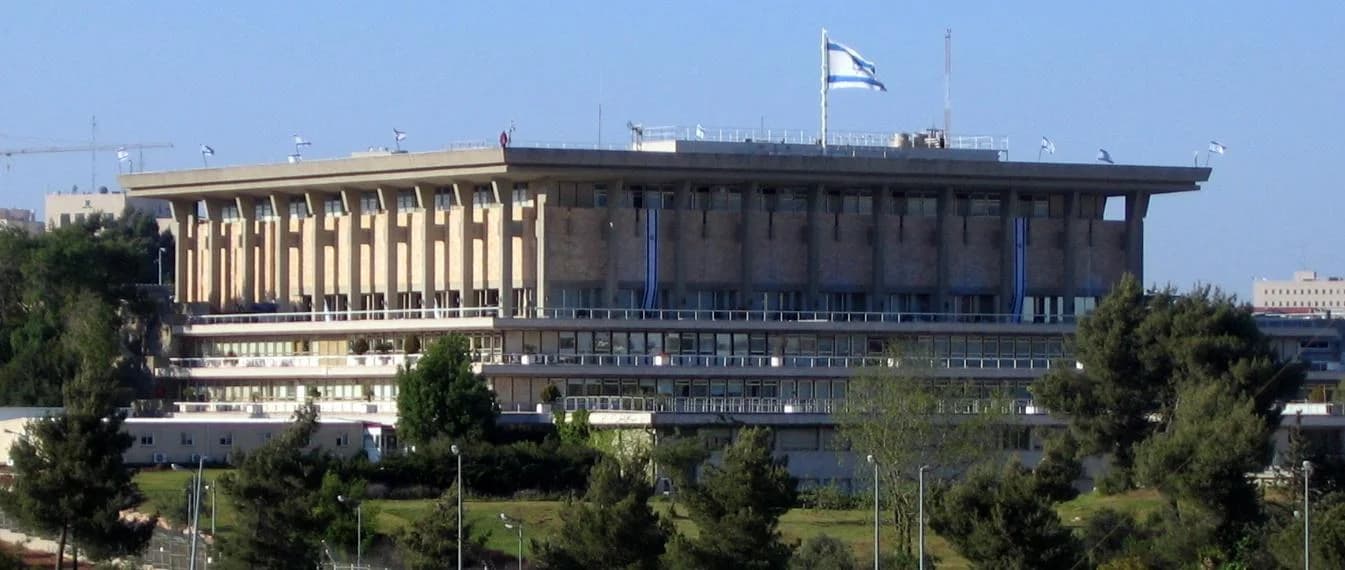
Photo source · Beny Shlevich, CC BY-SA 3.0