NASA's twin Escape and Plasma Acceleration and Dynamics Explorers (ESCAPADE) spacecraft captured parting visible and thermal-infrared images of Earth's Western Hemisphere on November 9, 2026, roughly three hours after completing a powered Earth gravity-assist flyby to set course for Mars.
Parting Views Captured 38,500 Miles From Earth
Acquired around 9 a.m. EST from a distance of about 38,500 miles as the pair receded from Earth at roughly 7,700 mph, the observations were taken by Northern Arizona University's Visible and Infrared Observation System camera (image credit: NASA/UC Berkeley/Northern Arizona University). The visible-light frame captured clouds swirling across South America and the Atlantic Ocean, while the companion thermal-infrared frame mapped surface and cloud-top temperatures across the sunlit Western Hemisphere.
Ten-Month Journey to Decode Martian Atmosphere Loss
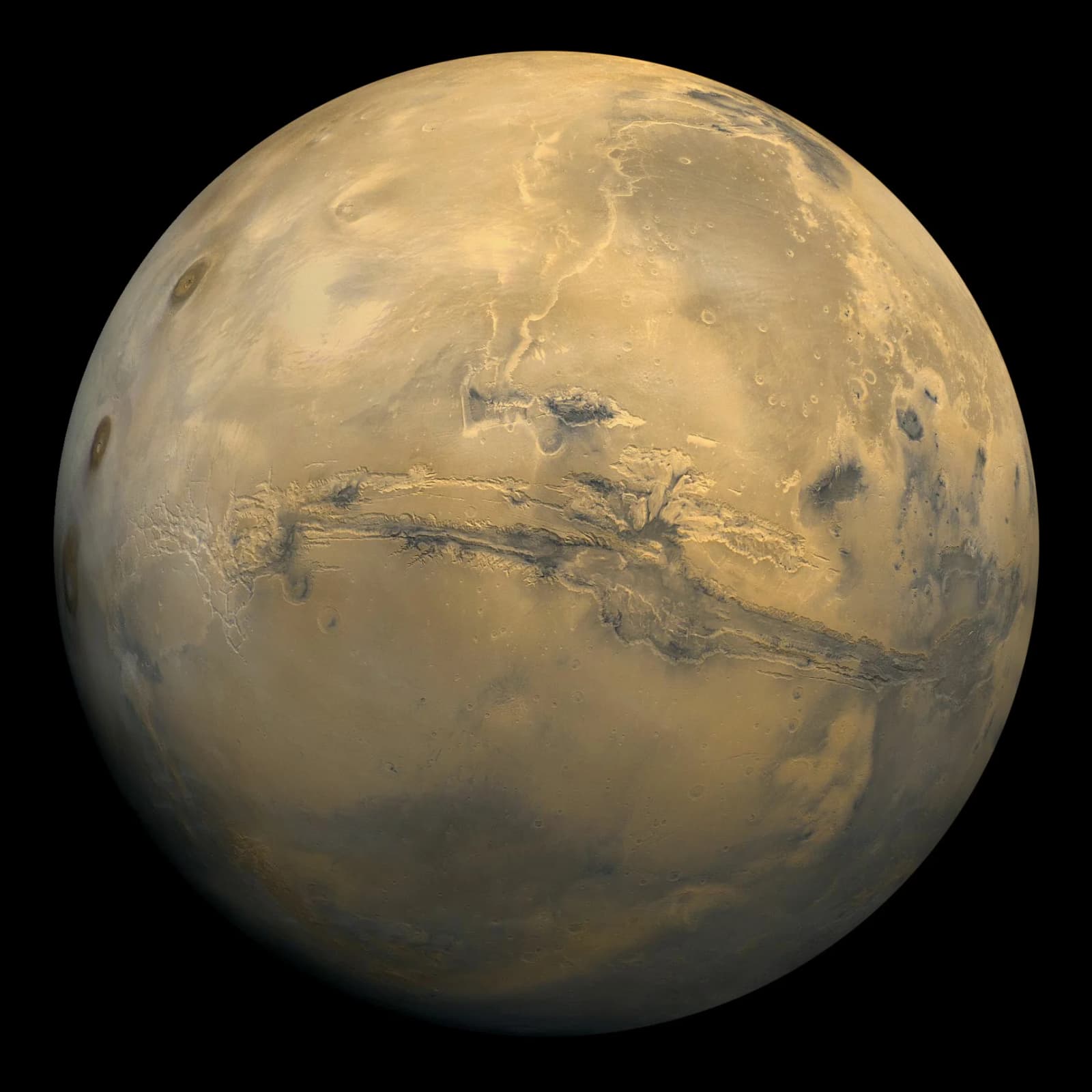
Managed through a partnership between NASA and UC Berkeley, the twin probes have now embarked on a 10-month interplanetary cruise to Mars. Once in orbit around the Red Planet, ESCAPADE will gather simultaneous two-point measurements of Mars's magnetosphere and upper atmosphere to reveal how the million-mile-per-hour solar wind strips away atmospheric gases over time.