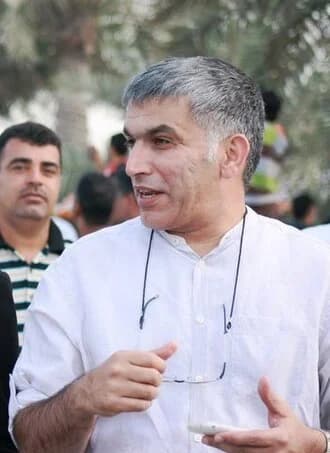
Nabeel Rajab, the Bahraini human rights activist who became one of the best-known faces of the 2011 pro-democracy protests in the Gulf kingdom, has died in Turkey at the age of 62, the Associated Press reported.
Rajab died on Tuesday, 17 November 2026. Ebrahim Sharif, an activist and close friend of the family, told the AP that Rajab's wife and daughter found him unresponsive at their home in Turkey early that morning and took him to a hospital in Istanbul, where he was pronounced dead. Sharif said the family believes he probably died of a heart attack. The AP said the cause of death has not been officially confirmed.
The Bahrain Center for Human Rights, which Rajab once led as president, confirmed his death in a post on X, the AP reported. "We extend our sincere condolences and heartfelt sympathy to his esteemed family," the group wrote.
A student in Pune, an activist in Manama
Born in Bahrain on 1 September 1964, Rajab studied political science and history at the University of Pune in India and graduated in 1987, according to Middle East Eye. He became active in human rights work in the 1990s and co-founded the Bahrain Centre for Human Rights in 2002. Authorities dissolved the centre in 2004, but it kept operating, Middle East Eye said.
From 2010 to 2020 he was deputy secretary-general of the International Federation for Human Rights (FIDH), the AP reported.
During the 2011 Arab Spring, Rajab joined thousands of protesters at Manama's Pearl Roundabout, who demanded fair elections, a constitutional democracy and an end to preferential treatment for the Sunni minority, the AP said. The uprising was crushed with the help of Saudi and Emirati troops.
Years in and out of prison
Rajab was jailed several times, largely over public statements and social media posts. Middle East Eye listed the cases: he was detained in May 2012 for criticising the interior ministry; sentenced in August 2012 to three years over protests, reduced to two on appeal; and re-arrested in October 2014, months after his release, over posts criticising the interior and defence ministries.
He was arrested again in June 2016 over comments on Bahrain's role in the Saudi-led campaign in Yemen and on alleged torture at Jaw Prison, and in February 2018 he was sentenced to five years for spreading false news and insulting state institutions, Middle East Eye reported. The AP said he was released to home detention in June 2020 while still serving that sentence.
The United Nations, rights groups and some of Bahrain's allies, including the United States, criticised his detentions, according to the AP.
Exile during the Iran war
Rajab left Bahrain with his family early in the Iran war, as authorities cracked down on Shiite-led protests, the AP reported. He had accused the government of torturing an imprisoned activist and had told the AP he feared arrest if he returned. Middle East Eye said that accusation concerned the death of former political prisoner Sayed Mohamed Almousawi.
Tributes
"Nabeel really stood out for standing up for the most vulnerable even when he knew the cost would be extremely heavy," Sayed Ahmed AlWadaei of the London-based Bahrain Institute for Rights and Democracy told the AP. FIDH president Alexis Deswaef said: "The world has lost a truly exceptional human rights defender."
Neither the AP nor Middle East Eye reported any statement from the Bahraini government on his death.
PS · Bahrain Centre for Human Rights, CC BY-SA 3.0