Madhya Pradesh, which in 2022-23 became the first state in India to present a separate child budget, now sets aside a smaller slice of its total spending for children than it did four years ago, according to an analysis published by the Free Press Journal on Children's Day, 14 November.
Bigger budget, smaller share
In 2022-23 the state earmarked Rs 57,803 crore for children out of a total budget of Rs 2.79 lakh crore, or 20.5 per cent. For 2026-27 the child budget stands at Rs 75,877 crore against a total outlay of Rs 4.38 lakh crore, which brings the share down to about 17 per cent, the report said. The 2026-27 figures match those listed in a published summary of the state budget, which puts the total allocation at Rs 4,38,317 crore.
In absolute terms, then, money for children has grown by about Rs 18,000 crore over the period. But the overall budget has grown faster, so children's claim on state spending has shrunk, even though children make up about 40 per cent of the state's population, the newspaper noted.
How the child budget works
The child budget is built from two kinds of schemes. Child-specific schemes are meant only for children, so their entire allocation counts towards child welfare. Child-responsive schemes serve wider groups, but at least 30 per cent of their allocation must be spent on children.
The Women and Child Development (WCD) department is the nodal agency that prepares the statement. Nineteen departments took part in child budgeting for 2026-27, up from 17 in 2022-23. However, the report said that no representatives of the home, revenue, transport, environment, AYUSH, and village and cottage industries departments attended a WCD workshop on next year's child budget, and these departments did not say how they would make their rules child-friendly.
A state-level committee on child budgeting, which brings together officials from various departments, UNICEF and child welfare experts, has not held a single meeting in the past three years, and its reconstitution has been pending for months, the newspaper reported.
Why it matters
The analysis sets the funding trend against some of the weakest child health indicators in the country. Citing the latest National Family Health Survey and Sample Registration System data, it said Madhya Pradesh has an infant mortality rate of 40 per 1,000 live births, the highest of any state, and a child mortality rate of 46 to 49 per 1,000 live births, also the highest in India.
Nearly 39.7 per cent of children under five are underweight, the second-highest level after Jharkhand, and 72.7 per cent of children aged six to 59 months are anaemic. The report also pointed to a rise of almost 46 per cent in child marriages in 2025 compared with 2020.
No response from the department
Asked about the implications of the falling share, WCD secretary GV Rashmi directed the reporter to the department's commissioner. Commissioner Sandeep GR did not respond to repeated calls and messages, the newspaper said.
What happens next
Work on the child budget for the next financial year has already begun through the WCD workshop. Whether more departments take part, and whether the state-level committee is revived before the next budget, will indicate how seriously the state treats the commitment it made when it introduced the child budget four years ago.
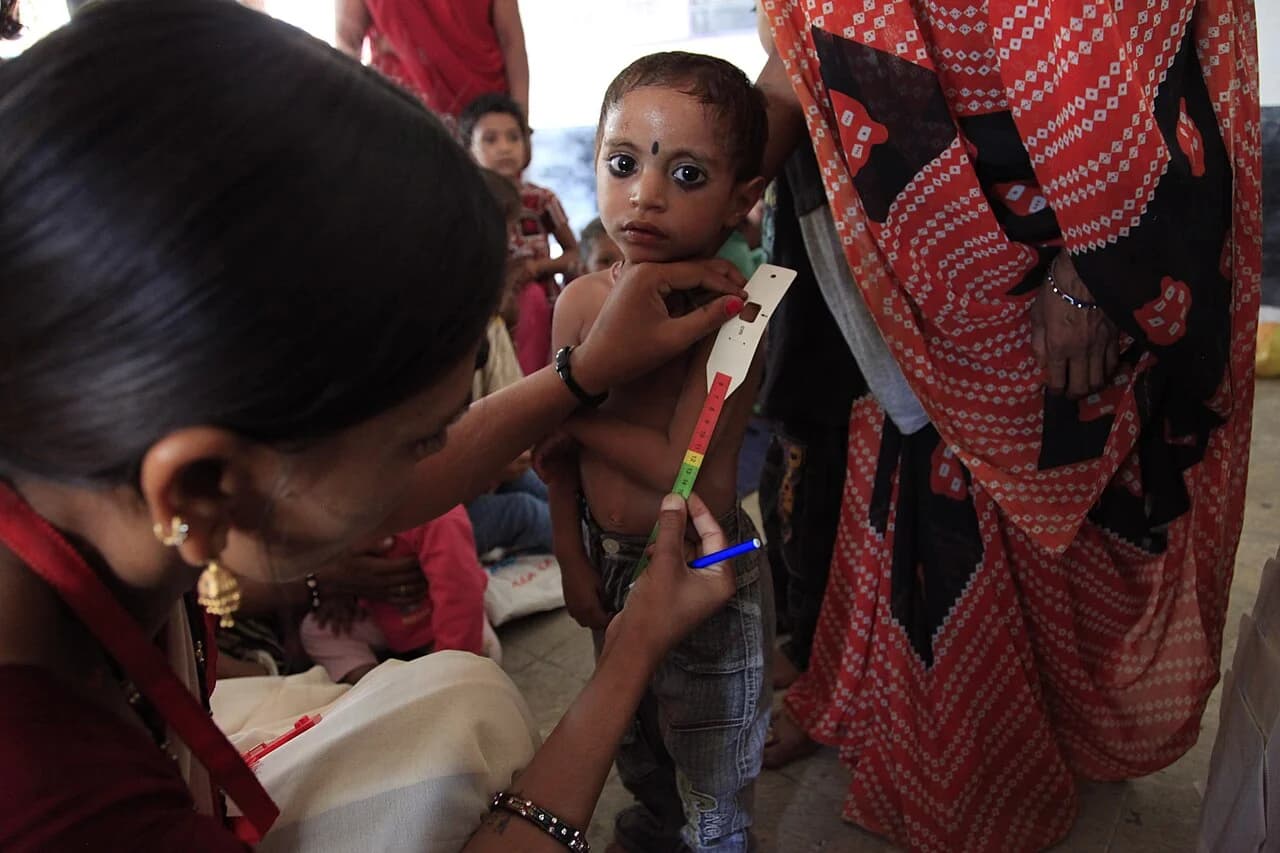
PS · DFID - UK Department for International Development, CC BY 2.0