Madhya Pradesh is spending more money on its children than it did four years ago, but a smaller slice of its overall budget, according to an analysis published by the Free Press Journal on Children's Day, 14 November 2026.
The newspaper reported that the share of the state budget earmarked for children has fallen from 20.5% in 2022-23 to 17% in 2026-27, even though children make up about 40% of the state's population.
The numbers
Madhya Pradesh introduced a separate child budget in 2022-23, the first state to do so, according to the report. That year, Rs 57,803 crore of a total budget of Rs 2.79 lakh crore was set aside for children.
For 2026-27, the child allocation stands at Rs 75,877 crore, the report said. Finance Minister Jagdish Devda presented a Rs 4.38 lakh crore budget for the year in the Assembly in February. The allocation for children has therefore risen in absolute terms, but at a slower pace than the budget as a whole.
The child budget is split into two parts, the newspaper explained: child-specific schemes, which are meant entirely for children, and child-responsive schemes, in which at least 30% of the funds must reach children.
Health indicators remain weak
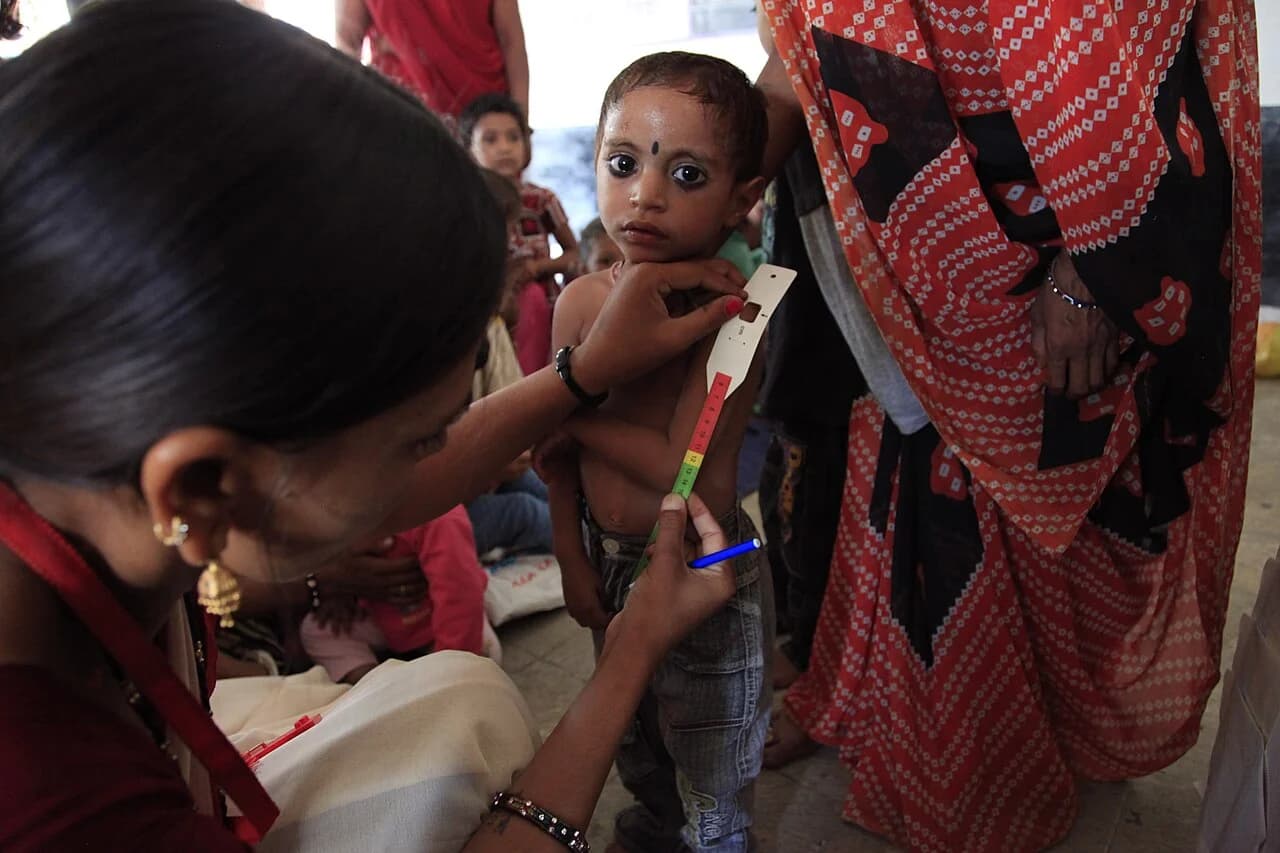
The analysis set the budget trend against the state's child health record. Citing National Family Health Survey and Sample Registration System data, it said Madhya Pradesh has the country's highest infant mortality rate, at 40 deaths per 1,000 live births, and a child mortality rate of 46 to 49 per 1,000.
According to the report, about 39.7% of children under five in the state are underweight, second only to Jharkhand, and more than 72.7% of children aged six months to five years are anaemic. It also said reported child marriages rose by nearly 46% in 2025 compared with 2020.
Gaps in the process
Only 19 departments took part in child budgeting for 2026-27, up from 17 in 2022-23, the newspaper reported. It said departments including home, revenue, transport and environment stayed away from a child budget workshop organised by the Women and Child Development (WCD) department.
The state-level committee on the child budget has not met in three years, and its reconstitution has been pending for months, the report added.
When asked about the falling share, WCD secretary GV Rashmi referred the reporter to the department's commissioner, the newspaper said. Commissioner Sandeep GR did not respond to repeated calls and messages, according to the report. The state government had not issued a public response to the analysis at the time of writing.
Why it matters
A separate child budget is meant to make it easier to track how much a government actually spends on children across departments. A shrinking share, alongside high rates of infant deaths, underweight children and anaemia, raises questions about whether funding for children is keeping pace with need.
What next
Reviving the state-level child budget committee and bringing more departments into the exercise are the obvious next steps flagged by the analysis. The figures could also come up when the Assembly meets for its winter session.
PS · DFID - UK Department for International Development, CC BY 2.0