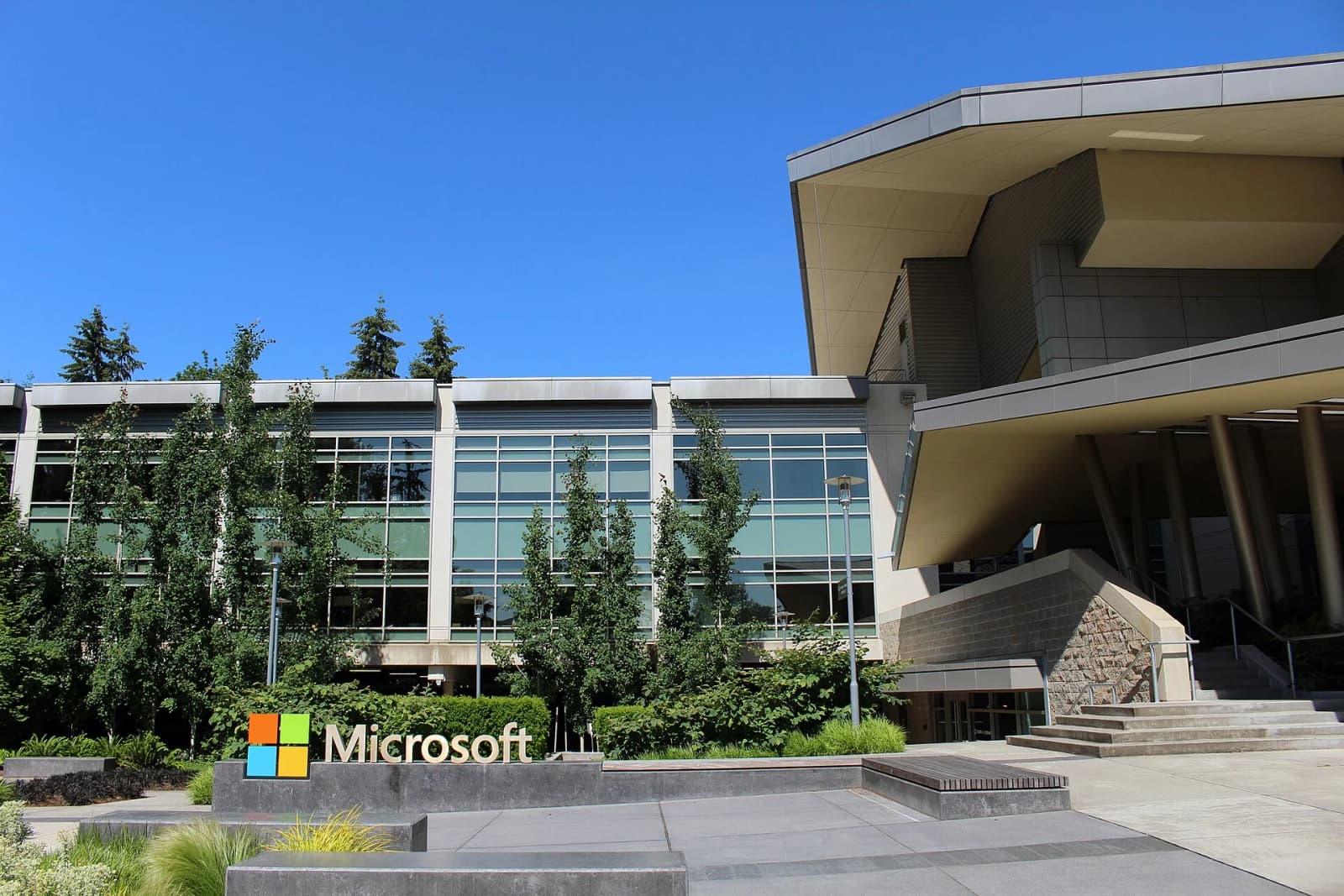
Microsoft's in-house AI division, Microsoft AI (MAI), on Tuesday, 17 November, announced seven new models at the company's Ignite 2026 conference, positioning them as cheaper alternatives to rival systems from OpenAI and Anthropic. In a post on its website, the unit said the releases respond to customer demand for models that are affordable enough to keep AI agents running around the clock.
The performance and price comparisons below are Microsoft's own claims; the company's post gives relative figures against competitors rather than full price lists for most models.
The seven models
- MAI Code 2: a model for everyday enterprise coding. Averaged across four coding benchmarks, Microsoft says it delivers 98% of the performance of OpenAI's GPT-6.1 Sol at about 40% of the price, and 96% of Anthropic's Claude Opus 5.5 at about 5% of the price. It is available in GitHub Copilot. Microsoft acknowledged the model is not yet tuned for fundamental science research or very long-running agentic work.
- MAI Code 2 Flash: meant for high-volume routine coding. The company says it is comparable to GPT-6 Luna at 65% of the price and to Claude Haiku 5.5 at 20% of the price. It is in GitHub Copilot and in limited-access preview on Microsoft Foundry.
- MAI Cyber 2 Flash: a cyber-defence model built to monitor and patch live systems continuously. Microsoft says it matches GPT-6 Astra's quality on the CyberGymE2E benchmark at under 2% of the cost per task, and that its output tokens cost 86% less than those of its predecessor, MAI Cyber 1.1 Flash.
- MAI Image 2.7: an image generation and editing model. Microsoft says it ranks first for image editing on the Artificial Analysis leaderboard and fourth for text-to-image. A Flash version generates images at about $10 per 1,000. Both are on Microsoft Foundry.
- MAI Realtime 1: the unit's first live speech-to-speech model, designed for low-latency conversation and priced from $0.01 per audio minute. It can be tried at MAI Labs.
- Dragon Copilot Transcribe: a medical transcription model built on MAI-Transcribe-2. Microsoft says it is live in its Dragon Copilot product, handles 10 million doctor–patient encounters a month and halves error rates in multilingual workflows.
- Decision 1.1: a routing model that sends each request to a larger, costlier model only when needed. Microsoft says it is used by 4,000 customers.
Own chip and licensed weights
Alongside the models, Microsoft said its second-generation AI accelerator chip, Maia 200, is now in production and running the company's largest models, delivering 1.7 times more tokens per watt.
The company also introduced MAI Licensed Weights, an offering under which customers can take a frontier MAI model, optionally customise it with their own data, and run it inside their own Azure environment. Microsoft said customers control who can access the model, and that their data and adaptations remain theirs.
As an example of a custom model, the post cited US telecom company AT&T, which it said built an MAI model for 5G network operations analytics that outperformed GPT-6.1 Sol at 50 times lower cost.
What is not yet clear
The announcement does not give general-availability dates for MAI Cyber 2 Flash or Licensed Weights; the post confirms the cyber model only for existing customers of Microsoft's MDASH security scanning system, where the company says it already accounts for almost 40% of scans. The benchmark results have been published by Microsoft itself.
The company summed up its pitch in the post with the line: "This is Frontier Intelligence you can trust, from the company you can trust."
PS · Coolcaesar, CC BY-SA 4.0