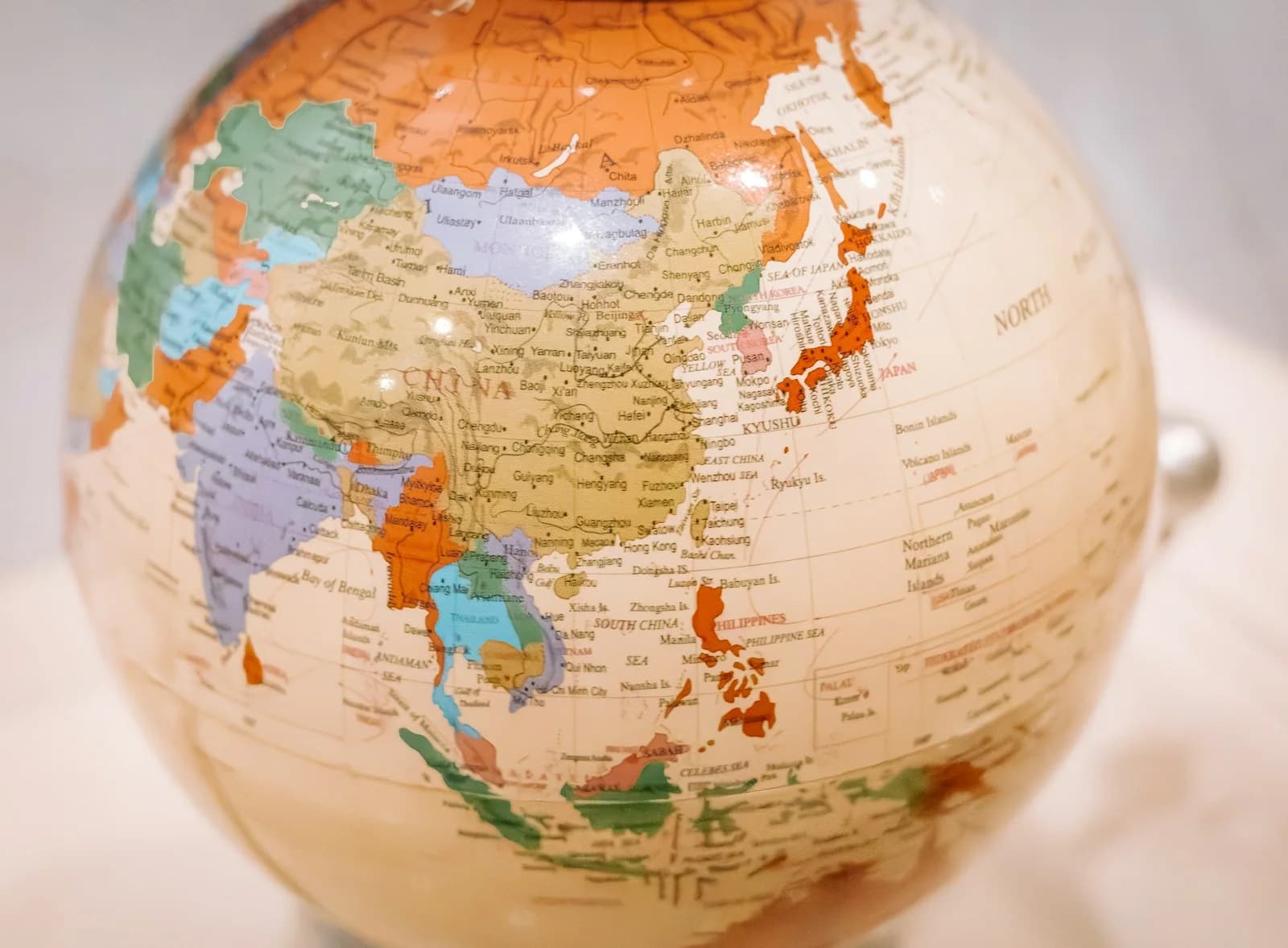
India has held its place as the third most powerful country in Asia, behind the United States and China, in the Lowy Institute's 2026 Asia Power Index, released on 23 November 2026. India's overall score rose 0.5 points to 40.5, while the gap between the two superpowers at the top shrank to its narrowest since the Index began in 2018.
The annual Index ranks 27 countries and territories in the region across eight measures of power, from military capability and economic weight to diplomatic and cultural influence.
Where does India stand in the 2026 Asia Power Index?
India is ranked third with 40.5 points, ahead of Japan (38.6, down 0.2) and Russia (32.2, up 0.1). The Lowy Institute's India country profile says India "consolidated its major power status" this year and grew more influential in Asia.
Diplomatic influence remains India's highest-scoring measure at 70.3, though it slipped 0.5 points. India gained in cultural influence (up 2.3 to 43.8), defence networks (up 2.2 to 18.6), future resources (up 1.1 to 56.2) and military capability (up 0.5 to 48.5). Its scores fell for economic capability (down 0.7 to 26.4) and resilience (down 0.1 to 55.4).
The institute credits greater regional defence engagement and sales of BrahMos missiles to Southeast Asia for India's stronger defence networks. It also notes that India's trade and investment ties stayed stable, making its economic relationships among the few in the region that did not weaken.
What did experts say about Prime Minister Modi?
Experts surveyed for the Index rated Prime Minister Narendra Modi the second-most effective leader in the region, after Chinese President Xi Jinping. The institute adds, however, that India's low profile during the Gulf conflict weighed on perceptions of Mr Modi's global leadership.
The Index also continues to find that India exerts less influence in Asia than its resources would suggest, giving it a score of minus 3.3 on this "power gap" measure, an improvement from minus 4.0.
US lead over China at a record low
The United States remains first with 78.9 points, but that is 1.5 points lower than last year. China is second with 73.6, almost unchanged. The resulting 5.3-point gap is the smallest recorded by the Index.
The institute says the US war with Iran drew military resources away from the Pacific and depleted American missile stocks, while tariffs, unilateral policies and the treatment of allies caused a record one-year drop in US diplomatic influence. US defence networks in Asia fell to their lowest level in the Index's history, as regional joint exercises and defence dialogues declined. MapMyTimes has reported on US President Donald Trump's threat of fresh strikes on Iran if talks fail.
China's diplomatic influence reached a record high, driven by its strong presence in regional summits, the institute says. In an accompanying analysis, Lowy Institute research associate David Vallance wrote that the gap between American and Chinese military capabilities is smaller than ever, and that the US can no longer claim to be Asia's uncontested military power.
Other key findings
- Southeast Asian countries showed modest resilience in a difficult year, but Indonesia's diplomatic influence fell significantly.
- Defence cooperation among China, Russia and North Korea accelerated in 2026, alongside closer economic ties.
Why it matters for India
With Japan just 1.9 points behind, India's third place is secure but not comfortable. The findings suggest that India's growing defence partnerships in Southeast Asia are adding to its weight in the region, while its economic capability, the measure on which it lost the most ground this year, remains its weakest area relative to its size.