Kanal-Centre Pompidou, a vast new museum of modern and contemporary art built inside a former Citroën car garage beside the Charleroi-Brussels Canal, opened to the public in Brussels, Belgium, at 10 am on Saturday, 28 November 2026. The venue, run in partnership with the Centre Pompidou in Paris, is staying open for 36 hours across its opening weekend, with free access until 10 pm on Sunday, 29 November, according to Kanal's opening announcement.
All 30,000 free exhibition tickets for the opening weekend were claimed within a day, the museum said. Visitors without a ticket can still enter the building and join a free programme of performances, concerts, DJ sets, films and family workshops in its public spaces. About 5,000 pupils from 27 schools were given an advance visit on Wednesday, 25 November.
What is Kanal-Centre Pompidou?
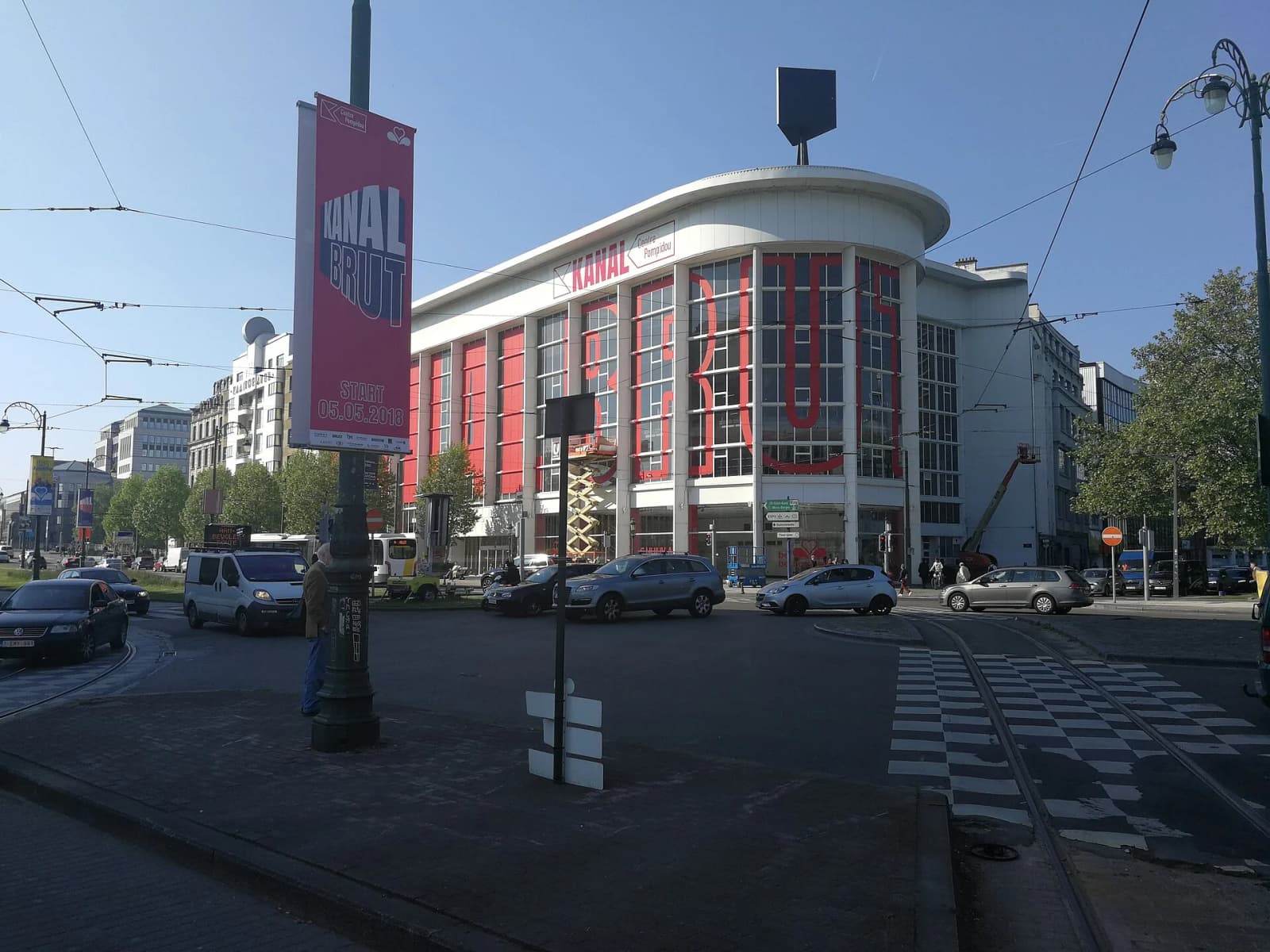
Kanal-Centre Pompidou is a 40,000-square-metre cultural complex that its operators describe as Europe's largest museum development. It occupies a garage built in 1933-34 that Kanal calls a "cathedral for cars". The conversion was designed by Atelier Kanal, a consortium of EM2N of Zurich, noAarchitecten of Brussels and Sergison Bates architects of London, which inserted three new buildings inside the old structure. More than 3,400 construction workers worked on the project.
More than 20,000 square metres are free to enter, including a 20-metre-high showroom, a rooftop terrace, a bookshop, a library, workshop spaces and a 700-square-metre indoor playground. The complex also houses Kanal Architecture, the city's architecture museum and archive formerly known as CIVA. The Art Newspaper has put the cost of the redevelopment at about €230 million.
How is the Paris Centre Pompidou involved?
The Paris institution is the museum's long-term partner under a 2017 agreement with the Brussels-Capital Region and the Kanal Foundation that runs until 2031. According to the Centre Pompidou, it lends works from its collection for semi-permanent displays, stages two temporary exhibitions a year and advises on acquisitions and programming. Flemish public broadcaster VRT reported that Kanal will pay nearly €12 million for the loans over the coming years, while the Paris museum is being renovated.
What can visitors see?
The museum has opened with ten exhibitions. The centrepiece, "A truly immense journey", brings together more than 350 works from the early 1900s to today, drawn mainly from the Centre Pompidou and Kanal collections, and runs until 9 January 2028. VRT reported that it includes works by Picasso, Matisse and Mondrian alongside Belgian artists such as Marthe Donas, Luc Tuymans and Pierre Alechinsky, with movement as its central theme.
Other opening shows include "An infinite woman", a contemporary African art exhibition that VRT said is linked to a 1925 Citroën motor expedition across Africa, and solo presentations by artists including Otobong Nkanga, Banu Cennetoğlu, Joëlle Tuerlinckx and Manon de Boer, most running into 2027.
What have officials said?
"This is a moment of celebration, a decade in the making," said Yves Goldstein, chief executive of Kanal. Xavier Rey, director of the Centre Pompidou's Musée national d'art moderne, called the opening "a key milestone in an ambitious collaboration". Boris Dilliès, Minister-President of the Brussels-Capital Region, told VRT it was "Brussels' finest and most ambitious project since the 1958 World Fair". Artistic director Kasia Redzisz told the broadcaster the team wants to explore how the works resonate with local stories about trade, exchange, migration and movement.
Why it matters and what comes next
The project has been years in the making: a temporary programme called "Kanal brut" drew 400,000 visitors between May 2018 and June 2019 before building works began in 2020, according to the Centre Pompidou. After the free opening weekend, the building's public areas stay free, while the exhibitions are ticketed. The live arts programme for the first season features artists including Hans Haacke, Sharon Hayes and Miet Warlop, Kanal said.
Photo source · Marc-AntoineV, CC BY-SA 4.0