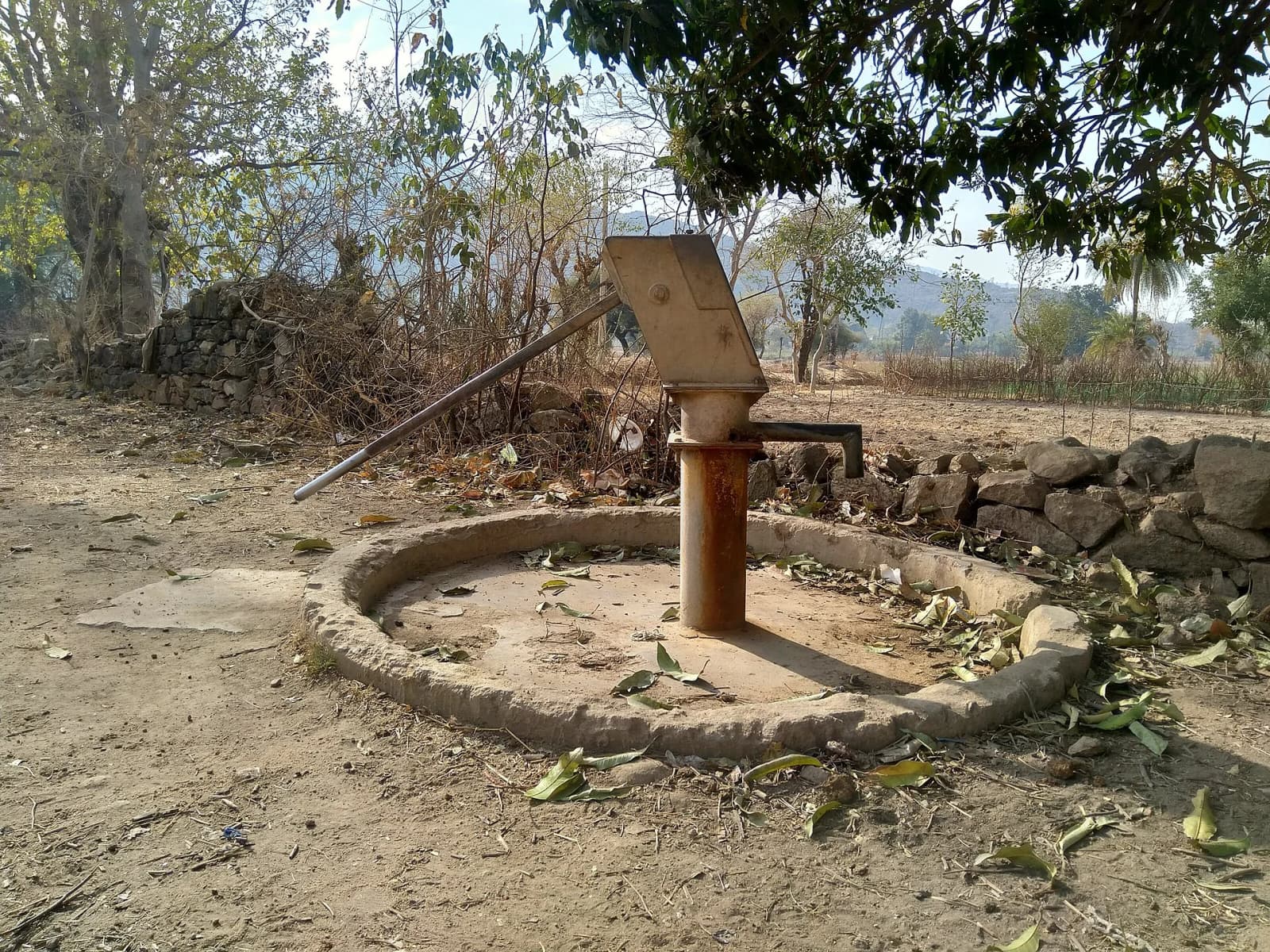
Indore, Madhya Pradesh's commercial capital, is experiencing acute groundwater depletion roughly three months earlier than usual, with deep residential borewells failing in late November rather than February or March. Across several rapidly expanding localities, borewells sunk between 300 and 550 feet are now delivering water for just 10 to 20 minutes per cycle before running dry.
Borewells Run Short Across Key Indore Localities
Field reports show severe drawdown across both established neighbourhoods and peripheral corridors: borewells in Nipania (350 feet), Paricharika Nagar (230 feet), and Mahalakshmi Nagar (450 feet) are yielding water for only about 10 minutes. In Kushwah Nagar, 320-foot borewells last roughly 12 minutes, while Tejaji Nagar (300 feet) and Patnipura (450 feet) report around 15 minutes of flow.
Even deeper installations in Pipliyarao (350 feet) and along the Bypass corridor (550 feet) have dropped to roughly 20 minutes of pumping output, leaving housing societies scrambling for tanker supplements well ahead of peak summer.
Supply-Demand Gap and Conservation Response
Civic planners point to a structural gap of nearly 200 million litres per day (MLD): Indore needs roughly 650 MLD daily, whereas the Narmada pipeline supplies around 450 MLD. Indore Municipal Corporation (IMC) adviser Suresh MG stressed that average per-capita daily consumption—currently around 200 litres—must be curtailed toward 70 litres to stretch available reserves.
IMC Water Works in-charge Abhishek Sharma said the civic body is planning new filling hydrants and reviving legacy water sources to reinforce distribution. Meanwhile, groundwater scientist Sudhindra M. Sharma recommended strict household water budgeting, reduced flush volumes, neighbourhood borewell management committees, and decisive action against illegal groundwater extraction across Madhya Pradesh's largest urban hub.