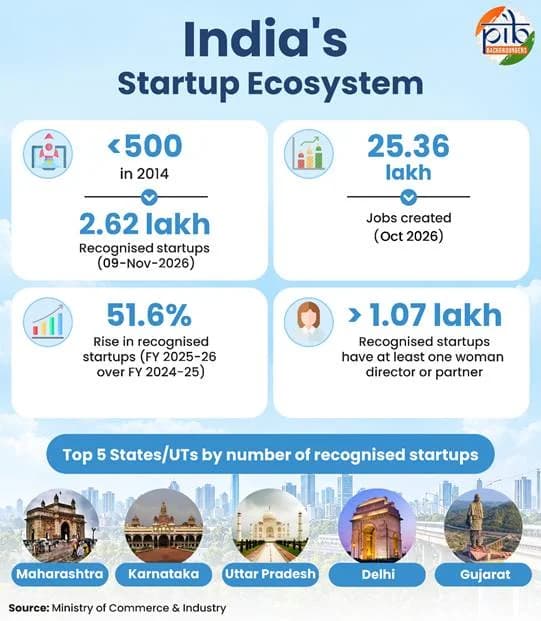
India had more than 2.62 lakh DPIIT-recognised startups as of November 2026, according to a government backgrounder issued on National Entrepreneurship Day on November 9. The review also reports more than 25 lakh jobs created by startups up to October 2026.
The figures measure different parts of the ecosystem and use separate reporting cut-offs. Recognition counts registered enterprises meeting the programme’s criteria; it does not by itself establish that every business is profitable or has raised investment.
Growth beyond the main metropolitan hubs
The review says more than 55,200 startups were recognised during financial year 2025–26, the highest annual number since 2016. It reports a 51.6 per cent increase in new recognitions compared with 2024–25 and a 36.1 per cent rise in direct jobs created over the same comparison period.
Startups are present across all states and Union Territories, according to the account. It identifies Maharashtra, Karnataka, Uttar Pradesh, Delhi and Gujarat as leading regions by recognised startups and direct employment at the March 31, 2026 cut-off.
The backgrounder says 52 per cent of recognised startups originate in non-metropolitan cities, pointing to a wider geographical spread of enterprise. Lower costs, access to talent, industrial clusters and improving infrastructure are among the factors it cites.
Women’s participation and training
More than 1.07 lakh recognised startups had at least one woman director or partner as of March 2026. The government put that share at about 48 per cent at the time. That March percentage should not be calculated against the later November total.
The review also discusses Swavalambini, a programme launched in 2025 to support young women from business ideas to enterprise creation through training, market and financial guidance, legal support and mentorship. Selected participants receive 21 weeks of mentoring and handholding.
An accompanying official graphic reports 1,276 participants trained under the entrepreneurship awareness programme against a target of 1,200, and 602 under the development programme against a target of 600. It also lists 82 faculty members trained. These are programme delivery counts, rather than a count of businesses made commercially successful.
Finance, incubation and market connections
The government account describes an ecosystem of seed support, credit guarantees, incubators and mentoring platforms. These programmes address different needs and do not operate as a single automatic grant available to every startup.
For entrepreneurs, the expanding number of recognised businesses is one indicator of participation. Access to customers, sound cash flow and sustainable operations remain separate tests of whether an enterprise can endure.