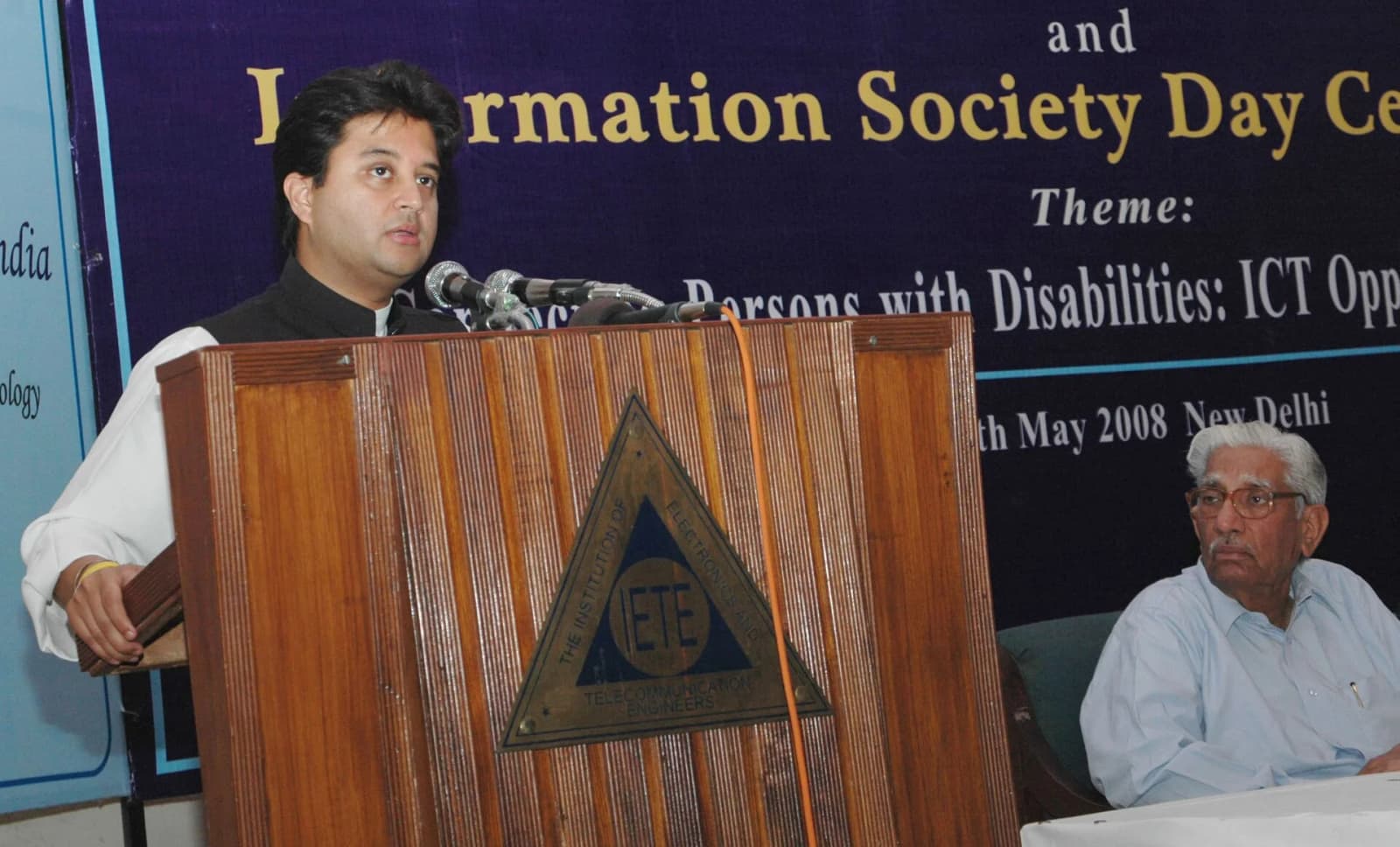
India will host the International Telecommunication Union's (ITU) Plenipotentiary Conference in 2030, after member states formally accepted New Delhi's offer at the close of the 2026 conference (PP-26) in Doha, Qatar, on 27 November 2026. Union Communications Minister Jyotiraditya M. Scindia invited delegates to India through a video message played before the closing session, according to the Ministry of Communications.
What did PP-26 decide about India?
The conference approved India as host of the next Plenipotentiary Conference, known as PP-30. The ministry said the decision completes a process that began when the government lodged a formal expression of interest in November 2024. India then put formal proposals to the ITU Council in 2025 and again in 2026; at its 2026 session in Geneva the Council approved the invitation and forwarded it to Doha for final acceptance.
The ITU's own closing press release also lists India as host of PP-30. It adds that Uzbekistan will hold the 2028 World Telecommunication Standardization Assembly in Samarkand.
Why does the Plenipotentiary Conference matter?
The Plenipotentiary Conference is the ITU's highest policy-making body and meets every four years. Member states use it to set the agency's overall direction, adopt its strategic and financial plans, and elect its senior officials and the 48-member ITU Council.
In his message, Mr Scindia thanked member states for electing India to the ITU Council for the 2027–2030 term and for backing its hosting bid. He described both mandates as "an honour and a responsibility" and invoked the idea of Atithi Devo Bhava (the guest is God), saying India wanted delegates to see its heritage as well as its digital journey.
"Let us come together in India in 2030—not merely to convene a Conference, but to strengthen our bonds of friendship, deepen international cooperation and shape a more connected, inclusive and digitally empowered future for all," Mr Scindia said.
What was decided in Doha?
According to the ITU, PP-26 ran for three weeks and drew 179 member states and more than 3,000 delegates. The Final Acts were signed by 158 member states. Governments elected five officials to the ITU leadership for 2027–2030, with terms starting on 15 January; the ITU said two of the five are women, a first for the organisation. They also chose the Council members and the 12-member Radio Regulations Board.
Priorities agreed at the conference include:
- Secure and interoperable use of artificial intelligence, including international AI standards and skills-building for developing countries.
- Resilience of submarine cables, terrestrial networks and satellite systems.
- Radio spectrum and orbit solutions for lunar exploration.
- Universal, affordable connectivity, emergency communications and children's online safety.
- Strategic and Financial Plans for 2028–2031.
ITU Secretary-General Doreen Bogdan-Martin said the decisions "strengthen ITU's foundation" and that the task now was "to transform these decisions into action".
India's record with the ITU
The ministry noted that India has been an ITU member since 1869 and has sat on its Council continuously since 1952. India last hosted a major ITU gathering in October 2024, when New Delhi held the World Telecommunication Standardization Assembly (WTSA-24), where discussions covered 6G, AI and digital public infrastructure.
What happens next?
The government has not yet announced a host city or dates for PP-30. The ministry said India is committed to organising an inclusive conference and will use it to deepen multilateral cooperation on telecom and digital technologies. Closer to home, the Telecom Regulatory Authority of India has been revising industry rules, including its overhaul of the 2002 interconnection regulations announced on the same day.
Photo source · Ministry of Communications, GODL-India