Researchers at the Indian Institute of Technology Gandhinagar (IITGN) have used drones to build three-dimensional models of seven ancient lava flows in Maharashtra's Western Ghats, in an effort to understand how well such rock could hold carbon dioxide underground. The institute announced the work on 17 November 2026; the study itself appeared in the journal Marine Geoscience and Energy Resources.
What the team did
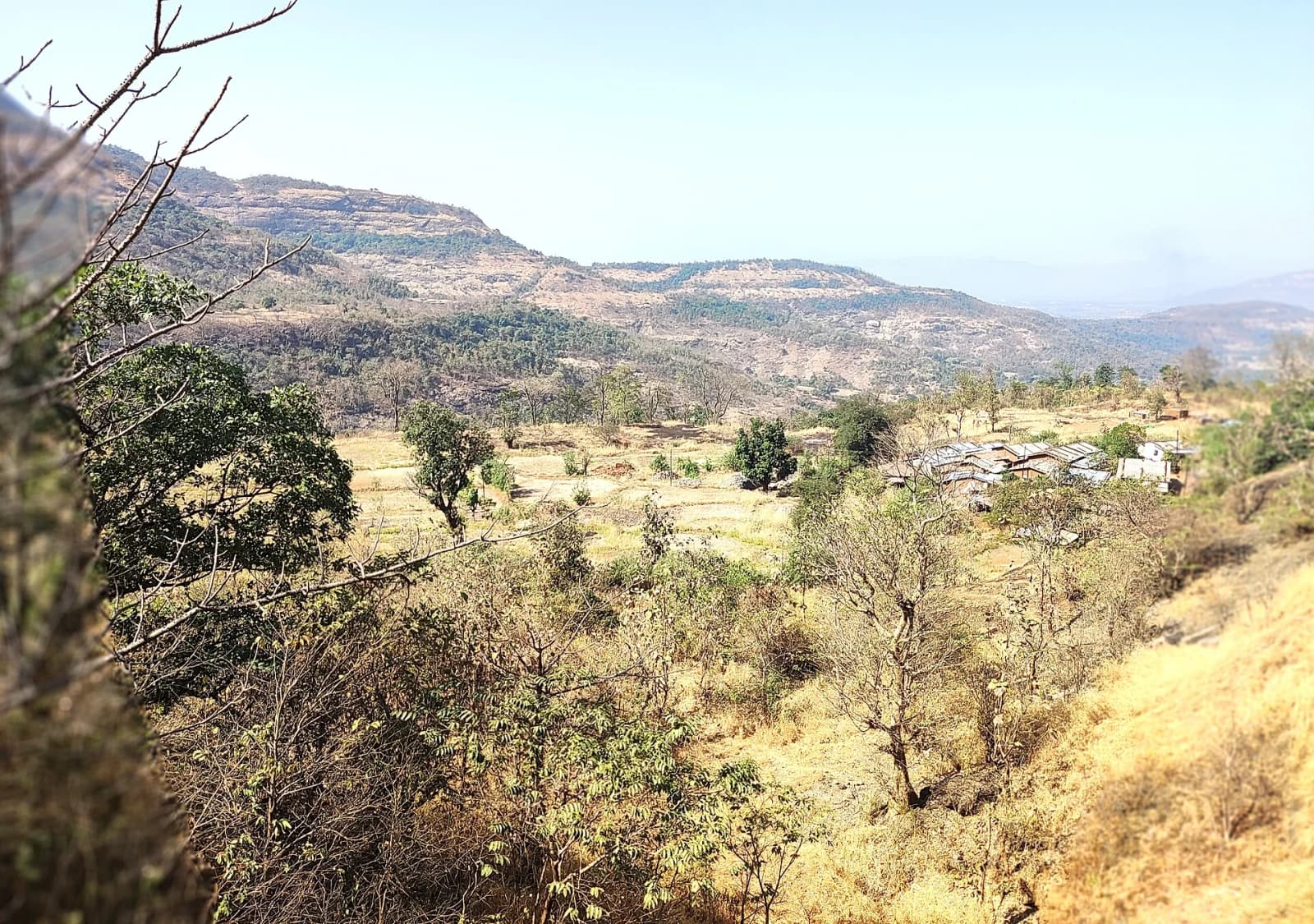
The study site is Kumbharli Ghat, where successive basalt flows of the Deccan Traps are exposed on the hillside. According to IITGN, these layers were laid down by repeated lava eruptions about 65 million years ago.
The researchers flew drones to photograph the rock faces from many positions and stitched the images into a 3D model, a technique known as photogrammetry. On that model they traced where one flow ends and the next begins, and recorded the thickness and shape of each. This mapping was then combined with analysis of the rock.
The method is called an outcrop-analogue approach: rock that is visible at the surface is studied in detail to infer how similar formations buried deep below are likely to behave.
Why basalt matters for carbon storage
Carbon capture and storage involves trapping CO2 and placing it underground. Basalt is of interest because it contains minerals that can react with dissolved CO2 and turn it into stable minerals, a process called mineralisation.
But not every flow is alike. The institute said individual flows differ in how much dense rock, fracturing, pore space and cavities they have, and in their mineral make-up. These differences decide how fluids travel through the rock and react with it, which is why each formation has to be assessed on its own.
"This is the first time such an outcrop-analogue approach has been used to quantitatively assess Deccan basalt," said Prof Pankaj Khanna, the corresponding author and an associate professor at IITGN.
IITGN described the work as the first use of drone-based photogrammetry to map individual lava flows in the Deccan basalt region, and said it offers the first systematic datasets of this kind for the area.
What is not yet known
The institute's announcement does not give figures for how much CO2 the flows could store. The conclusions are drawn from exposed rock, so what they imply for buried formations is an inference. IITGN also noted that only a handful of studies have examined these reactions in Deccan basalt under subsurface conditions.
What happens next
The team said the datasets can serve as a starting point for research beyond Kumbharli Ghat and lay the groundwork for further studies in India. Lead author Debasmita Datta, a PhD student at IITGN, said the team hopes the work "will contribute to international efforts to explore geological CO2 storage".