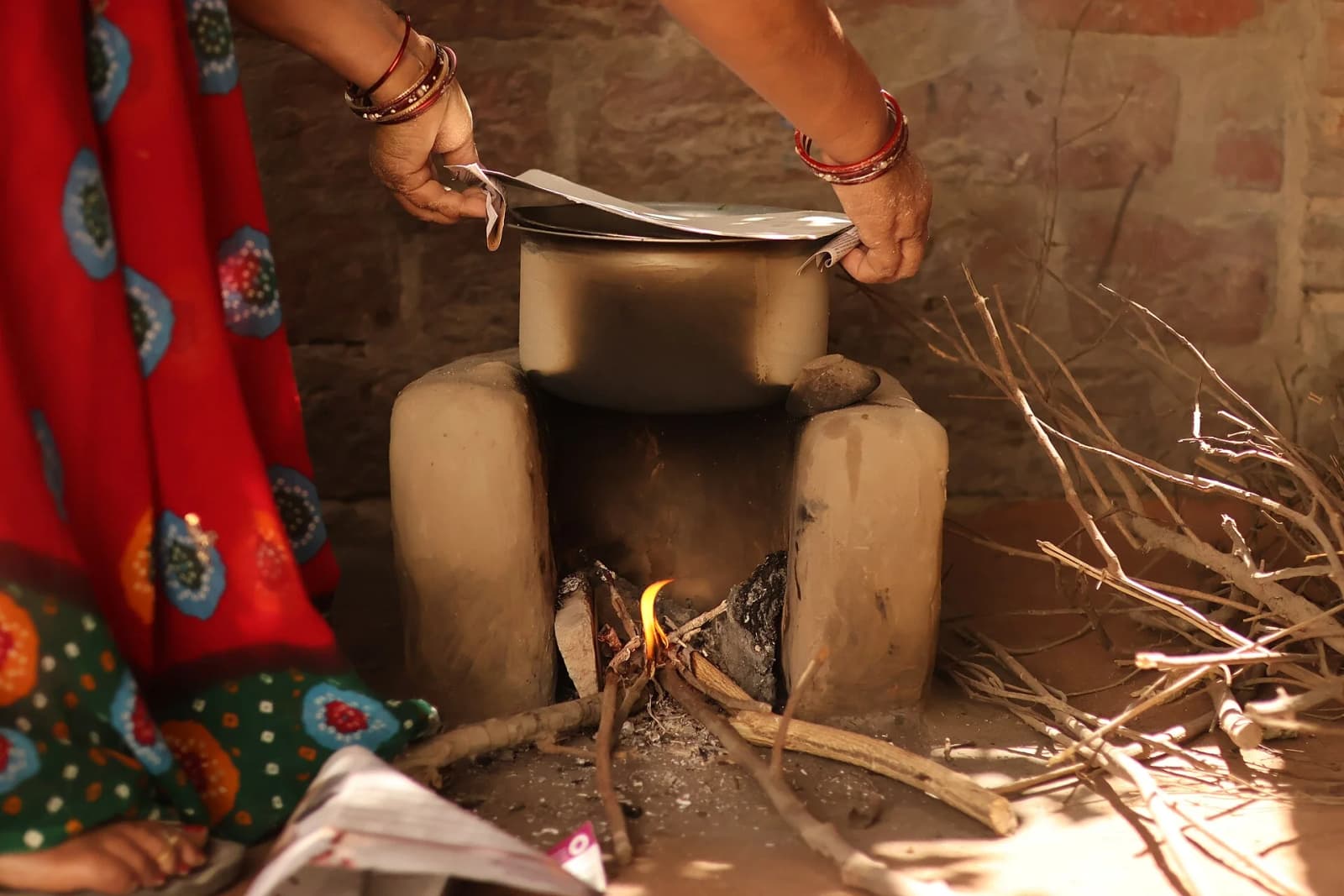
Cooking with firewood, dung cakes, coal and similar solid fuels is the single largest source of fine particulate (PM2.5) emissions in the most polluted parts of the Indo-Gangetic Plain, according to a study released in New Delhi on Thursday, 26 November 2026, by the Council on Energy, Environment and Water (CEEW), an independent policy research institution.
The study estimates that such household cooking accounts for 36 to 49 per cent of total primary PM2.5 emissions in the worst-hit areas of the plain, a belt that runs from Punjab in the west through Haryana, Delhi, Uttar Pradesh and Bihar to West Bengal in the east, as reported by the Press Trust of India.
What did the CEEW study find?
The study found that the kitchen fire, not only traffic or industry, is a central driver of the region's particulate pollution. Its key findings, as reported, are:
- Largest single source: cooking with solid fuels contributes 36-49% of primary PM2.5 emissions in the most polluted parts of the Indo-Gangetic Plain.
- Cooking dominates home energy: cooking makes up about 80% of household energy use.
- A year-round problem that worsens in winter: residential burning happens throughout the year but rises every winter, when households also burn fuel to keep warm.
- Ujjwala has helped: the Pradhan Mantri Ujjwala Yojana (PMUY), launched in May 2016 to give free LPG connections to economically weaker households, helped avert 15% of India's household PM2.5 emissions in the financial year 2025-26, according to the study.
Why do families with LPG still burn firewood?
The main reason is the cost of the next cylinder. Abhishek Kar, a fellow at CEEW, said many families still cook with firewood alongside LPG because the next refill is hard to afford, and that in the plain's most polluted areas cooking is the single largest source of PM2.5 emissions.
The study concludes that moving households from polluting to cleaner cooking fuels is the only way to cut most residential emissions. Under the Pradhan Mantri Ujjwala Yojana, adult women from poor households without an existing LPG connection are eligible, and beneficiaries receive cash assistance of Rs 2,050 for a 14.2 kg connection or Rs 1,300 for a 5 kg connection, along with a free first refill and a stove, according to the scheme's official website.
What does CEEW recommend?
The institution has put forward two specific steps aimed at the months when pollution peaks:
- A winter top-up under PMUY, so that the next LPG refill is affordable during the season when air quality is at its worst.
- Discounted electric cooking: India's more than 25,000 LPG distributors could sell certified induction cooktops and electric pressure cookers at a discount to households that give up two of their four subsidised cylinders.
Why does this matter for daily life?
The finding shifts attention to what happens inside homes. Smoke from a chulha affects the people cooking and those around them, and the study suggests it also adds substantially to the outdoor particulate load across one of India's most densely populated regions. Winter, when heating adds to cooking smoke, is also the season when air quality across north India is typically at its worst.
For households, the study points to the price of LPG refills, rather than access to a connection, as the main barrier to giving up solid fuels completely.
What happens next?
The recommendations are addressed to policymakers; there has been no government response to the study so far. CEEW's suggestion of a winter top-up would require changes to how refill support is delivered under PMUY, while the induction-cooktop proposal would involve the oil marketing companies' distributor network. Neither proposal has been adopted.
Photo source · Hk31122002, CC BY-SA 4.0