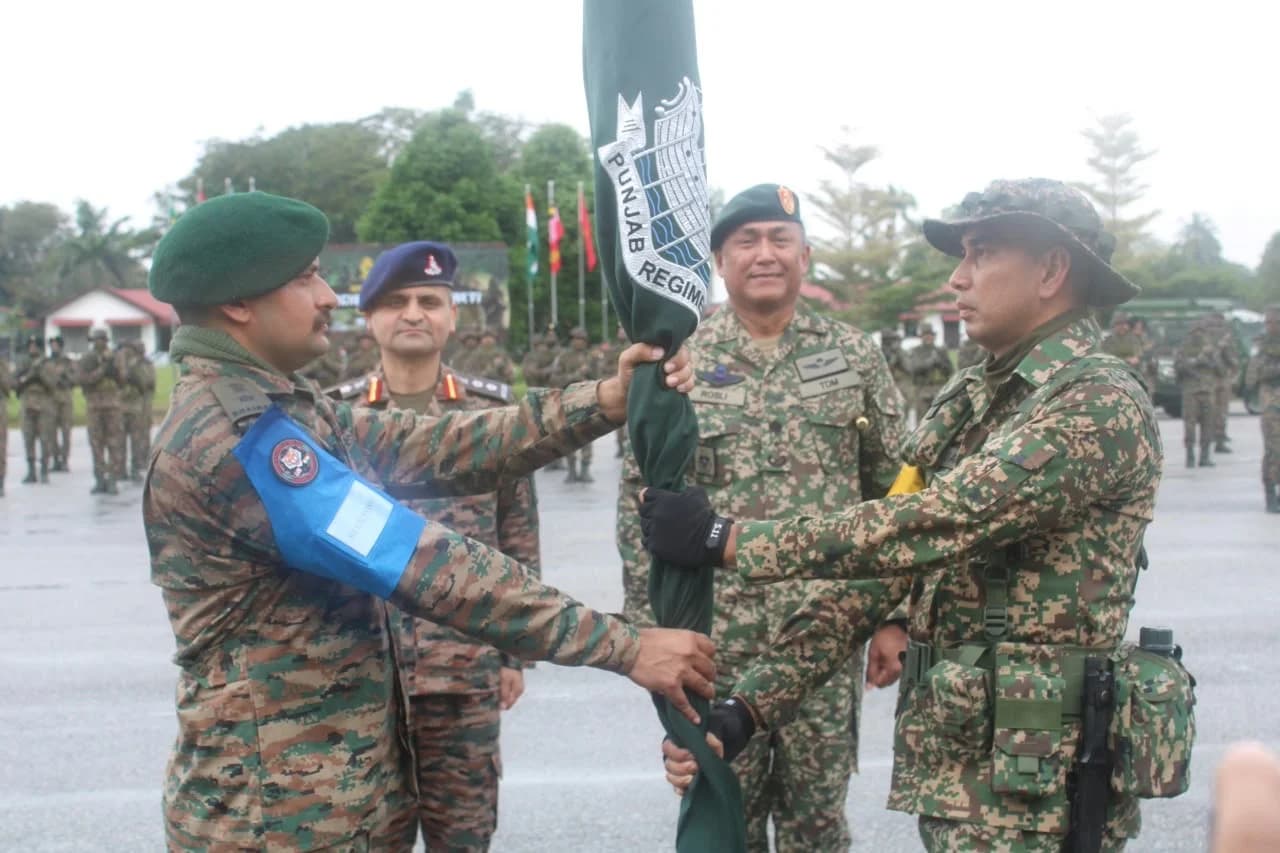
The armies of India and Malaysia began the sixth edition of their joint military exercise, Harimau Shakti, at Ipoh in Malaysia on 19 November 2026, the Ministry of Defence said in a release issued through the Press Information Bureau the same day. The exercise will run until 30 November 2026, with 120 personnel from each side taking part.
What is Harimau Shakti?
Harimau Shakti is a bilateral military training exercise between the Indian Army and the Malaysian Army that is held alternately in India and Malaysia, according to the ministry. This year's edition is being hosted in Malaysia, at Ipoh.
Its stated aim is to jointly rehearse sub-conventional operations under Chapter VII of the United Nations mandate, the chapter of the UN Charter that deals with action in response to threats to peace. The ministry said the focus will be on coordinated counter-terrorism action by contingents of the two countries, particularly in jungle and semi-urban terrain.
What will the troops practise?
The exercise will be held in phases, the release said. It opens with familiarisation with each other's operating procedures and cross-training, followed by joint tactical drills. The listed training activities include:
- setting up a joint command post and a surveillance centre;
- counter-terrorism operations, raids, and cordon-and-search operations;
- combat engineering drills;
- integrated use of unmanned aerial systems (UAS) for reconnaissance and surveillance, with special emphasis on counter-drone (C-UAS) capabilities to detect and neutralise hostile drones.
The exercise will end with a joint validation exercise based on a simulated counter-terrorism scenario that combines ground operations, integrated surveillance and unmanned systems, the ministry said.
Why does it matter?
The ministry said the exercise will let the two armies share tactical, technical and procedural best practices, improve interoperability and deepen defence cooperation between India and Malaysia. The stress on drones and counter-drone systems reflects what both armies have chosen to prioritise in this edition.
The drills come in a busy week for India's defence diplomacy in Asia. MapMyTimes reported on 19 November that the India-Japan 2+2 meeting in Tokyo agreed that Japanese forces would hold their first live-fire training in India.
What happens next?
Training at Ipoh continues until 30 November, when the exercise is scheduled to conclude after the validation phase. The ministry's release did not name the Indian unit taking part or the senior officers attending the opening.
Photo source · Ministry of Defence / PIB, PIB copyright policy