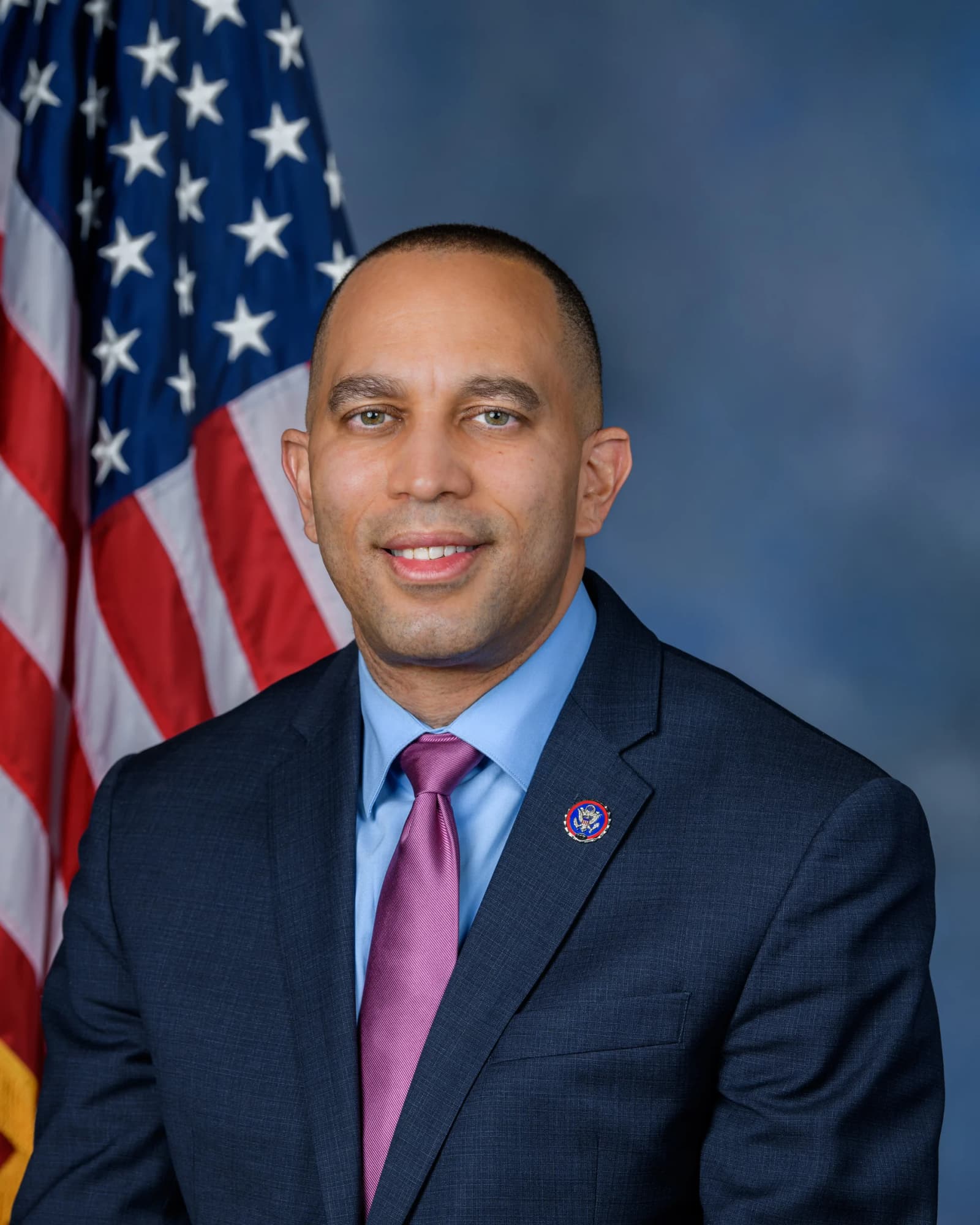
House Democrats on Wednesday, 18 November, nominated Hakeem Jeffries of New York to be the next Speaker of the US House of Representatives, putting him on course to become the first Black lawmaker to hold the post. Jeffries won the closed-door caucus vote by 251 to 11, according to CBS News and CNBC, which cited a person familiar with the private meeting.
The vote comes weeks after Democrats won the midterm elections and regained control of both chambers of Congress. Jeffries, 56, is the first Black member formally nominated by a party for the speakership, Al Jazeera reported.
A clear path, but not yet the gavel
The caucus nomination is not the final step. The Speaker is elected by the full House when the new Congress convenes in January, and a candidate needs 218 votes on the floor. Al Jazeera reported that Jeffries is set to replace Republican Speaker Mike Johnson when members are sworn in on 3 January.
Democrats are poised to hold at least 257 House seats after the midterms, CNBC reported, which would leave Jeffries comfortably above the threshold even if a handful of members withheld support. CBS News described his path to 218 votes as "all but secured."
New leadership team
The caucus also elevated Representative Katherine Clark of Massachusetts to majority leader, making her the first woman in that role, CBS News reported. Pete Aguilar of California was chosen as whip, Joe Neguse of Colorado as assistant speaker and Ted Lieu of California as caucus chair.
Jeffries thanked colleagues on X, writing, "Together, we will deliver bold change." Speaking about the members who opposed him, he said: "The results of today's election speak for themselves," CBS News reported. Former Speaker Nancy Pelosi posted a photo with him and congratulated "Speaker-designate Hakeem Jeffries."
Progressive holdouts
The 11 votes against Jeffries reflect unease among some newly elected progressives. A group of incoming members said in a joint statement that they had not received commitments on priorities including Medicare for All, stopping Immigration and Customs Enforcement (ICE), campaign finance reform and ending the war in Gaza. "Those conversations are ongoing," they said, according to Al Jazeera. "While we have seen meaningful progress, there is still work to be done," the statement added, as quoted by CBS News.
Congressman-elect Don Leonard of Ohio also declined to commit to backing Jeffries without guarantees on progressive priorities, including halting US military aid to Israel and addressing the Supreme Court's Citizens United ruling, Al Jazeera reported. It is not yet clear whether any of the members who voted no on Wednesday will oppose Jeffries on the House floor.
Jeffries has faced criticism from the party's left over his record on Israel and his ties to the pro-Israel lobby group AIPAC. In an interview with The Atlantic, he called for "dramatic change" in the Middle East and backed a two-state solution, Al Jazeera reported.
Background
Democrats first put Jeffries forward for Speaker in 2023, after Republicans ousted Kevin McCarthy, but the Republican majority instead elected Mike Johnson. Wednesday's vote follows the Democrats' victory in Alaska's Senate race, where Mary Peltola unseated Republican Dan Sullivan, a result that Democracy Now and other outlets said brings the party's Senate majority to 56 seats.
What next
The formal election for Speaker will take place on the House floor at the start of the new Congress in January.