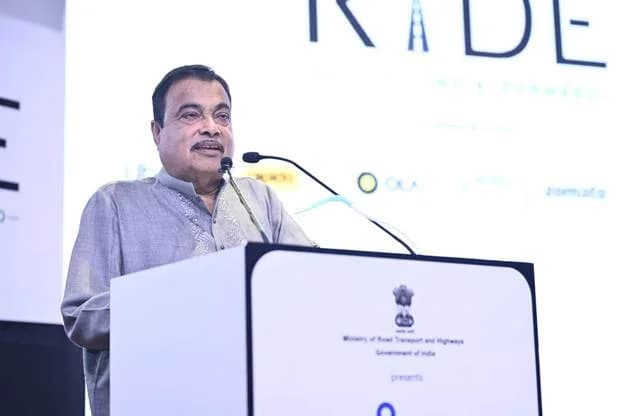
Union Road Transport and Highways Minister Nitin Gadkari on Wednesday, 18 November, asked state governments to adopt the Centre's Motor Vehicle Aggregator Guidelines, 2025, a framework that sets a minimum fare share and insurance cover for drivers who work through ride-hailing and delivery apps.
Gadkari was speaking at "RIDE – Moving India Forward", a programme at Bharat Mandapam in New Delhi that the ministry organised with Uber, Ola, Rapido, Bharat Taxi, Zomato, Swiggy and Porter, according to a release issued by the Press Information Bureau late on Wednesday.
What the guidelines promise drivers
Ministry Joint Secretary C. N. Singh outlined the main provisions, which the ministry said had been revised after consultations with state governments, aggregators and other stakeholders. According to the release, they include:
- at least 80 per cent of the applicable fare for drivers who use their own vehicles;
- health insurance cover of Rs 5 lakh and term insurance of at least Rs 10 lakh;
- freedom for drivers to work on more than one aggregator platform at the same time;
- 40 hours of induction training; and
- a grievance officer available round the clock through the aggregator's call centre to deal with complaints from both drivers and passengers.
Singh said the aim was to improve driver welfare and service standards and to give drivers and passengers an accessible way to have complaints addressed. He described drivers as important participants in the digital mobility system and said their welfare, dignity and working conditions were essential for the sector to grow sustainably, the release said.
Why states matter
Gadkari stressed that wider adoption of the aggregator framework by states would open up jobs, especially for people from socially, economically and educationally disadvantaged groups, and asked state governments to create an enabling environment for such services. The ministry's release did not say how many states have adopted the guidelines so far.
The minister said app-based services had grown beyond passenger transport into goods and food delivery, creating new livelihoods. He said the government's policy aimed to help the sector grow while protecting the interests of drivers and consumers, and invited companies to share suggestions on improving the regulatory framework.
He also cited e-rickshaws and e-carts as examples of technology that had changed traditional occupations and reduced physical strain, and called for better last-mile connectivity in rural areas so that people can reach schools, jobs and markets, and farmers can move produce to cities.
Who was at the event
Executives present included Rapido co-founder Pavan Guntupalli, Uber India director Shiva Shailendran, Porter chief executive Uttam Diga, Ola business head Ankush Aggarwal, Swiggy vice-president Neha Singhvi and Jaskiran Bedi of Zomato's public policy team, along with actor Sharad Kelkar, the release said.
Women who said the platforms had helped them become financially independent, and drivers and other gig workers, shared their experiences. The ministry also made a presentation on road safety and its Rah-Veer scheme, which encourages people to help road accident victims quickly, and Gadkari honoured gig workers and drivers who had taken injured accident victims to hospital during the critical first hours.